
Free Cancellation


-high.jpg&w=1920&q=75 "Venice: Murano and Burano Boat Tour with Glass Factory Visit - morning tour from San Marco")
-high.jpg&w=1920&q=75 "Private Venice Tour")
Venice was built by refugees fleeing barbarian invasions in the fifth and sixth centuries, who settled on a scattering of marshy islands in a lagoon along the northern Adriatic and gradually turned them into a city that still has no roads and no cars. Buildings rise on wooden piles driven deep into the lagoon mud, and getting anywhere in the historic center means walking over one of roughly 400 bridges or traveling by water. The result is unlike any other city in Italy, or arguably anywhere else.
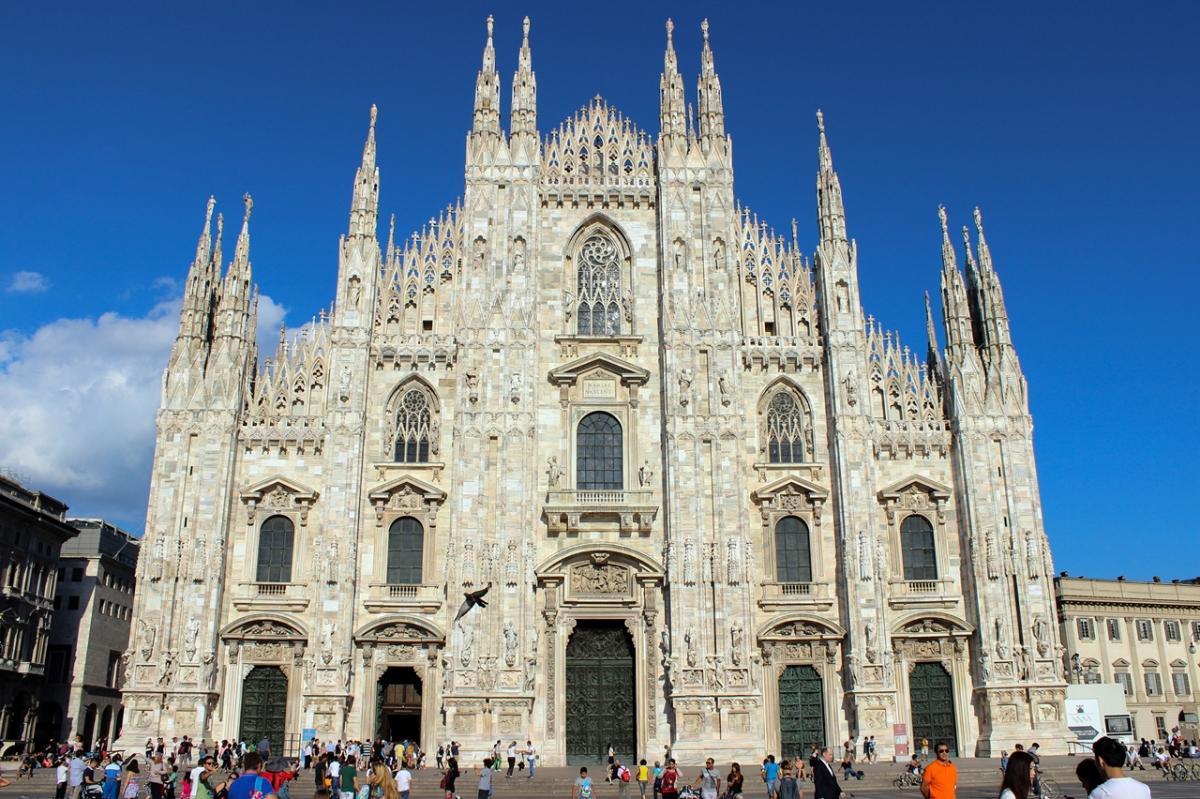
Venice's tours center on the obvious landmarks around St. Mark's Square, but the city rewards time spent away from them too, in the quieter canals of Cannaregio and Dorsoduro. It also fits naturally into a longer Italy tours itinerary, often paired with Verona or Milan on the way in or out.
St. Mark's Basilica combines Byzantine architecture with centuries of later additions, its facade and interior covered in gold mosaics that reflect Venice's long trading relationship with Constantinople. The current structure dates largely to the 11th century, built to house the relics of St. Mark the Evangelist, and four bronze horses taken from Constantinople in 1204 once stood on its facade before the originals were moved inside for protection. Its domes and mosaics still set it apart from any other church in Italy.
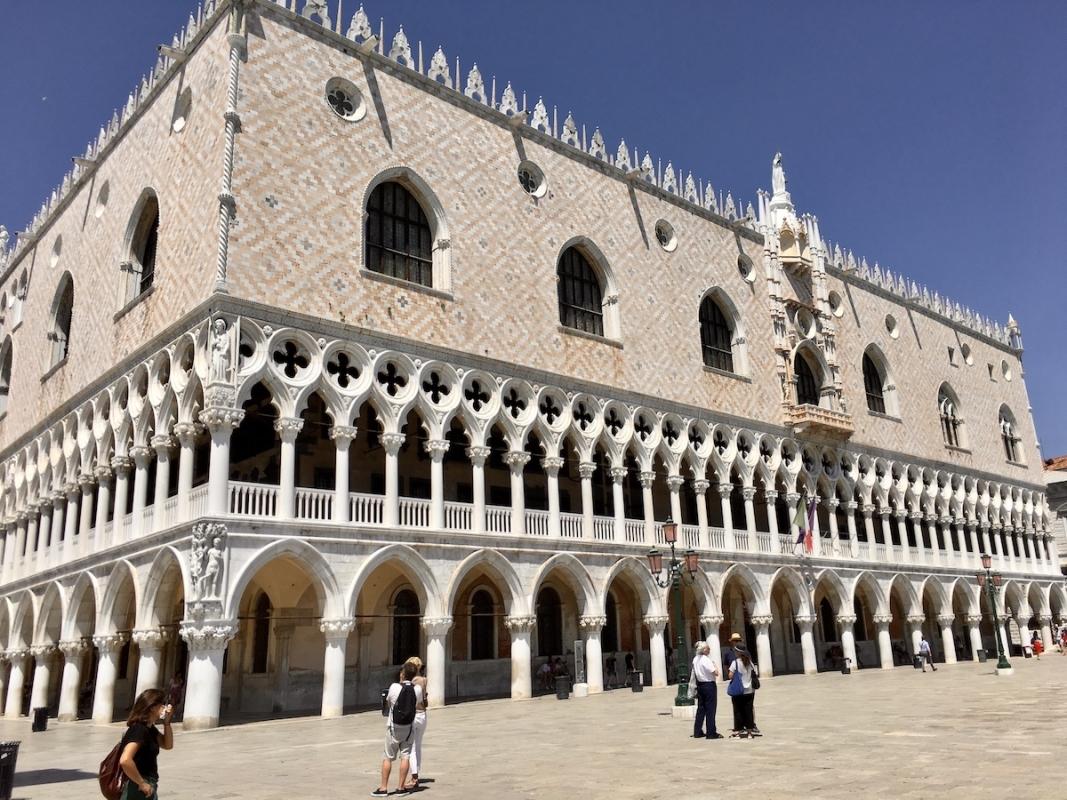
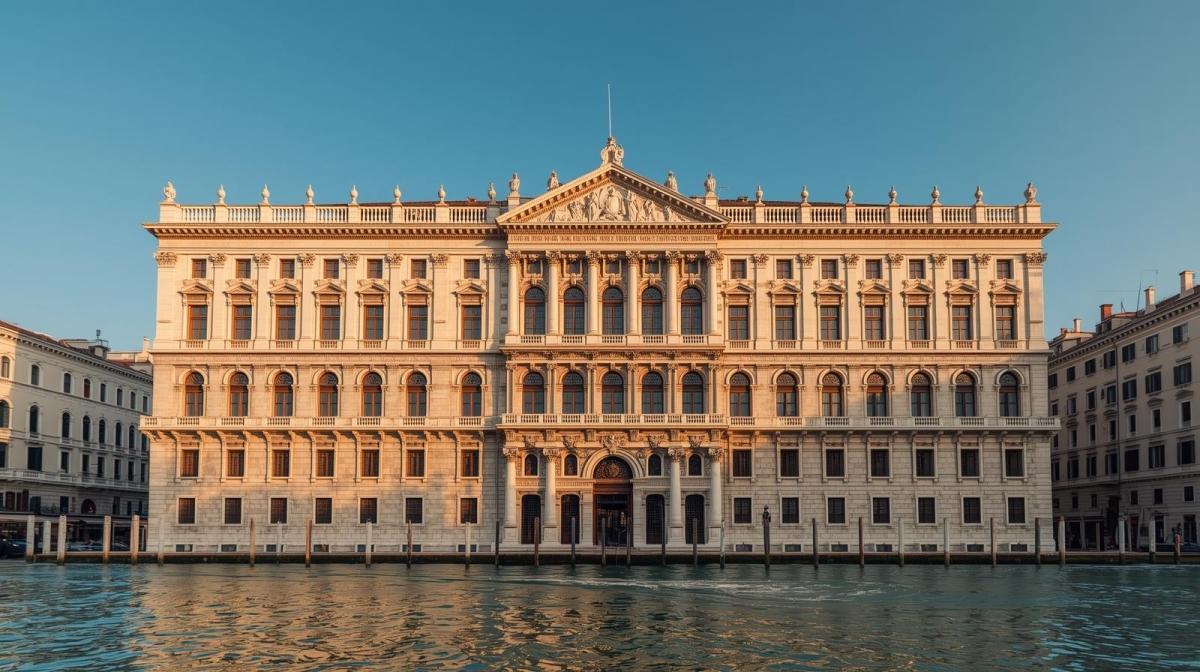
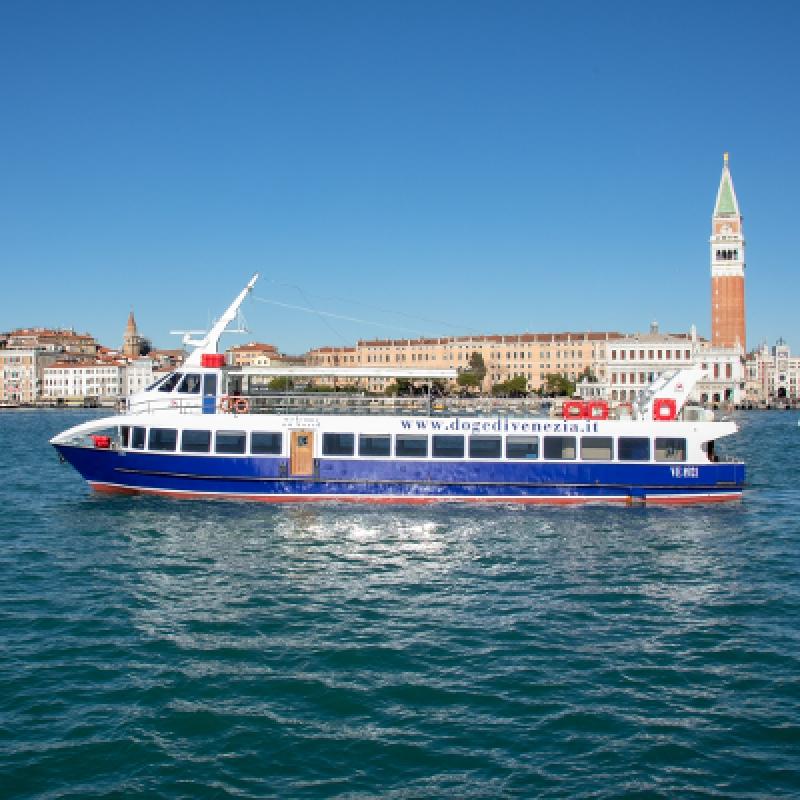
Next to the basilica, the Doge's Palace served as the residence of Venice's elected rulers and the seat of its government for centuries. Its Gothic facade opens onto ornate council chambers, and the Bridge of Sighs connects the palace to what were once the city's prisons, named for the sighs of prisoners said to catch a last glimpse of the lagoon through its windows on the way to their cells. Across the square, the Campanile bell tower, rebuilt after a sudden collapse in 1902, gives one of the widest views over the lagoon and the red rooftops of the city from its observation deck.
Directly across the water from St. Mark's Square, the island of San Giorgio Maggiore holds a church designed by Andrea Palladio in the 16th century, its white facade a landmark in its own right. A short elevator ride up its bell tower gives a view back toward the Doge's Palace and the Campanile without the crowds that gather in the square itself, and the crossing by vaporetto takes only a few minutes.
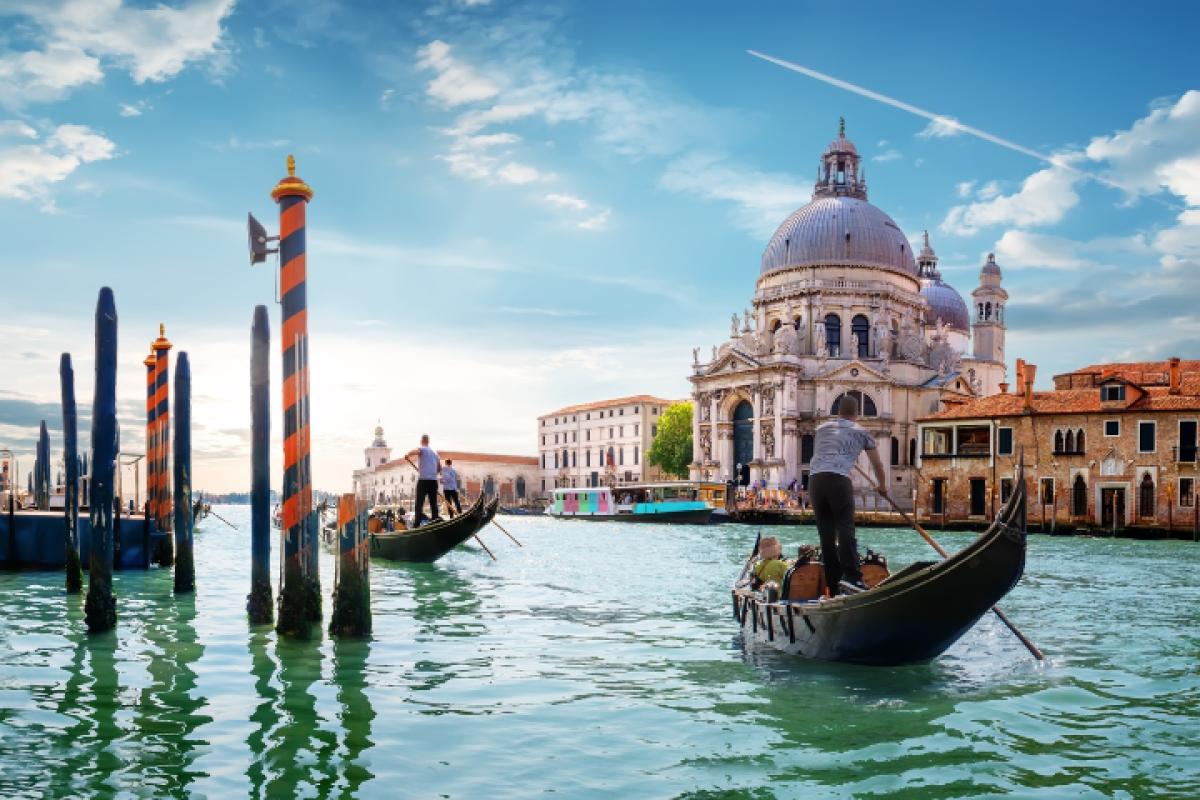
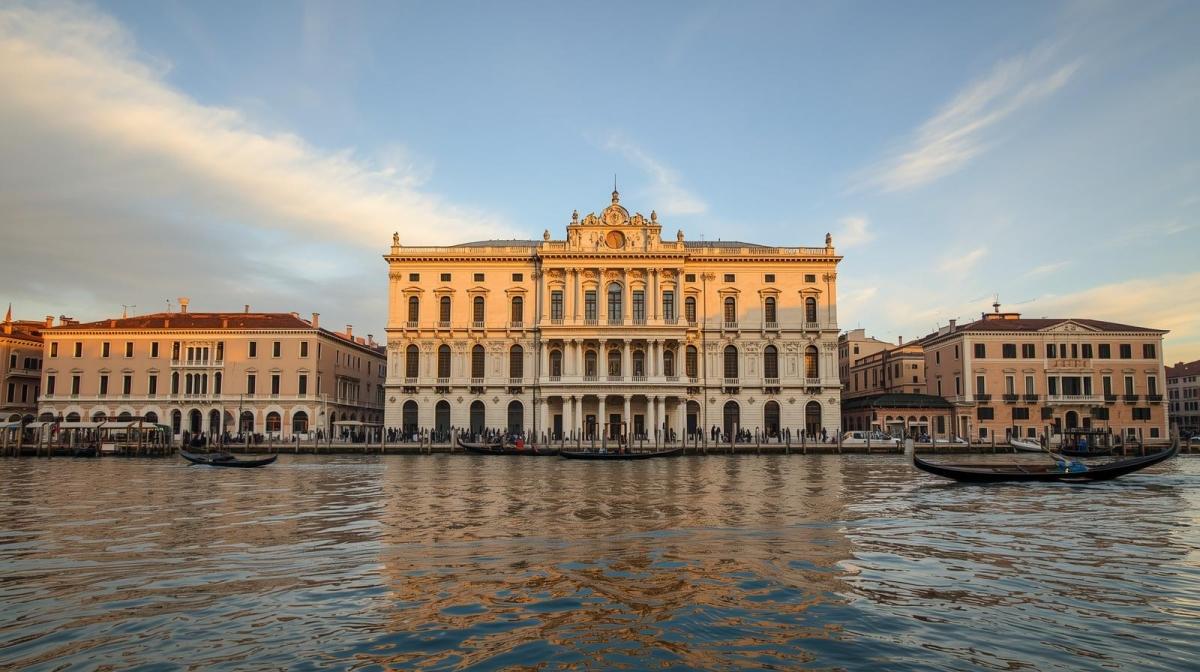
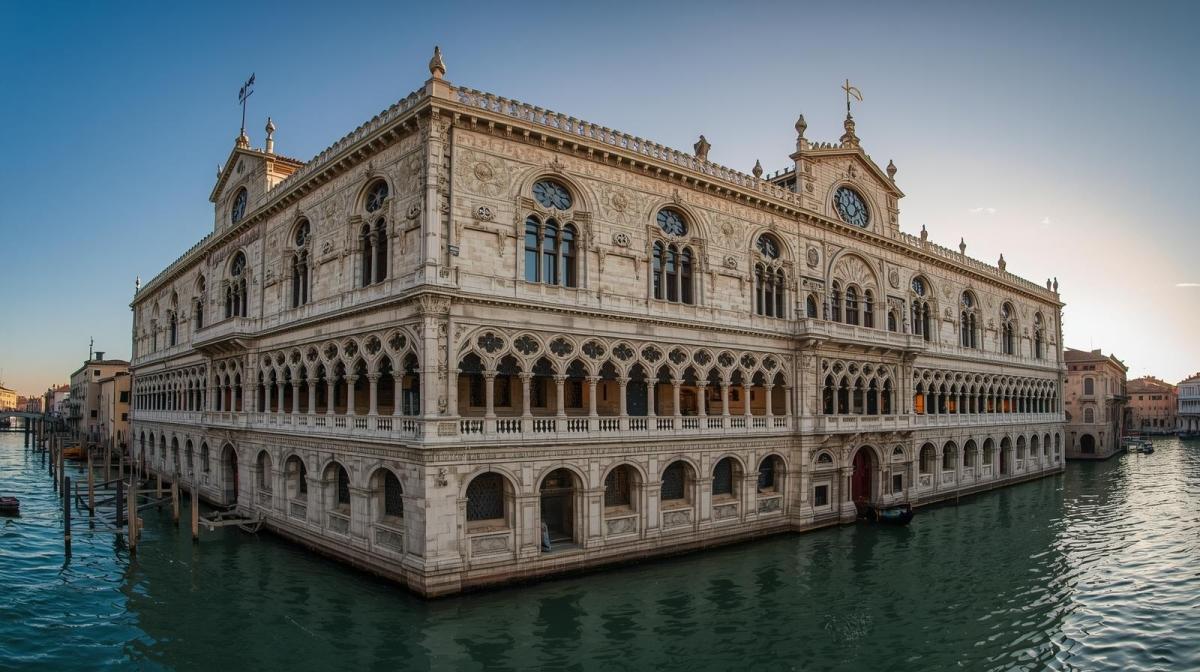
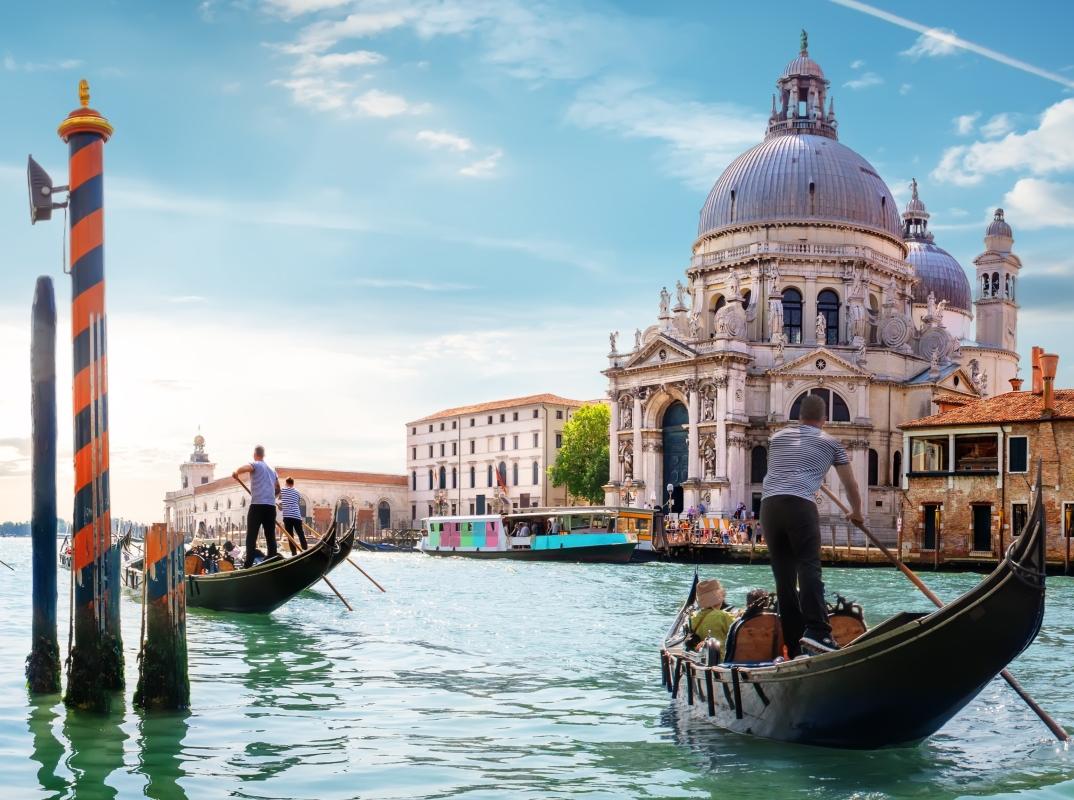
The Grand Canal cuts an S-shaped path through the city and functions as Venice's main street, lined with more than 170 palazzos built by merchant families over five centuries, including the ornate Gothic facade of Ca' d'Oro. The Rialto Bridge, completed in 1591, was for centuries the only way to cross the canal on foot and remains its most recognizable crossing. A vaporetto, the city's water bus, gives an affordable way to travel the canal's length, while a gondola ride, more expensive and typically shorter, ties together views of the palazzos from water level in a way walking cannot match.
Cannaregio holds the Jewish Ghetto, established in 1516 as the first in the world to use that name, its tall buildings a legacy of a community once confined to limited space within the district. The neighborhood's back canals see far fewer visitors than St. Mark's Square, and its bacari, small bars serving cicchetti, small plates similar to tapas, give a more local sense of Venetian daily life.
South of the Grand Canal, Dorsoduro holds two of Venice's major art collections, the Gallerie dell'Accademia, with its span of Venetian painting from the 14th to 18th centuries, and the Peggy Guggenheim Collection, housed in the unfinished palazzo where the collector lived for three decades. The domed church of Santa Maria della Salute, built after the plague of 1630 as a votive offering, anchors the district where the Grand Canal meets the open lagoon.
Venice's Carnevale, held in the weeks before Lent, fills the city with elaborate masks and costumes that trace back to a tradition first documented in the 13th century, when masks let Venetians of different social classes mix freely in the run-up to Lenten fasting. The Venice Biennale, an international exhibition of contemporary art and, in alternating years, architecture, draws a very different crowd through the spring and fall, spreading exhibitions across the Giardini and the Arsenale.
Because Venice has no traffic and every street is built for pedestrians, it is one of the easier Italian cities to explore without a fixed group schedule. A Venice Self Guided Walking Tour with an APP lets visitors move between St. Mark's Square, the Rialto Bridge, and the back canals of Cannaregio at their own pace, with commentary on the app filling in the history behind each stop. For travelers with extra time, the lagoon's outer islands make an easy add-on beyond the main sights.
Late spring and early fall bring the most comfortable weather for walking the city, avoiding both the summer heat that settles over the lagoon and the acqua alta flooding that can affect low-lying areas like St. Mark's Square between autumn and early spring. Since 2020, the MOSE barrier system, a series of movable gates at the lagoon's three inlets, has reduced the frequency of severe flooding, though minor acqua alta still occurs during exceptionally high tides. Winter, outside of Carnevale, offers the thinnest crowds of the year and a quieter view of a city that can feel overwhelmed by day-trippers in high summer.