
Free Cancellation
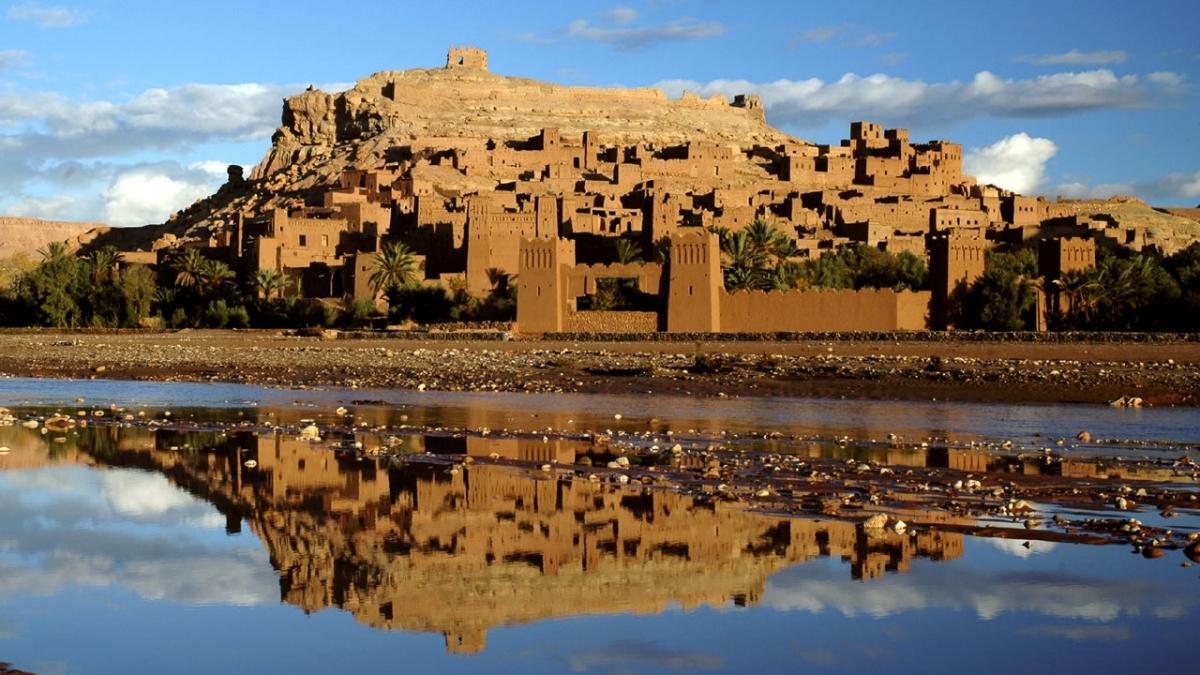

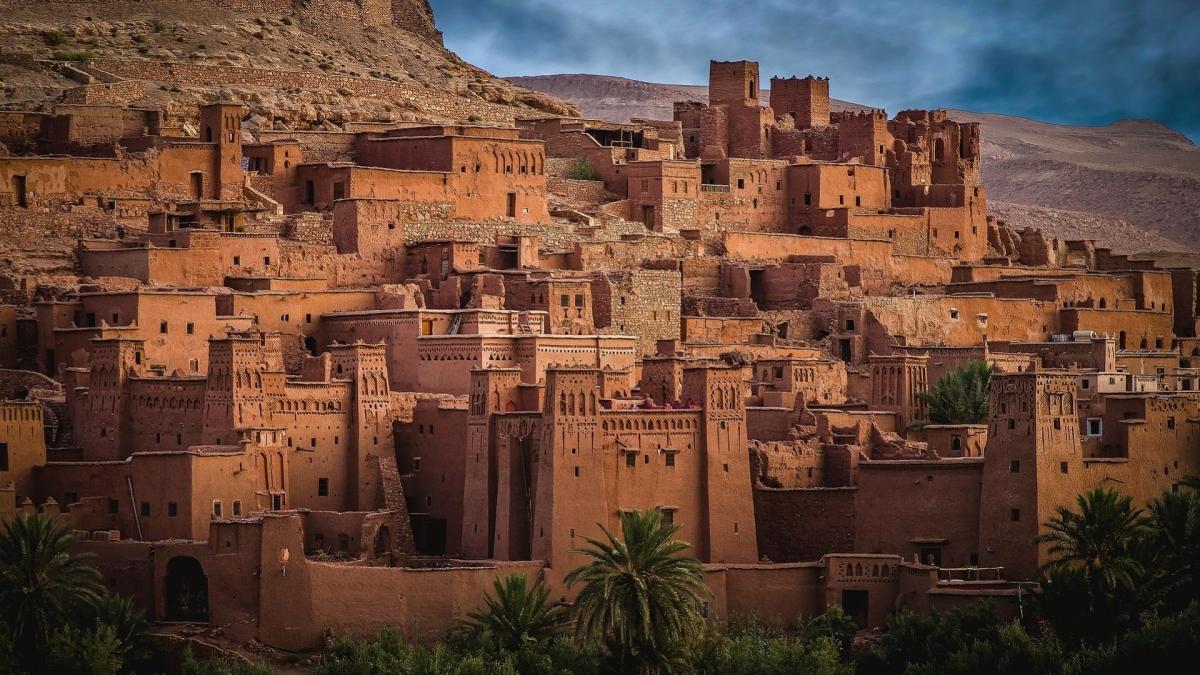
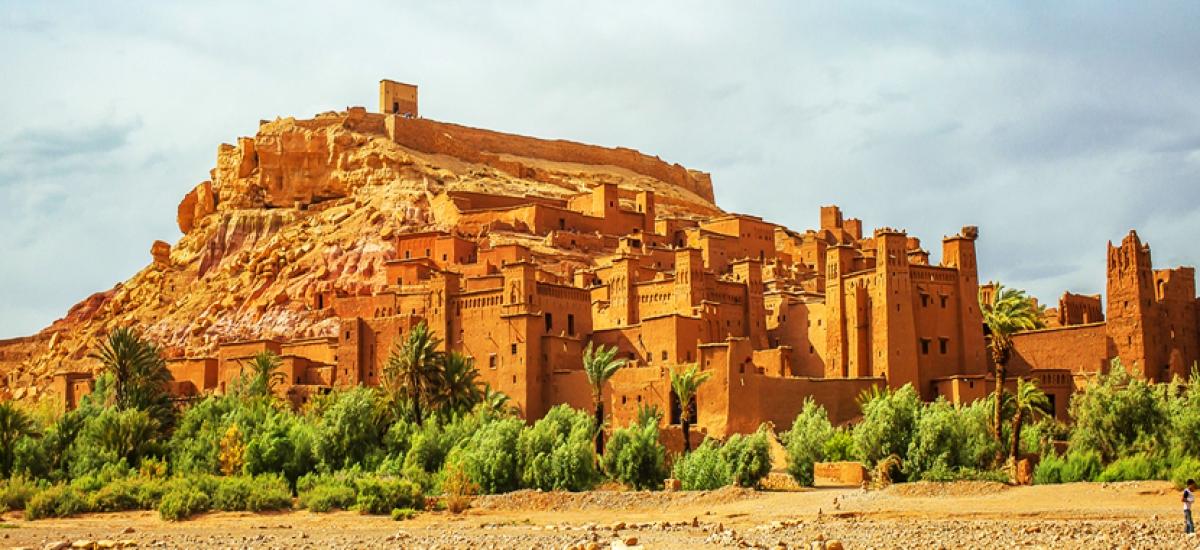
Aït Benhaddou is a fortified ksar of red earthen towers rising on a hillside above the Ounila River, built up over generations as a stop on the caravan route linking the Sahara to Marrakech through the High Atlas. The name translates roughly to fortress of the Benhaddou tribe, and the settlement's exact age is difficult to pin down since earthen buildings are periodically rebuilt on older foundations, though most of what stands today dates from the seventeenth century onward. Its cluster of kasbahs, individual fortified houses with decorated corner towers, still stands largely intact despite the mudbrick construction, and a handful of families continue to live within the walls. Longer Morocco tours routing between Marrakech and the desert almost always stop here.
Most visitors see Aït Benhaddou on the way to or from the Sahara rather than as a standalone trip, crossing the Tizi n'Tichka pass from Marrakech before continuing to Ouarzazate. UNESCO added the ksar to its World Heritage list in 1987, citing it as an outstanding example of earthen architecture from southern Morocco, and the designation now protects the site against further modern building within its walls.
A footbridge and stepping stones cross the Ounila River to reach the ksar's main entrance, where narrow lanes climb between the kasbahs toward a ruined agadir, or fortified granary, at the summit. Several of the ground-floor rooms now operate as small shops selling rugs, paintings, and fossils gathered from the surrounding region.
Steep stairs and shaded passages reward the climb with views over the palm grove and river valley below, and the earthen walls change color through the day as the sun moves, from pale ochre in the morning to deep red by late afternoon. A newer village across the river houses most of the site's current residents, since much of the old ksar itself is now largely uninhabited.
The site's earthen towers and desert light have made it a repeated filming location over several decades, appearing in productions including Lawrence of Arabia, Gladiator, and Game of Thrones. Guides working the ksar can usually point out which corners and rooftops were used for specific scenes.
Leaving Marrakech, the drive crosses the Tizi n'Tichka, a high mountain pass through the Atlas that tops out above 2,200 meters, with switchback roads and Berber villages along the route. Roadside stalls sell mineral specimens and geodes mined locally, a common stop for travelers on the way through.
Snow can close sections of the pass in winter, so travel times vary by season, and the road itself offers some of the more dramatic mountain scenery on the standard Marrakech to Ouarzazate route. Terraced fields and walnut groves fill the valleys on the Marrakech side before the landscape turns drier past the summit.
Ouarzazate, roughly half an hour beyond Aït Benhaddou, houses several film studios where sets for historical epics were built and, in some cases, left standing for later productions. The town also serves as a practical overnight stop for travelers continuing toward the Dades Valley or the Sahara dunes further east.
A hilltop kasbah of its own, Taourirt, sits within Ouarzazate and offers a smaller-scale companion visit to Aït Benhaddou for travelers with an extra hour to spare before continuing east. Further along the Ounila Valley toward Telouet, the ruined Glaoui kasbah once served as the seat of the powerful Glaoui family, who controlled the southern trade routes and mountain passes for much of the early twentieth century.
Local guides based at Aït Benhaddou can be hired at the site for a fixed fee, and walking the ksar with a resident guide typically adds context on which families still live there and how the earthen walls are maintained each year against winter rain.
Because Aït Benhaddou itself is usually a stop within a longer circuit rather than a multi-day destination, travelers comparing other guided small-group formats on TravelShopBooking might also look at the 3 Days Wine and E-Biking in Northwest Bulgaria Tour, an example of the kind of active, multi-day trip available elsewhere on the platform.