
Free Cancellation
Tangier sits at Morocco's northern tip, where the Mediterranean meets the Atlantic across the narrow Strait of Gibraltar, close enough to Spain that the coastline of Europe is visible on a clear day. Long a crossing point between continents, the city has drawn writers, diplomats, and traders for centuries, and travelers arranging Morocco tours often start or end their trip here given its ferry links to Spain. Recent investment has modernized much of the port and waterfront, though the medina above it has kept its older character intact.
Most Tangier tours focus on the medina and kasbah quarters above the port, along with the international zone history that shaped the city through the mid-20th century. Its position as a gateway city also makes it a common base for day trips into the nearby Rif Mountains. The city's mixed European and Moroccan influences show up in its architecture, food, and languages, with French and Spanish still commonly spoken alongside Arabic.
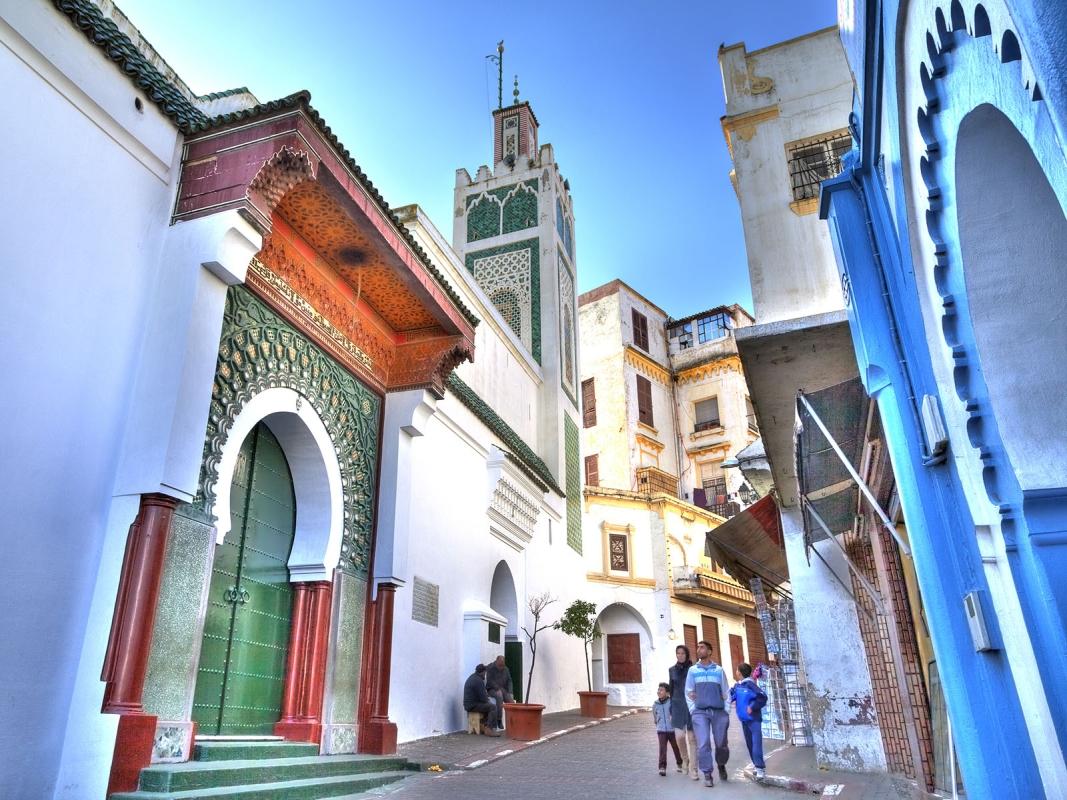
Tangier's medina climbs steeply from the port through whitewashed lanes lined with shops, cafes, and old hotels. At its center, the Petit Socco square once served as a meeting point for writers and travelers passing through the city, and its cafes still draw a mix of locals and visitors watching the square's daily activity. The Grand Socco, a larger plaza just outside the medina walls, connects the old city to the newer Ville Nouvelle and hosts a market on some days of the week. Terrace cafes around the Petit Socco remain popular spots to watch the flow of vendors, shoeshiners, and street performers throughout the day.
Above the medina, the kasbah quarter holds the former sultan's palace, now a museum of Moroccan arts, along with quieter residential lanes and gardens. The palace museum's collection includes ceramics, textiles, and weapons gathered from across the country's different regions. From the kasbah walls and nearby viewpoints, the Strait of Gibraltar spreads out below, with Spain's coastline visible across roughly nine miles of water on clear days. Ferries departing the port make the same crossing in under an hour, a detail that has shaped Tangier's identity as a meeting point between continents.
Tangier was the birthplace of Ibn Battuta, the 14th century traveler whose journeys across Africa, Asia, and the Middle East remain among the most extensively documented in medieval history. A small marker in the medina notes the site associated with his family, and his name appears throughout the city on streets, a shopping mall, and other landmarks. His account of decades spent traveling covered more territory than that of most other medieval travelers, including Marco Polo.
Through the mid-20th century, Tangier operated as an international zone governed jointly by several foreign powers, a status that drew writers including Paul Bowles and members of the Beat Generation. That period left behind a scattering of grand cafes, consulate buildings, and hotels that still stand in the city center today. Painters including Eugene Delacroix and Henri Matisse also spent time in the city, drawn by its light and street scenes that later appeared in some of their most recognized paintings.
Tucked into the medina, the American Legation Museum occupies the first property the United States government acquired abroad, a gift from the Sultan of Morocco in 1821 that marked one of the earliest diplomatic relationships between the two countries. It remains the only building on the National Register of Historic Places located outside the United States, a status that reflects its unusual diplomatic history. The building now houses art and historical exhibits related to Tangier's international history, including material on the writers who lived in the city through the 20th century.
A short drive from the city center, Cap Spartel marks the point where the Atlantic and Mediterranean meet, with a lighthouse overlooking the cliffs and views that stretch toward the Spanish coast on clear days. The drive out follows a coast road past villas built during the international zone era, when foreign residents favored this stretch for its views. Nearby, the Caves of Hercules form a natural sea cave whose main opening has been carved by erosion into a shape resembling a map of Africa, a detail that draws most visitors down to the water level.
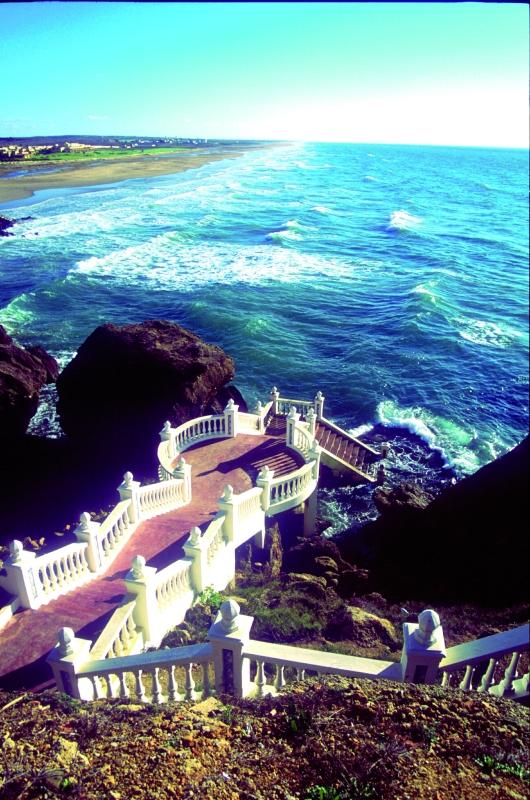
Tangier's main city beach curves along the bay below the medina, backed by a promenade that has been rebuilt in recent years with cafes and public seating. Quieter stretches of sand continue west toward Cap Spartel, popular with both local families and visitors looking for a break from the medina's narrow lanes. Beach clubs and casual restaurants line parts of the promenade, drawing day-trippers from Spain along with residents out for an evening walk.
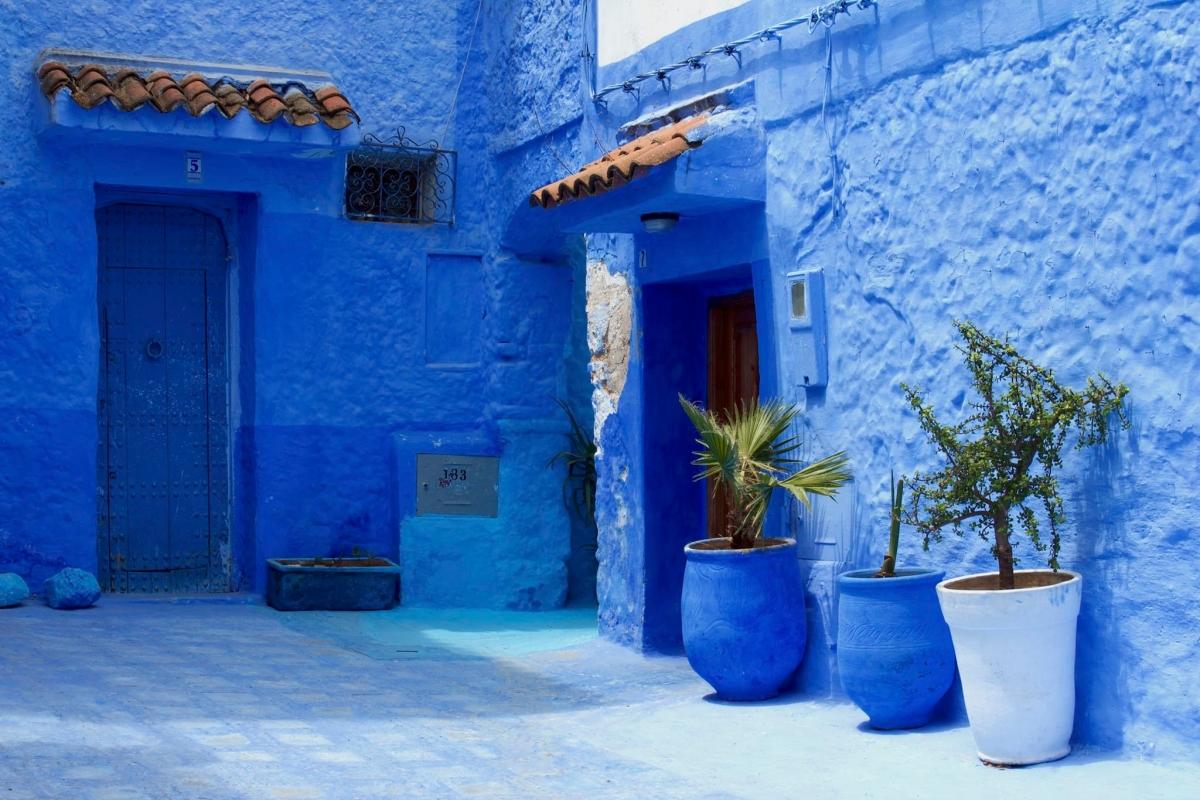
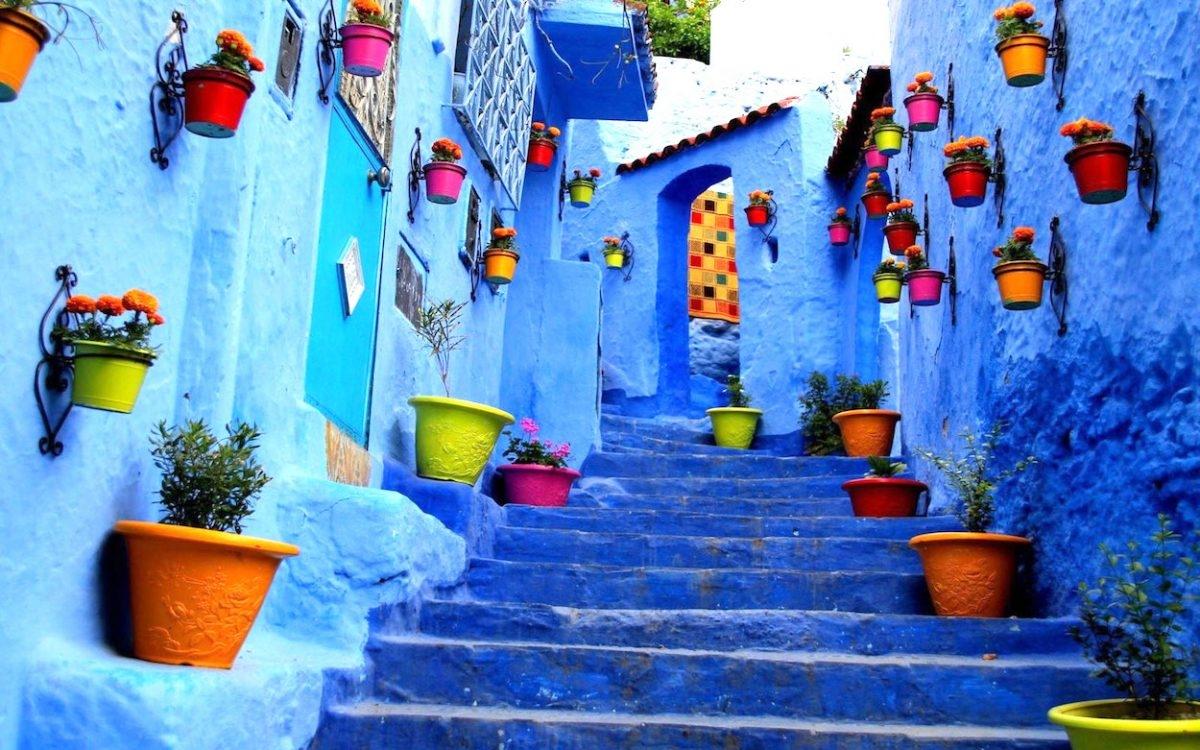
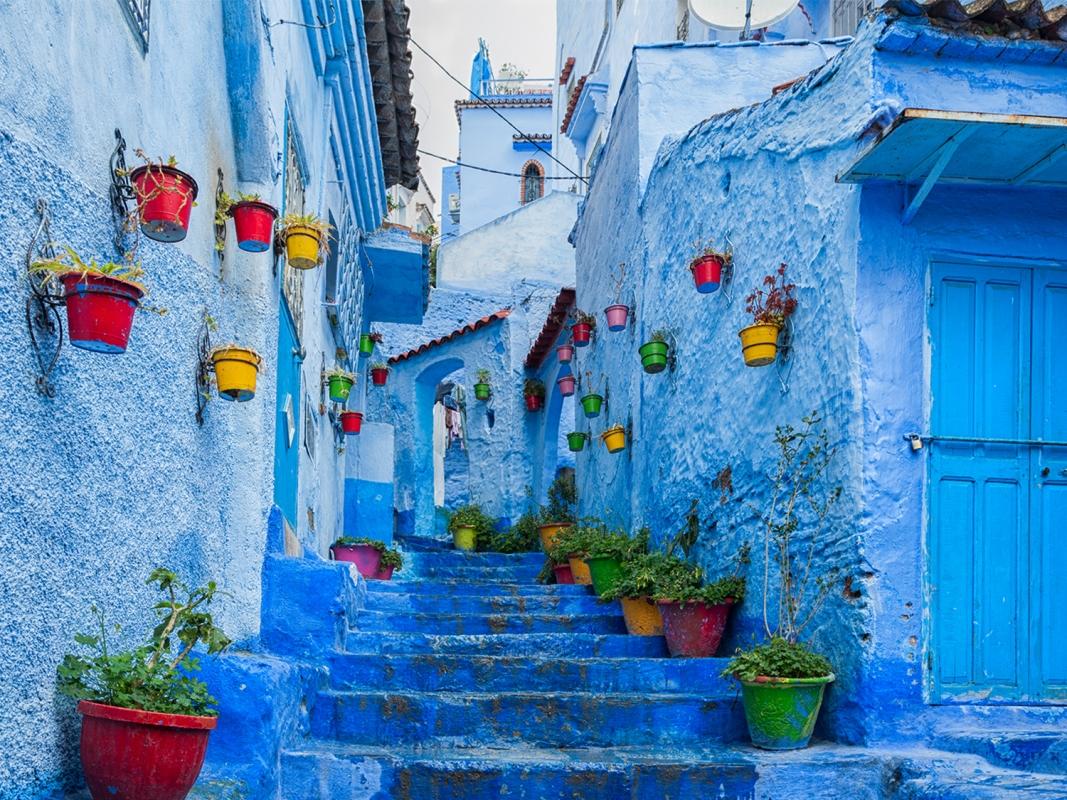
Tangier's location makes it a practical base for day trips into the Rif Mountains, most often to Chefchaouen, the blue-painted town roughly two and a half hours away by road. Travelers based in Tangier can arrange a private full-day excursion to Chefchaouen, a route that climbs through Rif villages before reaching the town's distinctive blue streets.
Spring and fall bring mild temperatures and steady sea breezes, making both seasons comfortable for walking the medina and kasbah. Summer draws crowds along the coast and can turn windy given the city's exposure to the strait, while winter stays mild by Moroccan standards but brings more frequent rain than the rest of the year.