Free Cancellation
-high.jpg&w=1920&q=75 "9 Day Cultural Odyssey Guaranteed Departure Tour in Armenia")
-high.jpg&w=1920&q=75 "Echoes of Armenia Hike Tour 9 Day 8 Night")
-high.jpg&w=1920&q=75 "8 Days Turkey Armenia Combined Tour")
-high.jpg&w=1920&q=75 "14 Days Turkey Armenia Treasure Tour")
-high.jpg&w=1920&q=75 "18 Days Turkey & Caucasian Countries Tour")
-high.jpg&w=1920&q=75 "12 Days Explore Turkey Armenia Georgia")
-high.jpg&w=1920&q=75 "19 Days Turkey & Caucasian Countries Tour")
-high.jpg&w=1920&q=75 "Combined Country Azerbaijan Georgia & Armenia Caucasus Tour 12 Days")
-high.jpg&w=1920&q=75 "Eastern Turkey, Armenia & Georgia Tour – 11 Days Across Ancient Civilizations")
-high.jpg&w=1920&q=75 "12 Days Caucasus Tour – Azerbaijan, Georgia & Armenia Highlights")
-high.jpg&w=1920&q=75 "19 Day Tour to Azerbaijan, Georgia, Armenia & Turkey")
-high.jpg&w=1920&q=75 "14 Day Georgia & Armenia Tour – Caucasus Multi-Country Adventure from Tbilisi")
-high.jpg&w=1920&q=75 "11 Day Georgia & Armenia Tour – Tbilisi, Kazbegi, Vardzia & Yerevan Small Group")
-high.jpg&w=1920&q=75 "30 Days Ultimate Turkey, Azerbaijan, Georgia & Armenia Grand Discovery Tour – Cultural & Heritage Journey")
Yerevan is the capital of Armenia and one of the oldest continuously inhabited cities in the world, founded in 782 BC as the fortress of Erebuni on a hill overlooking the Ararat plain. Tours of the city combine layers of history, from Urartian ruins to Soviet-era boulevards and a contemporary cafe culture, all within a compact center that can largely be explored on foot.
The city sits on the Hrazdan River in the shadow of Mount Ararat, whose snow-capped peak appears on clear days across the border in Turkey. Yerevan works both as a destination in its own right and as the base for exploring the rest of the country, with connections to other Armenia Tours covering monasteries, mountains and wine regions beyond the capital.
On a hill in the city's southeastern district, the ruins of Erebuni Fortress mark the spot where Yerevan began. Built in 782 BC by the Urartian king Argishti I, the fortress predates Rome by several decades, and its cuneiform foundation inscription, now held in the adjoining Erebuni Museum, gives the city its official founding date. Excavated wall foundations, storage rooms and a reconstructed section of the citadel give a sense of the fortress's original scale, with views from the hilltop extending across the modern city toward Ararat.
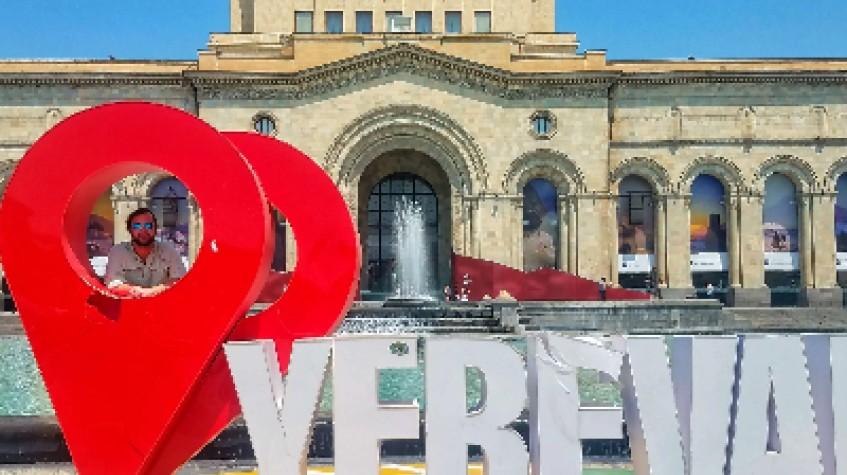
Republic Square is the civic heart of Yerevan, an oval plaza lined with buildings built from the local pink and yellow volcanic tuff that gives the city its nickname, the Pink City. The square houses the History Museum of Armenia, the National Gallery and several government buildings arranged around a large singing fountain that runs musical and light shows on summer evenings. From here, Northern Avenue leads toward the Cascade, lined with shops, restaurants and outdoor seating.
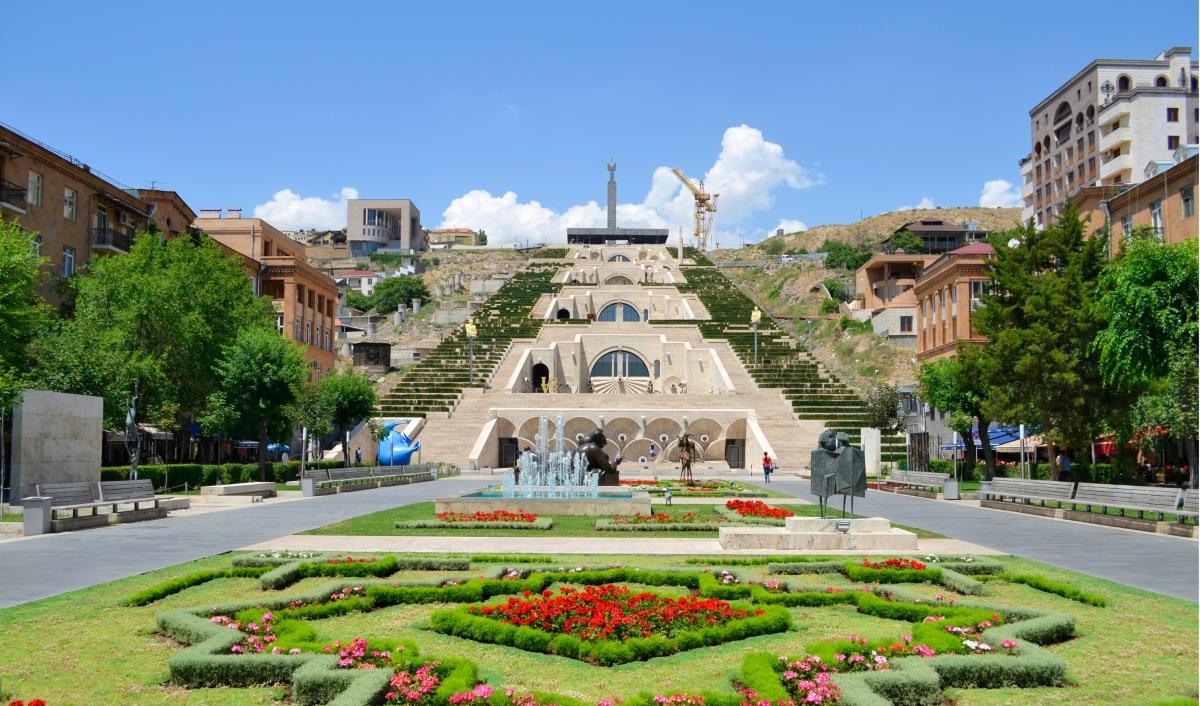
The Cascade is a giant limestone stairway that climbs the northern edge of the city center, built in stages from the 1980s onward and still unfinished at its upper section. Escalators inside the structure carry visitors past several landings, each holding contemporary sculpture from the Cafesjian Center for the Arts, including work by Fernando Botero at the base. The top of the completed section offers a wide view back over the rooftops of Yerevan toward Ararat on clear days.
Yerevan holds a dense cluster of museums for a city its size. The Matenadaran houses one of the world's largest collections of ancient and medieval manuscripts, connected to the Armenian alphabet created by Mesrop Mashtots in 405 AD. The History Museum of Armenia traces the country from prehistory through the medieval kingdoms, while the Armenian Genocide Memorial and Museum at Tsitsernakaberd documents the events of 1915 with a hilltop memorial overlooking the city.
The Vernissage market operates on weekends near Republic Square, filling several blocks with stalls selling carpets, wood carving, Soviet memorabilia and handmade jewelry. For food, the GUM Market brings together vendors of dried fruit, spices, honey and fresh produce under one covered hall, a working market rather than a tourist stop, though visitors are welcome to browse and sample.
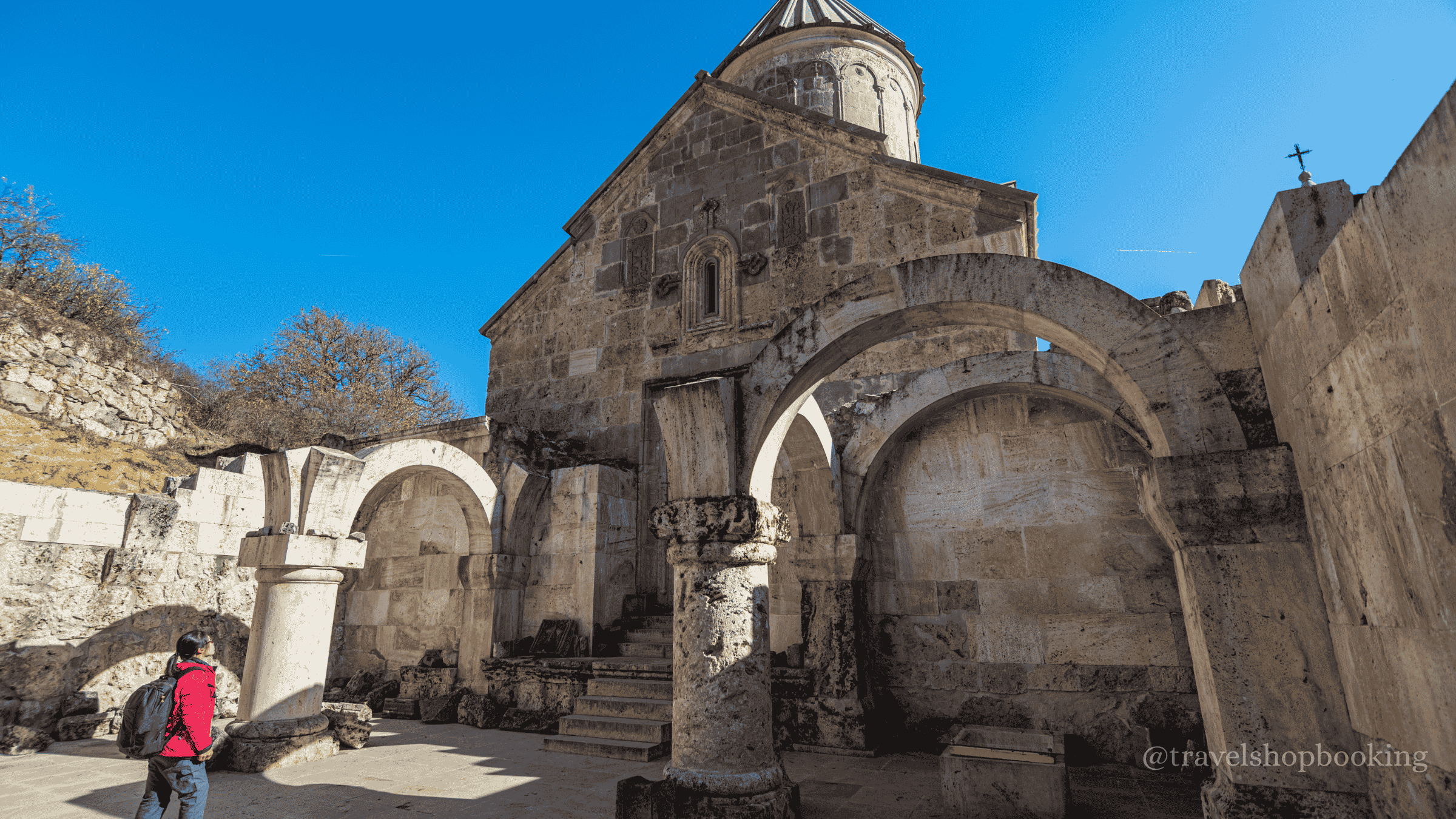
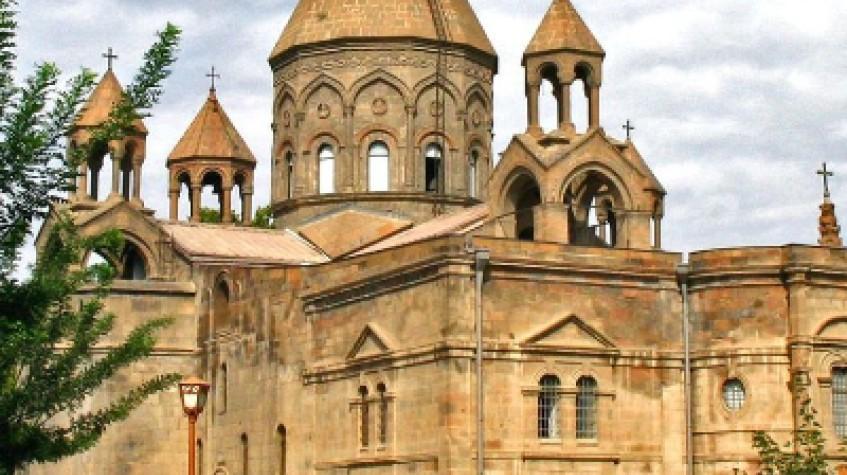
Several of Armenia's most visited landmarks lie within an hour or two of the capital. Garni Temple, a Hellenistic colonnaded structure from the 1st century AD, stands on a cliff above the Azat River gorge and is the only building of its kind to survive in the former Soviet Union. Nearby, Geghard Monastery is partly carved directly into the mountainside, with chambers cut from solid rock dating to the 4th century and later. To the south, Khor Virap Monastery sits close to the closed border with Turkey, with Mount Ararat rising directly behind it, and marks the pit where Gregory the Illuminator is said to have been imprisoned before Armenia adopted Christianity as a state religion in 301 AD.
Yerevan's food culture centers on grilled meat, or khorovats, along with dolma, fresh lavash bread baked in clay ovens and Armenian brandy, which has been distilled in the region since the late 19th century. The Yerevan Brandy Company, founded in 1887 and now producing under the Ararat label, runs tours and tastings of its cellars near the Hrazdan gorge, one of the few production sites open to visitors within the city. Cascade-area streets and the pedestrian stretch of Saryan Street hold much of the city's cafe and restaurant scene, where Armenian coffee is typically brewed slowly in a small copper pot known as a jazzve.
The city center is compact enough to cover on foot, with Republic Square, the Cascade and the main museums all within a twenty-minute walk of each other. A small metro line connects outer districts to the center, and taxis booked through ride-hailing apps are inexpensive for reaching sites farther out or for arranging day trips to Garni, Geghard and Khor Virap.
Multi-day itineraries built around Yerevan typically pair city sightseeing with the surrounding monasteries and natural sites, since most of Armenia's landmarks sit within a few hours of the capital. The Guaranteed Departure Tour Armenia 7 Day Tour covers Yerevan alongside major sites across the country on a fixed schedule.
Spring and autumn bring the mildest weather, with clear skies that make Mount Ararat most visible from the city. Summers are hot and dry, and the Cascade and Republic Square fountains draw crowds into the evening as temperatures cool. Winters are cold with occasional snow, though museums and indoor sites remain fully open year-round.