

Free Cancellation
-high.jpg&w=1920&q=75 "13 Days Discovering Ecuador: A Journey Through History, Nature, and Culture")

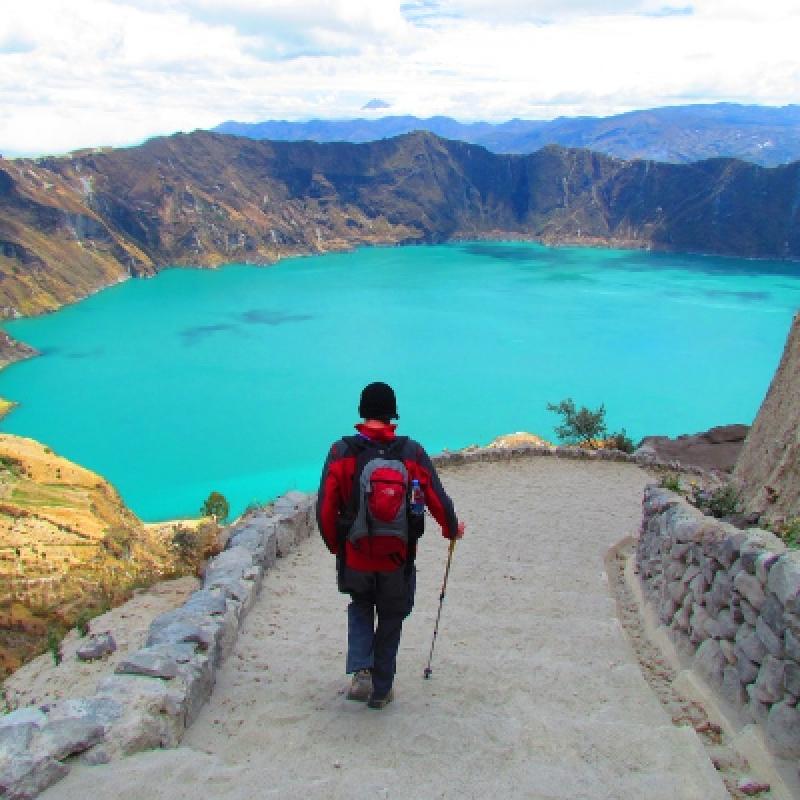


Quilotoa is a water-filled volcanic caldera in the central Ecuadorian Andes, formed after a major eruption roughly 800 years ago collapsed the summit of the volcano into itself. The crater now holds a lake around 3 kilometers across, its turquoise-green color coming from dissolved minerals that leach into the water from the surrounding rock.
Quilotoa Tours generally start from towns along the Ecuador highland corridor south of Quito, and the crater rim sits at an elevation of about 3,900 meters, making it one of the higher points travelers reach on a typical Andes itinerary.
A trail runs along roughly two-thirds of the crater rim, offering changing views of the lake's color as clouds and sunlight shift through the day. A separate, steeper path drops about 280 meters from the rim down to the shoreline, where travelers can rent kayaks or walk along the water's edge before climbing back up, a return leg that takes considerably longer than the descent and feels noticeably harder at this altitude than it looks from the rim.
Quilotoa is the most recognized stop on the Quilotoa Loop, a multi-day trekking circuit linking indigenous highland villages such as Chugchilán, Sigchos and Zumbahua. Trails between villages pass through farmland, cloud forest and páramo grassland, and many travelers stay in small community-run guesthouses along the way rather than completing the full loop in one push.
The nearby town of Zumbahua hosts a Saturday market where highland Kichwa communities sell produce, textiles and livestock, and many Quilotoa itineraries schedule a stop here to coincide with market day. The market offers a look at rural Andean trade that predates organized tourism in the region.
Quilotoa is typically visited as part of a broader Andean highlands itinerary rather than alone, often paired with towns such as Latacunga, Baños or the Cotopaxi region.
7 Days at The Andean Valleys includes a stop at the crater lake alongside other highland destinations.
The crater is visible year round, though clear skies are more common during the drier months from June through September. Mornings generally offer better visibility before afternoon clouds move in over the rim, a pattern common across the Ecuadorian highlands.
Quilotoa lies roughly three hours by road from Quito, most commonly reached via Latacunga or the village of Zumbahua, both of which serve as jumping-off points for tours and independent travel to the crater. The final approach climbs steadily through farmland and páramo before reaching the rim, where the lake often comes into view suddenly at a bend in the road, and buses connecting Latacunga with Zumbahua pass within walking distance of the crater entrance.