

Free Cancellation


-high.jpg&w=1920&q=75 "13 Days Discovering Ecuador: A Journey Through History, Nature, and Culture")
Ecuador Cuenca Tours introduce visitors to the country's third-largest city, a colonial center in the southern Andes recognized by UNESCO as a World Heritage Site in 1999. Built on the ruins of an Inca settlement and, before that, a Cañari city known as Guapondelig, Cuenca preserves one of South America's most intact colonial centers, with cobblestone streets and colonial facades standing across dozens of blocks.
The Tomebamba River cuts through the southern edge of the historic center, separating the colonial city from the riverside district of El Barranco. As part of a longer Ecuador itinerary or on its own, Cuenca rewards visitors with a slower pace than Quito or Guayaquil and a historic core that is easy to explore on foot.
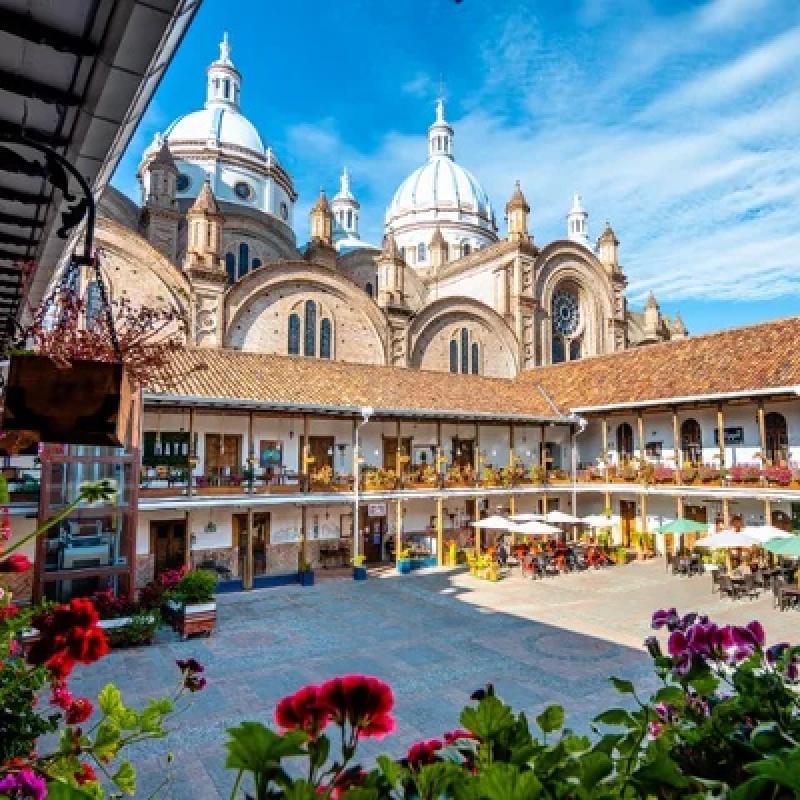
Cuenca's Cathedral of the Immaculate Conception, known locally as the New Cathedral, dominates Parque Calderon with a facade of pink marble and a set of blue and white tiled domes visible from across the city. Construction began in 1885 and continued for more than a century, and the building's scale eventually led to the closure of its predecessor, the Old Cathedral, which still stands nearby as a museum.
Around the park, streets lined with balconied colonial houses lead toward smaller plazas, including Plaza de las Flores, where flower vendors have sold their goods for generations next to the Carmen de la Asuncion church. Many of the surrounding buildings retain original wooden balconies and interior courtyards, features that helped the center qualify for UNESCO recognition alongside its street layout.
Along the river, the El Barranco district is built on a raised embankment of old stone and brick, with houses that back directly onto the water and terraces used historically for washing and gathering. Stairways lead down from the streets above to riverside paths that stay busy with walkers in the late afternoon, and several of the neighborhood's older buildings now house cafes and small galleries.
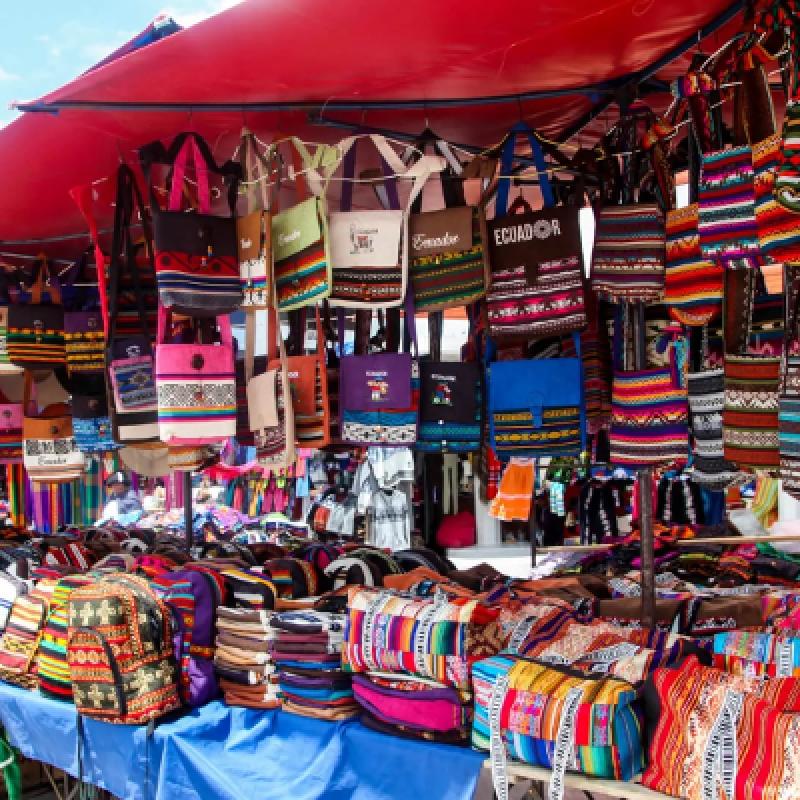
Despite the name, Panama hats originate in Ecuador, and Cuenca has been one of the country's main centers of production and export since the trade expanded in the 19th century. The hats are woven from toquilla straw, a process recognized by UNESCO as part of Ecuador's intangible cultural heritage, and several workshops and museums in the city demonstrate the weaving technique and sell finished hats directly.
Finer weaves can take weeks to finish and are graded by density and tightness of the fiber, details that account for the wide range in quality and price found across the city's shops.
South of the Tomebamba, the Pumapungo archaeological park preserves the remains of an Inca administrative complex built when Cuenca was known as Tomebamba, once considered a northern counterpart to Cusco. Excavated terraces and foundations sit alongside a museum covering Ecuador's ethnic groups, and an aviary on the grounds houses native bird species in a garden setting.
Cuenca fits naturally into longer highland itineraries that connect the southern Andes with other volcano and market towns further north. The North and the Route of the Volcanoes is one example of a multi-day trip built around Ecuador's highland destinations, useful for travelers who want to see Cuenca as part of a broader trip rather than a standalone visit.
Cuenca's elevation of roughly 2,550 meters keeps temperatures mild year round, without the seasonal extremes found in the Amazon or on the coast. The driest months generally run from June to September, though the historic center is walkable in any season and rain rarely lasts more than a few hours at a time.
Evenings can turn noticeably cooler than the daytime temperature suggests, so a layer for after dark is worth packing regardless of the month. Local festivals, including the founding-day celebrations in April, bring extra activity to the historic center and are worth checking against travel dates in advance.