
Free Cancellation


-high.jpg&w=1920&q=75 "13 Days Discovering Ecuador: A Journey Through History, Nature, and Culture")
Guayaquil Tours introduce travelers to Ecuador's largest city and its principal seaport, a working metropolis on the banks of the Guayas River rather than a colonial museum piece. Long treated as a stopover before flights to the Galapagos Islands, Guayaquil has spent the past two decades reshaping its waterfront and historic core into one of the country's more walkable urban destinations. Warm, humid air rolls off the river year round, and the city's rhythm mixes container-port commerce with a growing café and gallery scene.
Most visitors reach Guayaquil as part of a wider Ecuador itinerary, using the city's airport as the departure point for the Galapagos before or after exploring the mainland. Guayaquil Tours typically combine a walk along the riverfront with visits to the hillside neighborhood above it and a stop in one of the city's parks, giving travelers a half-day or full-day introduction to the coast before they continue on.
The Malecón 2000 riverside promenade stretches for more than two kilometers along the Guayas River and forms the backbone of any city visit. Gardens, fountains, museums and a botanical walkway line the route, and an observation tower near its center offers views over the river and the surrounding skyline.
Above the northern end of the Malecón, the colonial hillside neighborhood of Las Peñas climbs more than four hundred numbered steps past brightly painted houses, art galleries and small cafes to the Santa Ana hill lighthouse. Cobblestone streets and colonial-era architecture make it the most photographed corner of the city.
Across the river in the Samborondón district, Guayaquil Historical Park recreates the region's early twentieth century architecture alongside a wildlife area where visitors can see native species such as jaguars, tapirs and howler monkeys in a re-created wetland setting.
Known locally as the iguana park, Parque Bolívar sits in the heart of downtown next to the metropolitan cathedral and shelters dozens of free-roaming land iguanas that rest in the trees and along the walkways among visitors.
The historic center around Parque Bolívar and the Metropolitan Cathedral concentrates much of the city's colonial and republican-era architecture, including the Palacio de Cristal, a restored iron-and-glass exhibition hall on the Malecón that now hosts art shows and cultural events. Government offices, banks and older commercial buildings line the surrounding streets, many restored during the same waterfront renewal that reshaped the Malecón itself.
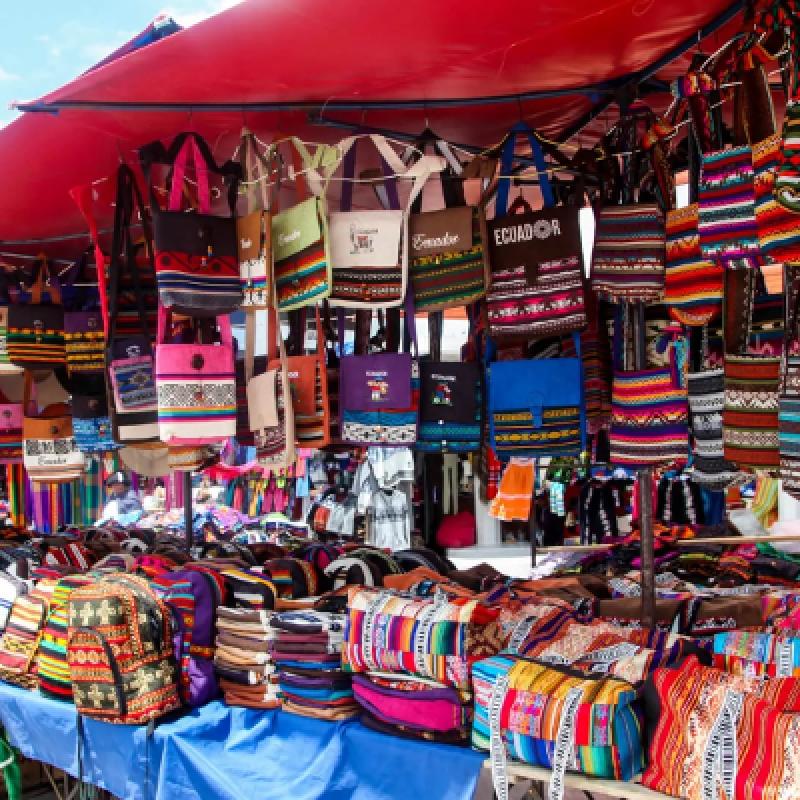
Coastal Ecuadorian cooking centers on seafood, and Guayaquil is a good place to try ceviche prepared with shrimp or fish, along with encebollado, a fish and cassava soup often eaten for breakfast. The Mercado Artesanal, a covered handicraft market near downtown, sells textiles, leather goods and Panama hats from across the country, and small chocolate shops around the historic center source cacao from Ecuador's coastal plantations, one of the country's principal cash crops since the nineteenth century.
Guayaquil's international airport is the mainland's principal departure point for the Galapagos Islands, and many travelers spend a day or two in the city either before flying out to the archipelago or after returning to it. A river taxi service known as the Morsa Aquatica crosses the Guayas between the Malecón and Samborondón, offering a low-cost way to see the waterfront from the water, while taxis and ride-hailing apps cover the rest of the city, and a light metro system known as the Aerovía connects the eastern suburbs to downtown via cable car.
Tour operators often build a Guayaquil stop into longer Ecuador and Galapagos itineraries such as the Galapagos Relax 8 Days Tour, which pairs island time with mainland travel through the coast.
Guayaquil has a tropical climate with a wetter season from December through May and a drier, cooler season from June through November. The drier months bring lower humidity and more comfortable conditions for walking the Malecón and climbing the steps of Las Peñas, though temperatures remain warm throughout the year.