
Free Cancellation
Florence sits on the Arno river in central Tuscany and grew, under the patronage of the Medici family, into the city where the Renaissance took its clearest architectural and artistic form. Brunelleschi's dome over the cathedral, Michelangelo's sculpture, and Botticelli's paintings all took shape here within a few decades of the 15th century, packed into a historic center compact enough to cross on foot in under half an hour.
The city forms the anchor of most Tuscany itineraries and is often visited as part of a wider Italy Tours route. Two to three days give enough time for its major museums and churches, with an extra day useful for excursions into the surrounding countryside.
The Duomo, formally Santa Maria del Fiore, is topped by Filippo Brunelleschi's dome, completed in 1436 using a double-shell design and herringbone brickwork that solved an engineering problem architects had debated for over a century. Climbing the 463 steps between the dome's inner and outer shells brings visitors close to Vasari's frescoed Last Judgment before opening onto a panoramic terrace over the city's terracotta rooftops.
Beside the cathedral, Giotto's Campanile rises nearly 85 meters and offers its own climb and viewpoint, faced in the same pink, white and green marble as the Duomo. Across the square, the Baptistery of San Giovanni holds Lorenzo Ghiberti's bronze doors, the Gates of Paradise, cast between 1425 and 1452 and admired by Michelangelo himself, according to tradition.
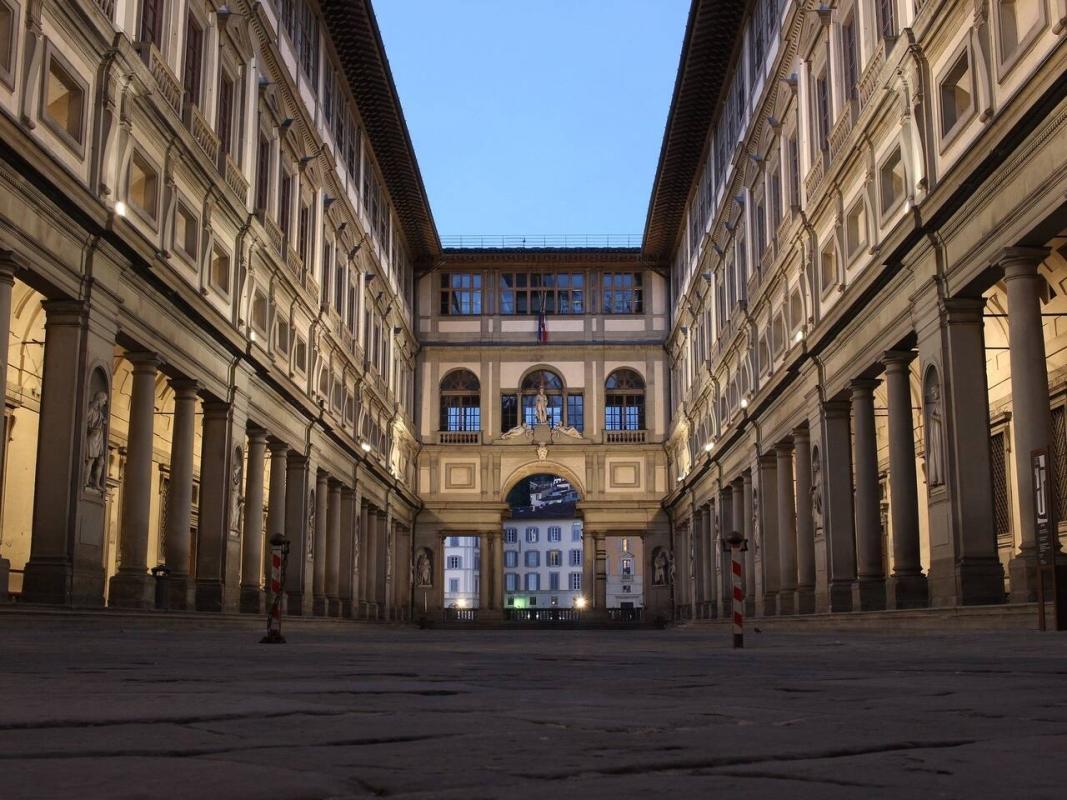
The Uffizi Gallery, built originally as government offices for the Medici in the 1560s, now holds one of the world's most concentrated collections of Renaissance painting, including Botticelli's Birth of Venus and Primavera. A short walk away, the Accademia Gallery displays Michelangelo's David, carved between 1501 and 1504 from a single block of marble that earlier sculptors had abandoned as unworkable.
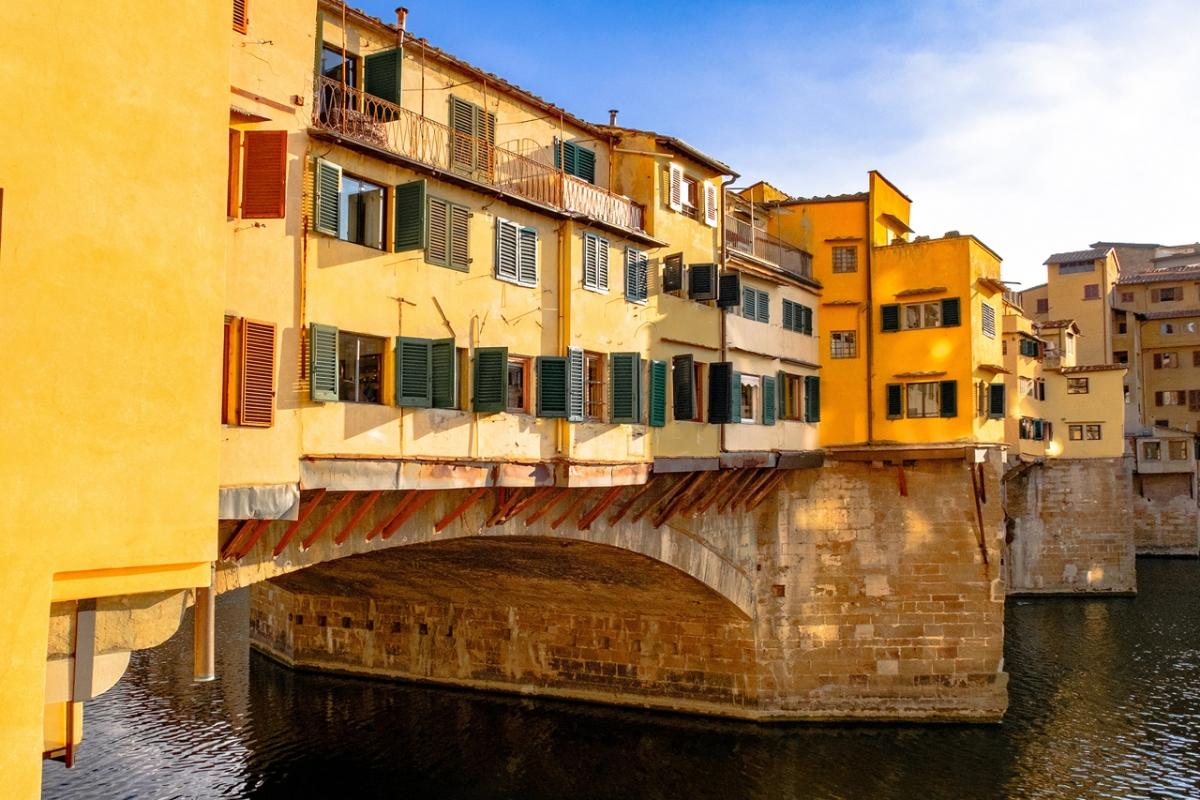
Ponte Vecchio, the medieval bridge lined with jewelry shops since the 16th century, survived the bombings of the Second World War when other bridges over the Arno did not. Above it runs the Vasari Corridor, an elevated passage built in 1565 to let the Medici move between the Palazzo Vecchio and the Pitti Palace without descending into the street. On the river's southern bank, the Oltrarno district holds the Pitti Palace and its Boboli Gardens, along with quieter workshops that continue Florence's tradition of leatherwork and goldsmithing.
Florence Airport, also called Peretola, sits about 5 kilometers from the historic center and handles flights from major European cities, while Pisa's larger airport offers another option roughly an hour away by train or bus. High-speed rail connects Florence to Rome in about ninety minutes and to Milan in under two hours, making the city an easy stop on a broader Italian rail itinerary rather than a place requiring a dedicated flight.
Piazza della Signoria has served as Florence's civic center since the Middle Ages, fronted by the crenellated Palazzo Vecchio and its open-air sculpture gallery, the Loggia dei Lanzi, which displays works including Cellini's bronze Perseus. A replica of Michelangelo's David stands on the spot where the original was unveiled in 1504, before it was later moved indoors to the Accademia for protection. East of the center, the Basilica of Santa Croce holds the tombs of Michelangelo, Galileo and Machiavelli, earning it a reputation as one of Italy's most significant burial churches.
Florence's food culture centers on simple, ingredient-driven dishes rather than elaborate sauces, with bistecca alla fiorentina, a thick T-bone steak grilled rare, standing as the city's signature dish. Ribollita, a bread and vegetable soup, and pappa al pomodoro, a tomato and bread soup, both reflect the Tuscan habit of using day-old bread rather than wasting it. The Mercato Centrale, a covered market near San Lorenzo, brings together produce stalls on its ground floor with food counters upstairs, offering a practical introduction to the region's ingredients in one stop.
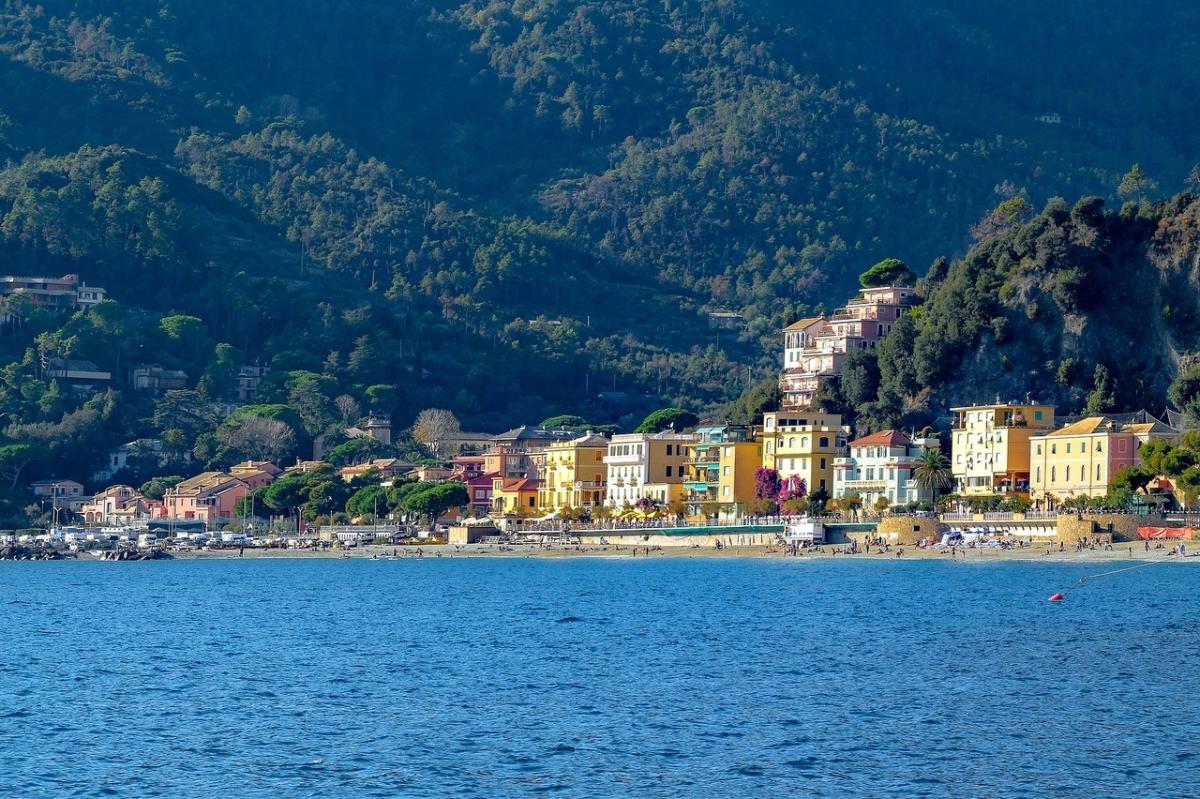
Florence's position makes it a practical base for exploring the wider region, from the hill town of Siena and its striped medieval cathedral to Pisa's Leaning Tower, about an hour away by train. Further afield, travelers can reach the five villages of the Cinque Terre on the Ligurian coast, connected to Florence through day tours such as From Florence: Discover the essence of the Cinque Terre.
Florence claims a role in the origin of modern gelato, with several long-established shops near the Duomo and Santa Croce still churning small batches using traditional methods rather than the pre-made bases common elsewhere. Beyond Mercato Centrale, the Sant'Ambrogio market on the eastern edge of the center draws more local shoppers than tourists and offers a quieter look at the produce and cured meats that supply the city's kitchens. Small trattorias tucked into the streets around San Lorenzo and Santo Spirito continue to serve these same Tuscan staples largely unchanged from one generation to the next.
Spring, from April to June, and fall, from September to October, bring comfortable temperatures and lighter crowds at the major museums than the peak summer months. Summer heat can be intense in the historic center, where narrow streets trap warmth, while winter stays mild by northern European standards and keeps queues shorter at sites like the Uffizi.