

Kenya Lake Nakuru National Park Tours
200+ tours & activities
-high.jpg&w=1920&q=75 "6 Days Rift Valley Lakes & The Untamed Masai Mara Safari")
Free Cancellation
6 Days Rift Valley Lakes & The Untamed Masai Mara Safari
Free Cancellation
6 Days Absolute Game Viewing
Free Cancellation
6 Days Kenya Explorer Safari: Sopa Lodges & Flamingo Hill Camp Stay
Free Cancellation
10 Days Safari & Beach Package
Free Cancellation
8 days Kenya Budget Joining Safari
Free Cancellation
Kenya Bush to Beach Safari: 8 Days of Wildlife & Relaxation
Free Cancellation
6 Days Maasai Mara/ Nakuru/ Amboseli
Free Cancellation
10 Days Best of Kenya Luxury Safari Holiday on 4x4 Landcruiser Jeep
Free Cancellation
4 Days Rift Valley & Masai Mara
Free Cancellation
Wildlife Safari: 5-Day Maasai Mara, Lake Nakuru & Naivasha
Free Cancellation
4 Days Masai Mara and Lake Nakuru medium range Joining Safari
Free Cancellation
4 Days Lake Nakuru & Maasai Mara Safari
-high.jpg&w=1920&q=75 "4 Days lake Nakuru and Masai mara 4x4 Jeep private safari")
Free Cancellation
4 Days lake Nakuru and Masai mara 4x4 Jeep private safari
Free Cancellation
12-Days in Uganda, Kenya & Tanzania: Gorillas, Chimps & The Big Five

Free Cancellation
7 Days Kenya Private Safari and Beach Tour
Explore Kenya Lake Nakuru National Park Tours
About Kenya Lake Nakuru National Park Tours
Lake Nakuru National Park sits in the floor of the Great Rift Valley, roughly 140 kilometers northwest of Nairobi, and ranks among Kenya's most visited parks despite covering only about 188 square kilometers. Gazetted in 1968 after starting life as a bird sanctuary in 1961, it is one of the few national parks in the country enclosed by a perimeter fence, a design that was chosen specifically to protect its rhino population from poaching. The park can be visited on its own from Nairobi as a long day trip, though most travelers see it as part of a longer Kenya Tours itinerary that links the Rift Valley lakes with the Maasai Mara.
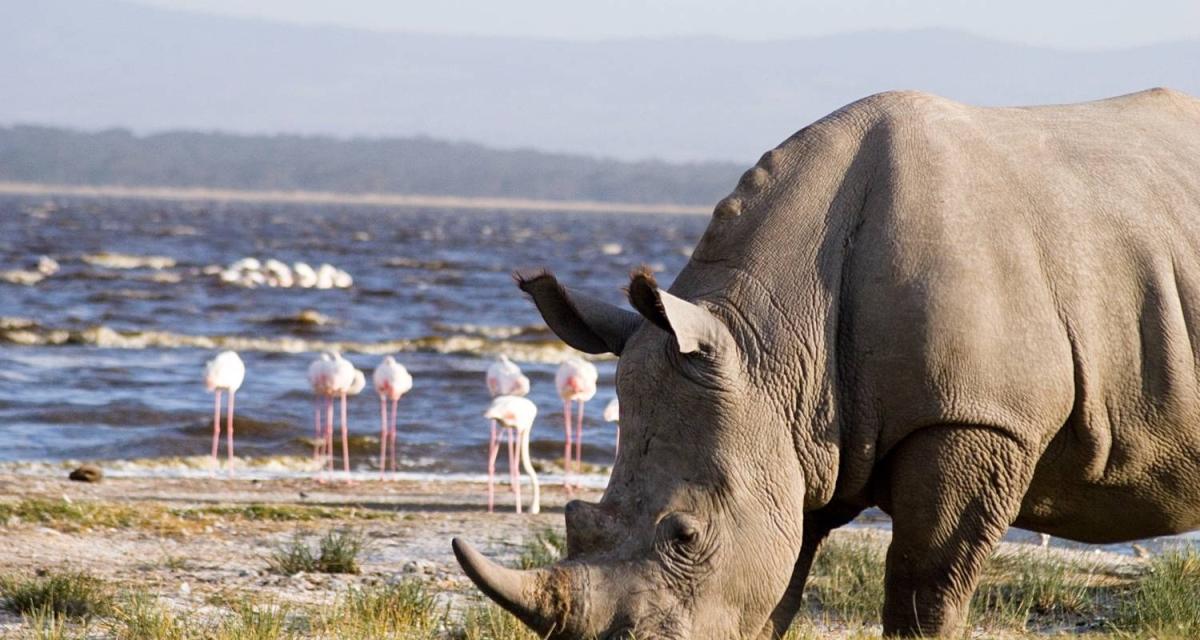
What draws visitors is less the lake itself than the wildlife concentrated around it. The fenced boundary has allowed the park to become a stronghold for both black and white rhinoceros, and sightings on a morning game drive are common in a way they rarely are elsewhere in Kenya. It also holds healthy numbers of lion, including individuals known for climbing into the branches of the yellow-bark acacia trees, along with buffalo, leopard and introduced Rothschild's giraffe.
From Bird Sanctuary to Rhino Stronghold
Lake Nakuru National Park started out in 1961 as a bird sanctuary covering only the lake itself and a narrow fringe of shoreline, set aside to protect the huge flocks of lesser flamingo that once gathered on its alkaline water. The boundaries were expanded and the site was upgraded to full national park status in 1968, and over the following two decades the surrounding woodland and grassland were folded in to create the fenced area visitors explore today. Its shift from a bird-focused sanctuary to a rhino stronghold took shape from the 1980s onward, when conservation authorities began relocating black rhino into the newly secured perimeter as poaching cut numbers elsewhere in Kenya. That history explains why the fence, unusual for a Kenyan park, exists in the first place, since it was built for rhino protection rather than to contain other wildlife.
Game Drives and the Rhino Sanctuary
Game drives here typically run in an open-sided 4x4, following a network of tracks that circle the lake and climb into the surrounding woodland and grassland. Because the park is compact, a single morning or afternoon drive can realistically cover a wide range of habitats, from the euphorbia forest on the eastern shore to the open plains where lion prides are often found resting. Rangers and drivers know the rhino territories well, and the enclosed nature of the park means tracking success rates are higher than in Kenya's larger, unfenced reserves.
Baboon Cliff and Out of Africa Viewpoint
Two lookout points give visitors a sense of the park's full layout. Baboon Cliff, on the western side, looks straight down over the lake and is a regular stop for photographs of the shoreline and the escarpment beyond. Out of Africa Viewpoint, named for its use in the 1985 film, offers a similar panorama from the south and is often paired with a short walk, since it lies within the fenced and therefore relatively low-risk section of the park.
Woodland and Grassland Habitats
Away from the lakeshore, the park's acacia woodland and open grassland support waterbuck, impala and defassa waterbuck in large numbers, along with the occasional leopard sighting in the denser cover. Birdlife extends well beyond the lake's water birds, with raptors such as martial eagle and augur buzzard regularly spotted along the cliffs.
Where to Stay Near the Park
Accommodation options range from simple tented camps just outside the main gates to lodges built into the escarpment overlooking the lake, giving travelers a choice between budget and higher-end stays without needing to change location for game drives. Several properties sit inside the fenced boundary itself, which allows for an early start before the gates fill with day visitors arriving from Nairobi. Camps closer to the southern gates put guests nearer the rhino sanctuary's core territory, while those on the northern side tend to offer quieter surroundings and views over the euphorbia forest.
Combining Lake Nakuru with the Rift Valley Circuit
The park is rarely visited alone on a multi-day trip. Its location on the main road between Nairobi and the Maasai Mara makes it a natural stop on circuit safaris that also take in Lake Naivasha and, less often, the smaller Lake Elementaita and the geothermal landscape of Hell's Gate, and operators commonly build it into itineraries lasting four to seven days. The Classic 5-Day Safari through Maasai Mara, Lake Nakuru and Naivasha follows this pattern, spending a day around the park's rhino sanctuary before continuing on to the Mara's open savanna.
Getting to the Park
Most visitors drive from Nairobi, a journey of two to three hours that climbs out of the city onto the Rift Valley escarpment before descending toward the valley floor, with viewpoints along the way offering a first look at the fault line that shapes the entire region. The road is tarmacked for the full distance, and the drive is often treated as a scenic introduction to the Rift Valley rather than simply a transfer, particularly when paired with a stop at one of the roadside viewpoints overlooking Longonot or Naivasha.
Best Time to Visit Lake Nakuru National Park
The dry months from late June to October and again from January to February give the clearest game viewing, since animals concentrate near permanent water and vegetation thins out. It remains open year-round, though, and even the wetter months bring fewer crowds and greener scenery, which some photographers prefer despite the muddier tracks.