
Free Cancellation


-high.jpg&w=1920&q=75 "Day trip to Nairobi National park and Giraffe center")

-high.jpg&w=1920&q=75 "6 Days Rift Valley Lakes & The Untamed Masai Mara Safari")
Nairobi is Kenya's capital and its busiest travel hub, sitting at roughly 1,795 meters above sea level on the southern edge of the Kenyan highlands. The city grew from a small supply depot on the Uganda Railway in 1899 into a metropolis of more than four million people, and it remains the starting point for most visits to the country, whether the plan is a short city stop or the opening night of a longer Kenya itinerary.
What sets Nairobi apart from other capitals is Nairobi National Park, a stretch of open savanna bordering the city's southern suburbs and putting lions, rhinos and giraffes within a half-hour drive of downtown offices. Few capital cities anywhere pair skyscrapers with big game this way, and that contrast is reason enough for many travelers to spend a day or two in Nairobi before continuing to a longer safari. The city also functions as the diplomatic and economic center of East Africa, home to the United Nations Office at Nairobi, one of only four such UN headquarters worldwide. Its own name traces back to a Maasai phrase, "Enkare Nyorobi," meaning cool water, a reference to the river that once ran clear through what is now a busy downtown core.
Fenced on three sides and open to the Athi-Kapiti plains on the fourth, Nairobi National Park covers about 117 square kilometers and holds one of the densest black rhino populations in Kenya alongside lions, giraffes and buffalo. Because the park has no elephants, sightlines across the grassland stay unusually open, and the city skyline forms a backdrop to almost every photograph taken inside it.
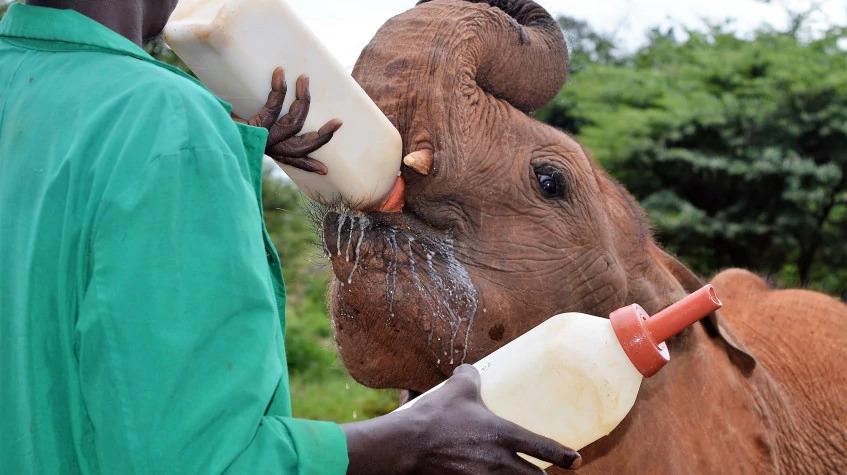
On the park's edge, the David Sheldrick Wildlife Trust hand-raises orphaned elephant and rhino calves and opens a public viewing hour each morning, when keepers bottle-feed the youngest arrivals and explain each animal's rescue story before it is eventually returned to the wild in Tsavo.
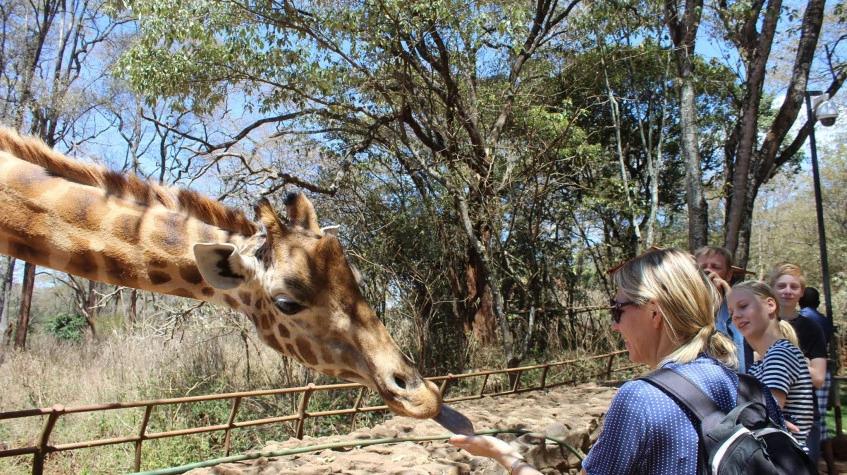
A short drive away in the Karen suburb, the Giraffe Centre protects the endangered Rothschild's giraffe and lets visitors feed them by hand from a raised platform, a conservation project that began in the 1970s with a single breeding pair.
North of the city center, Karura Forest is a protected urban woodland threaded with running and cycling trails, a waterfall on the Karura River and a set of caves once used as a hideout during the Mau Mau uprising of the 1950s. The forest survived a campaign to develop parts of it in the 1990s thanks in part to activist Wangari Maathai, later a Nobel Peace Prize laureate, and today it functions as one of Nairobi's main green spaces for residents and visitors alike.
The Karen Blixen Museum occupies the farmhouse where the Danish author lived from 1917 to 1931 and wrote the memoir later adapted into the film Out of Africa. Set below the Ngong Hills with views the author described in her own writing, the house is furnished with original pieces and surrounded by gardens that still reflect the coffee estate it once was. A short distance away, the Nairobi Railway Museum traces the Uganda Railway that founded the city, with vintage steam locomotives on display and the carriage from which a man-eating lion reportedly dragged a passenger in 1900. The Kenyatta International Convention Centre, a cone-shaped tower completed in 1973, remains one of downtown's most recognizable landmarks, and its public viewing deck offers panoramic views over the city and, on a clear day, the Ngong Hills beyond.
Nairobi National Museum, on the northern edge of downtown, holds an extensive collection built up since the early twentieth century, including hominid fossils linked to the Leakey family's research in Kenya and a snake park next door with species found across the country. Downtown, the Maasai Market moves between locations through the week and sells beadwork, wood carving and fabric direct from makers, while the Bomas of Kenya complex stages traditional dance performances representing several of the country's ethnic communities inside reconstructed homesteads. Nyama choma, grilled meat served with ugali and sauteed greens, remains the anchor of Nairobi's dining culture and appears on menus at roadside grills and long-established restaurants alike across the city.
Most international flights land at Jomo Kenyatta International Airport, while Wilson Airport handles the light aircraft connecting Nairobi to the Maasai Mara, Amboseli and Samburu within an hour or two. Many visitors use the capital as the starting point for a joining safari that links several parks in one trip, such as the 5 Days Bogoria Nakuru Naivasha Mara Joining Safari, which departs from Nairobi and covers four of the Rift Valley's destinations in a single circuit. An overnight stay in the city before an early safari departure is common practice, since most lodges and parks lie several hours from the airport by road.
Nairobi's altitude keeps temperatures mild year-round, typically between 12 and 26 degrees Celsius, so there is no bad season for a city visit. Two dry spells, from June to September and from December to February, offer the clearest skies and are also when most travelers pass through on their way to safari. Long rains fall from March to May and short rains arrive from October to November, adding humidity but rarely disrupting a short stay. Evenings stay cool throughout the year because of the elevation, and a light jacket is worth packing regardless of the season.