
Free Cancellation




-high.jpg&w=1920&q=75 "Kenya Bush & Beach Adventure Expedition")

-high.jpg&w=1920&q=75 "8 Days Flying wildlife & Beach Safari")
Mombasa sits on Kenya's Indian Ocean coast, built partly on Mombasa Island and connected to the mainland by causeways, bridges and the Likoni ferry crossing to the south. As East Africa's oldest and busiest port city, its history stretches back over a thousand years through Swahili, Portuguese, Omani Arab and British periods, each of which left a visible mark on the old town's architecture and the wider culture of the coast. Many visitors add Mombasa onto a wider Kenya Tours itinerary, pairing the coast with an inland safari.
The city's character is distinctly Swahili, a blend of African, Arab and South Asian influences visible in its food, language and architecture, and this sets Mombasa apart from Kenya's inland safari destinations. Beyond the old town, Mombasa functions as the gateway to the wider coast, with beach resorts stretching north and south along stretches of white sand and reef-protected water.
Portuguese explorer Vasco da Gama anchored off Mombasa in 1498 on his route to India, opening a period of Portuguese interest in the coast that culminated in the construction of Fort Jesus a century later. Omani Arab forces ended Portuguese control after a lengthy siege of the fort in 1698, and Mombasa remained under Omani and later Zanzibari Busaidi rule for much of the eighteenth and nineteenth centuries, a period that deepened the Arab and Indian trading influence already present in Swahili coastal culture. The British East Africa Protectorate took over administration in 1895 and initially made Mombasa its capital, a role the city held until 1907, when the seat of government shifted inland to Nairobi. Kenya's independence in 1963 did not diminish Mombasa's importance, since it remains the country's principal seaport and a key gateway for trade across East Africa.
Fort Jesus, a UNESCO World Heritage Site since 2011, was built by the Portuguese in 1593 to guard the harbor entrance and later changed hands repeatedly between Portuguese, Omani and British control before becoming a museum. Its coral-stone walls and bastions overlook the Old Port, and the museum inside displays ceramics, weapons and artifacts recovered from the site and from shipwrecks along the coast. The narrow streets of the surrounding Old Town, with carved wooden doors and overhanging balconies, reward slow exploration on foot, ideally with a local guide who can point out details easily missed otherwise.
Mombasa's markets, particularly around Mackinnon Market and the streets near the old town, still trade in the spices that made the coast a stop on historic trade routes between Arabia, India and East Africa. That trading history shows up directly on the plate, with Swahili dishes such as biryani, coconut-based curries and grilled seafood reflecting centuries of exchange across the Indian Ocean. Street food stalls serving mahamri, a lightly spiced fried bread, and fresh tropical fruit are common throughout the city. Swahili, the language that gives the coast its name, developed here from centuries of contact between Bantu-speaking communities and Arab traders, and it remains the everyday language of Mombasa alongside English.
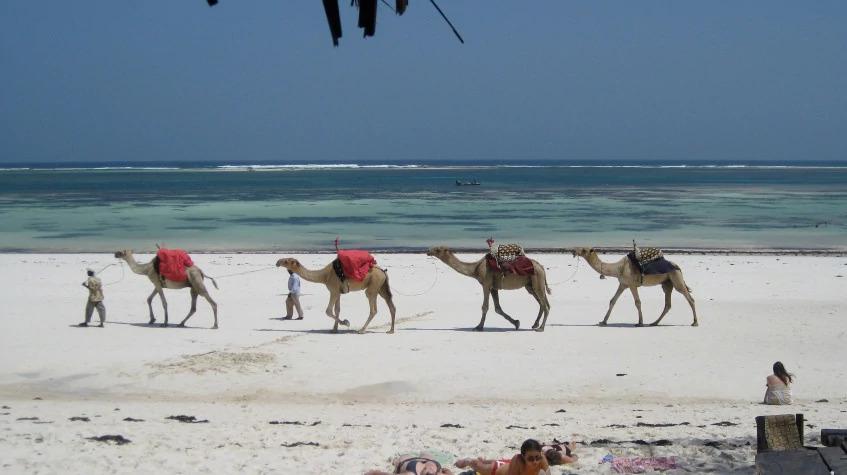
North Coast beaches such as Nyali and Bamburi, and South Coast beaches such as Diani, lie within a short drive of the city center and offer calmer, reef-protected swimming compared to open ocean stretches elsewhere on the coast. These areas host most of Mombasa's resort accommodation and are a common extension for travelers who want beach time after an inland safari. Diani, reached via the Likoni ferry crossing to the south, is known in particular for its long stretch of powder-white sand and offshore coral reef, and steady afternoon winds during the northeast monsoon season make it a base for kitesurfing as well as swimming.
Mombasa's tropical coastal climate keeps daytime temperatures between roughly 24 and 32 degrees Celsius throughout the year, with humidity that makes the heat feel more intense than the numbers alone suggest. The long rains fall between April and June, while a shorter, lighter rainy period arrives around October and November, and the driest, most comfortable stretch for sightseeing generally runs from June through September.
Within the city, tuk-tuks and shared matatu minibuses are the most common ways to get around short distances, while the Likoni ferry remains the main link between Mombasa Island and the South Coast and is notorious for long queues of pedestrians and vehicles at peak times. Causeways and bridges connect the island to the mainland to the north and west, and most visitors rely on a hired driver or pre-arranged transfer rather than navigating the ferry crossing independently.
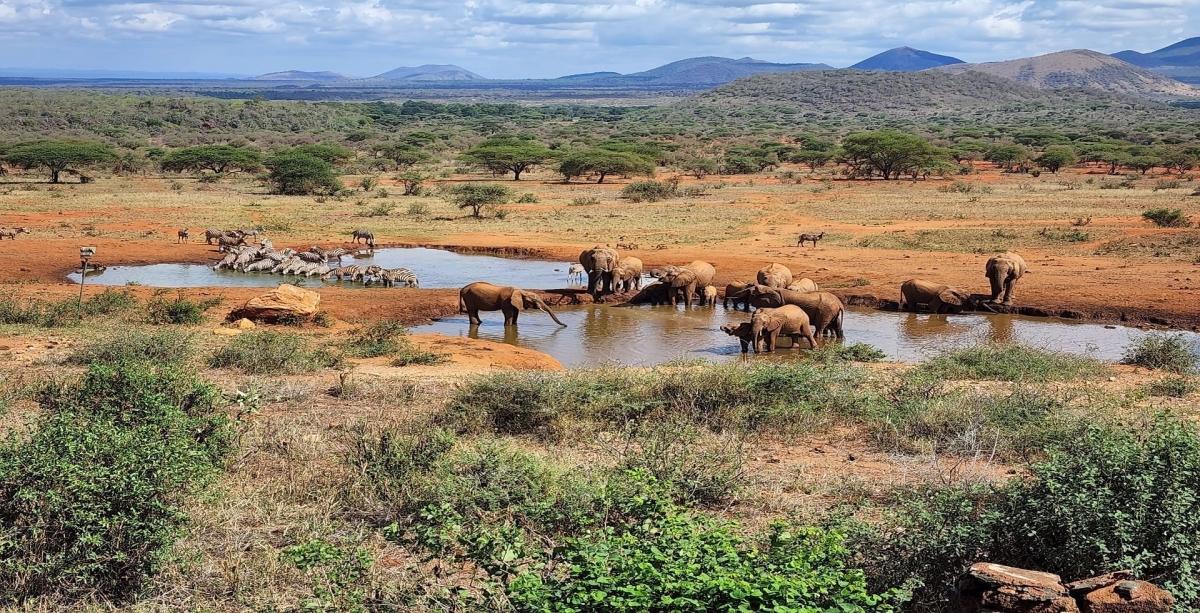
Tsavo East and Tsavo West national parks lie a few hours inland by road, making a short safari extension a practical addition to a coastal stay in Mombasa. The eastern park in particular is known for its open plains and elephants reddened by the park's iron-rich dust, a contrast to the denser vegetation and volcanic scenery found further west. A short extension such as the 2 Days Tsavo East Safari is built around this pairing, combining Mombasa's coastal base with a short game-viewing trip into Tsavo's red-earth landscape, known for its large elephant herds.
Moi International Airport connects Mombasa to Nairobi with a flight of around an hour, while the Standard Gauge Railway offers a road-free alternative between the two cities in roughly four to five hours. Both options are more practical than the long coastal road route for travelers on a fixed schedule.