
Honduras Tours
100+ tours & activities
Explore Honduras Tours

About Honduras Tours
Honduras Tours take travelers through Central America's Caribbean coast and its Maya interior, pairing ancient ruins with reef diving in a single itinerary. The country's two signature draws sit at opposite ends of the map: the carved stone city of Copán near the Guatemalan border, and the Bay Islands of Roatán and Utila off the northern coast. Between them lie pine-covered highlands, colonial towns and Garífuna fishing villages along the shore.
Most visitors combine a few days inland with a longer stretch on the islands, and Honduras works well as a standalone trip or as part of a longer South America itinerary that continues along the Caribbean coast. Tours here tend to run smaller and slower paced than in neighboring countries, reflecting a destination that remains relatively undeveloped for tourism.
Getting to Honduras
Honduras borders Guatemala to the west, El Salvador to the south and Nicaragua to the southeast, with a much shorter Pacific coastline opposite its longer Caribbean shore. San Pedro Sula and Tegucigalpa both operate international airports on the mainland, while travelers heading straight for the Bay Islands can also fly directly into Roatán, bypassing the mainland if diving is the main goal.
Copán and the Maya Ruins
Copán is one of the most important Maya sites for understanding the civilization's written history. The ruins are known for their detailed carved stelae and the Hieroglyphic Stairway, a stone staircase inscribed with the longest known Maya text, recording centuries of dynastic history. Copán was inscribed as a UNESCO World Heritage Site for the quality and completeness of its carvings, which rank among the finest produced anywhere in the Maya world.
The nearby Copán Sculpture Museum displays many of the site's well-preserved carvings indoors, protecting them from weather while the open-air pieces at the ruins themselves convey the original scale of the plazas, ball court and stepped pyramids that once formed the city center.
Roatán and the Bay Islands
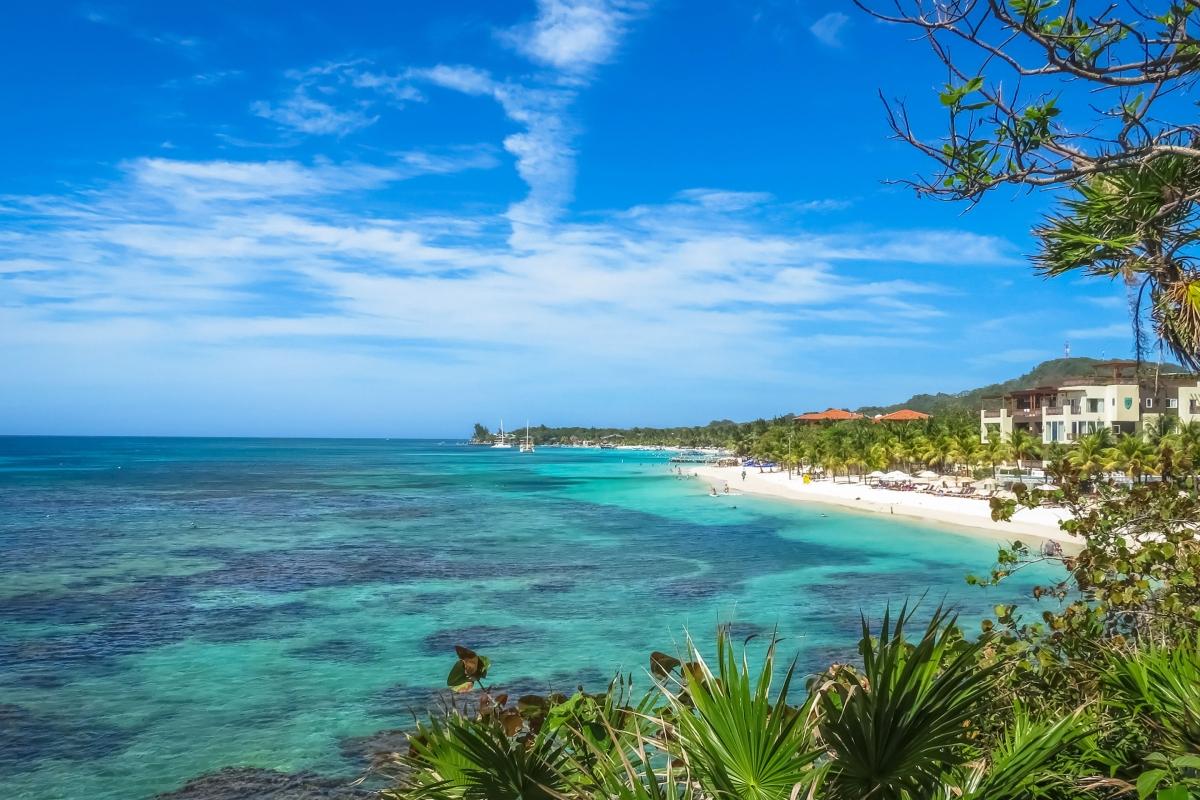
Roatán and Utila sit along the Mesoamerican Barrier Reef, the second-largest barrier reef system in the world after Australia's Great Barrier Reef. The islands are known among divers for water that stays warm and clear through most of the year, plus prices that run lower than at many other Caribbean dive destinations. Utila in particular has built a reputation as an affordable base for open-water certification courses, while Roatán offers a wider range of resorts and day-boat operators.
Garífuna Culture on the North Coast
Honduras' Caribbean coast is home to Garífuna communities descended from West African and Indigenous Caribbean ancestry, groups that intermixed on the island of St. Vincent before being resettled along the Central American coast in the late 18th century. Towns such as Trujillo and Sambo Creek offer a chance to experience this culture directly through its own language, music and food traditions, often paired with beach time or a stop en route between Copán and the Bay Islands.
Honduras Tour Packages
Multi-day packages typically link the jungle interior with the northern coast, combining ruins, nature reserves and island time into one route. 6 days Natural Caribbean Honduras: Jungle, Garífuna Culture, and Hidden Paradises is one example, moving from forest and river landscapes to coastal and Garífuna communities over less than a week.
Best Time to Visit Honduras
The dry season, running roughly from March to May, offers the most reliable weather for both inland sightseeing and diving visibility. November through February stays cooler and is generally comfortable, while the wettest months fall between September and October, when heavier rain can affect travel along the north coast. Hurricane season technically runs from June through November, though direct hits on Honduras are less frequent than in areas farther north in the Caribbean.