
Free Cancellation
Jamaica sits in the Caribbean Sea south of Cuba, a mountainous island of roughly 4,200 square miles known equally for its beaches and its music. Montego Bay and Negril draw the largest share of visitors with calm turquoise water and long stretches of sand, but the interior holds a different kind of trip entirely: coffee farms clinging to the slopes of the Blue Mountains, waterfalls fed by fast-moving rivers, and small towns where reggae was born and is still played live most nights of the week.
Tours here range from a single resort excursion to a multi-day loop around the island, and both approaches work well given how compact the island is. A traveler based in Montego Bay can reach Negril's Seven Mile Beach in under an hour, while Ocho Rios and the north coast waterfalls sit closer to two hours east. Cockpit Country, a rugged limestone interior between Montego Bay and the north coast, remains one of the least visited parts of the island despite its role as a stronghold for the Maroons, communities of formerly enslaved people who resisted British forces for generations. These trips can also be booked as part of a broader regional tour collection for travelers combining Jamaica with other stops.
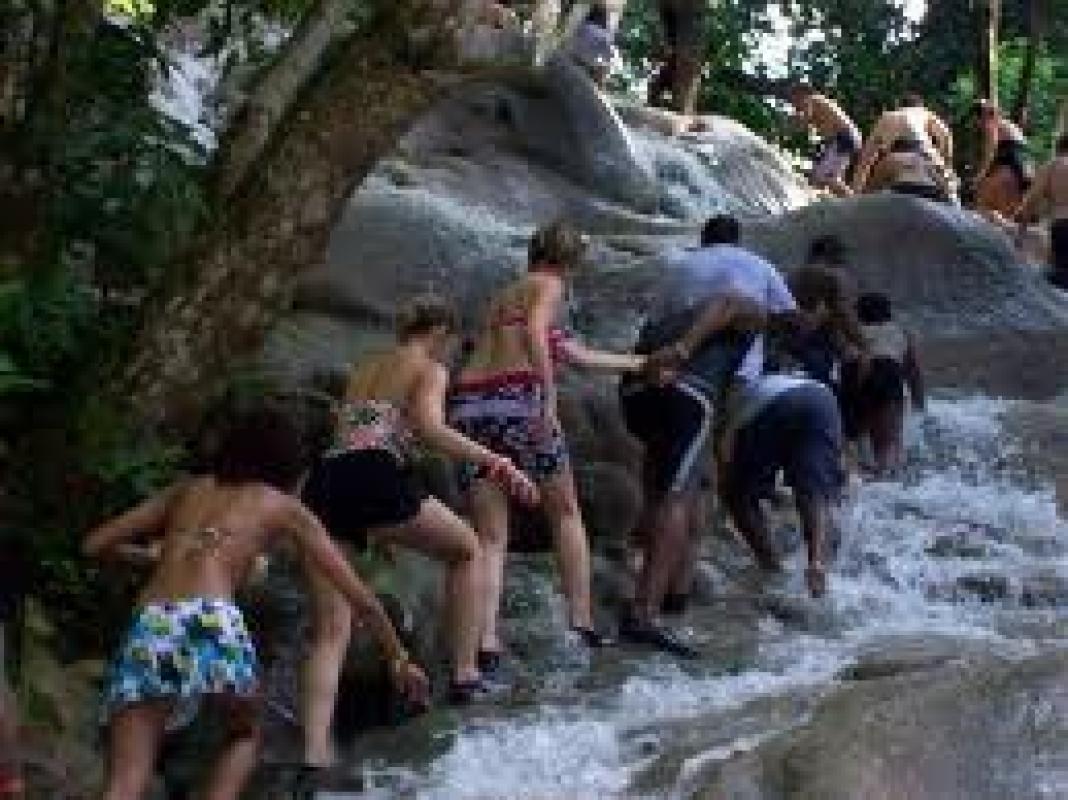
Dunn's River Falls, near Ocho Rios, is the island's signature natural attraction: a 600-foot terraced waterfall that visitors climb hand in hand, guided by local staff over smooth limestone steps. The falls empty directly onto the beach, so a morning climb is often followed by an afternoon swim in the same bay. Ocho Rios also anchors cruise-ship arrivals, which keeps its market stalls, jerk stands, and craft vendors busy through most of the year. Montego Bay, farther west, has its own layered history, from the 1831 slave rebellion led by Sam Sharpe to the resort strip that now lines Gloucester Avenue.
South of Ocho Rios and inland from Kingston, the Blue Mountains rise to 7,402 feet at Blue Mountain Peak, Jamaica's highest point. The range is protected as a national park and UNESCO World Heritage Site, and its cool, misty slopes produce Blue Mountain coffee, one of the more expensive coffees in the world thanks to limited growing area and strict export rules. Farm tours here typically cover the full process from picking to roasting, with cupping sessions at the end. Guided hikes into the park itself, some starting before dawn to catch sunrise from the peak, are a quieter alternative to the coastal resorts.
Kingston, the capital, is where reggae took shape in the 1960s and 1970s, and the Bob Marley Museum there occupies the singer's former home and recording studio on Hope Road. Trench Town, the Kingston neighborhood where Marley and other early reggae musicians grew up, is now part of a heritage trail with murals and small museums. Outside Kingston, Nine Mile in Saint Ann Parish holds Marley's birthplace and mausoleum, and several tours combine the site with a stop in Ocho Rios. Devon House, a restored nineteenth-century mansion in Kingston built by one of the Caribbean's first Black millionaires, adds a quieter counterpoint to the music trail, with gardens and a well-known ice cream shop on the grounds. Every July, Montego Bay hosts Reggae Sumfest, one of the largest reggae and dancehall festivals in the world, drawing performers and fans from across the Caribbean and beyond.
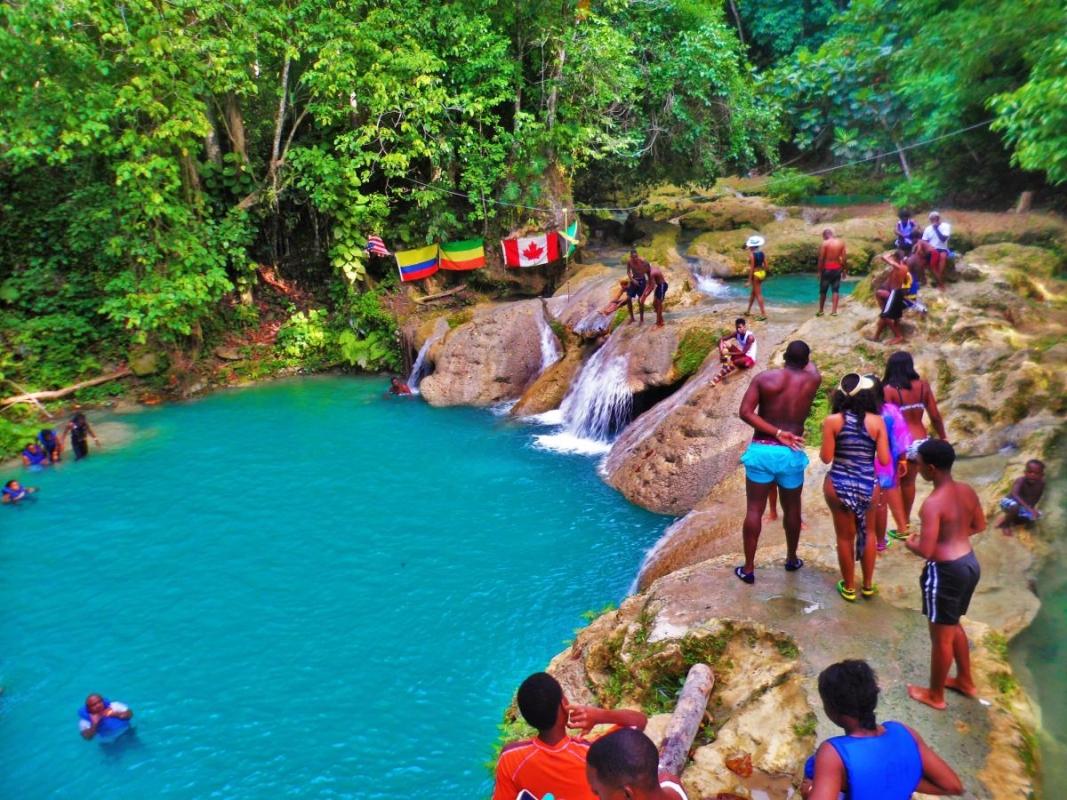
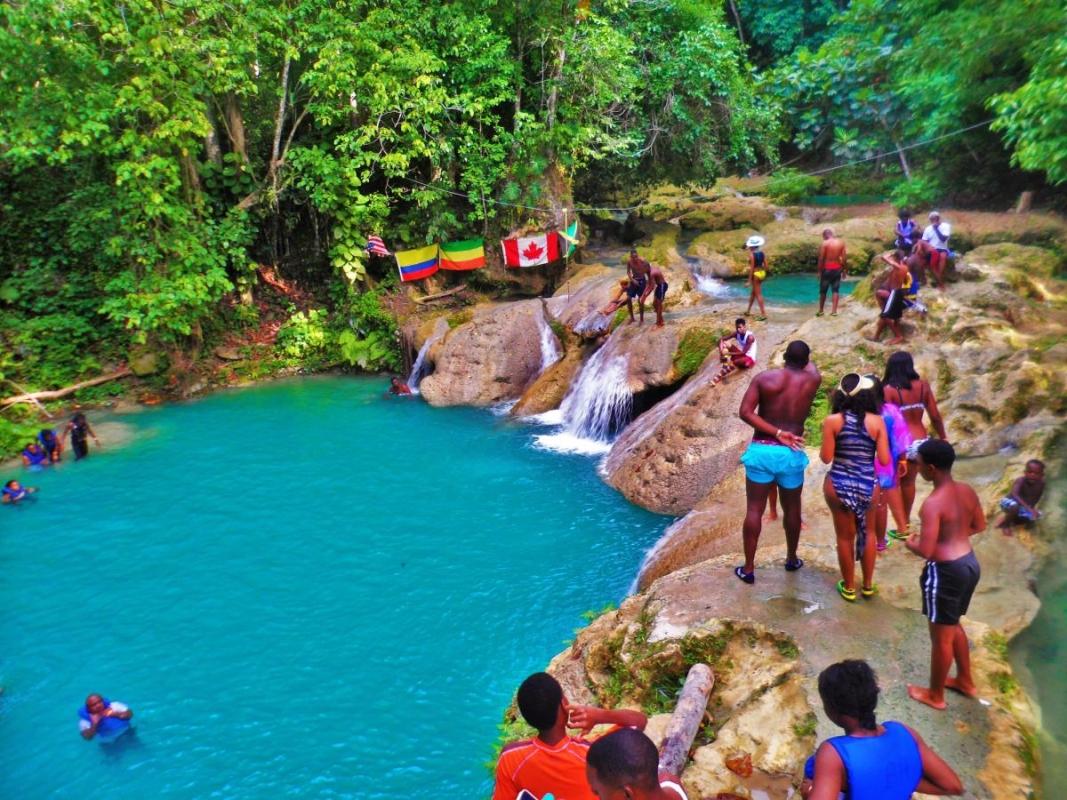
Bamboo rafting on the Rio Grande, near Port Antonio on the northeast coast, dates back to the 1950s and still moves at the same unhurried pace, a single guide poling a raft downriver past overhanging trees. Nearby, the Blue Lagoon, a deep, mineral-rich cove made famous by the 1980 film of the same name, offers calmer water for swimming. On the south coast, the Black River winds through one of the Caribbean's largest mangrove wetlands, where boat safaris regularly spot American crocodiles, while YS Falls, a series of seven cascades near the river, adds rope swings and a canopy tour to the standard waterfall visit. The Appleton Estate distillery, operating in St. Elizabeth Parish since 1749, gives a working look at how Jamaican rum is made.
Jerk cooking defines much of Jamaican cuisine: chicken or pork marinated in scotch bonnet pepper, allspice, thyme, and scallion, then smoked slowly over pimento wood. Boston Bay near Port Antonio is often credited as the dish's origin point, and roadside jerk pans are common across the island. Ackee and saltfish, the national dish, pairs a mild native fruit with salted cod, usually served for breakfast alongside fried dumplings and festival, a slightly sweet cornmeal fritter.
Day tours from the resort areas cover most of the island's headline sights without requiring a change of hotel. The Experience the Best of Ocho Rios: Dunn's River Falls & Sightseeing tour is a straightforward example, pairing the waterfall climb with stops around town in a single outing. Other operators build in the Blue Mountains, Kingston's music sites, or river tubing on the Martha Brae as add-ons depending on how much time a traveler has.
The dry season from December through April brings the most reliable weather and the busiest resorts, particularly around Christmas and February half-term breaks. Hurricane season runs June through November, with the highest storm risk in September and October, though direct hits are infrequent. Shoulder months like May and late November often combine lower prices with good conditions for hiking and waterfall visits.