
Free Cancellation



-high.jpg&w=1920&q=75 "Zanzibar: Jozani Forest with Red Colobus Monkey & Transfer")
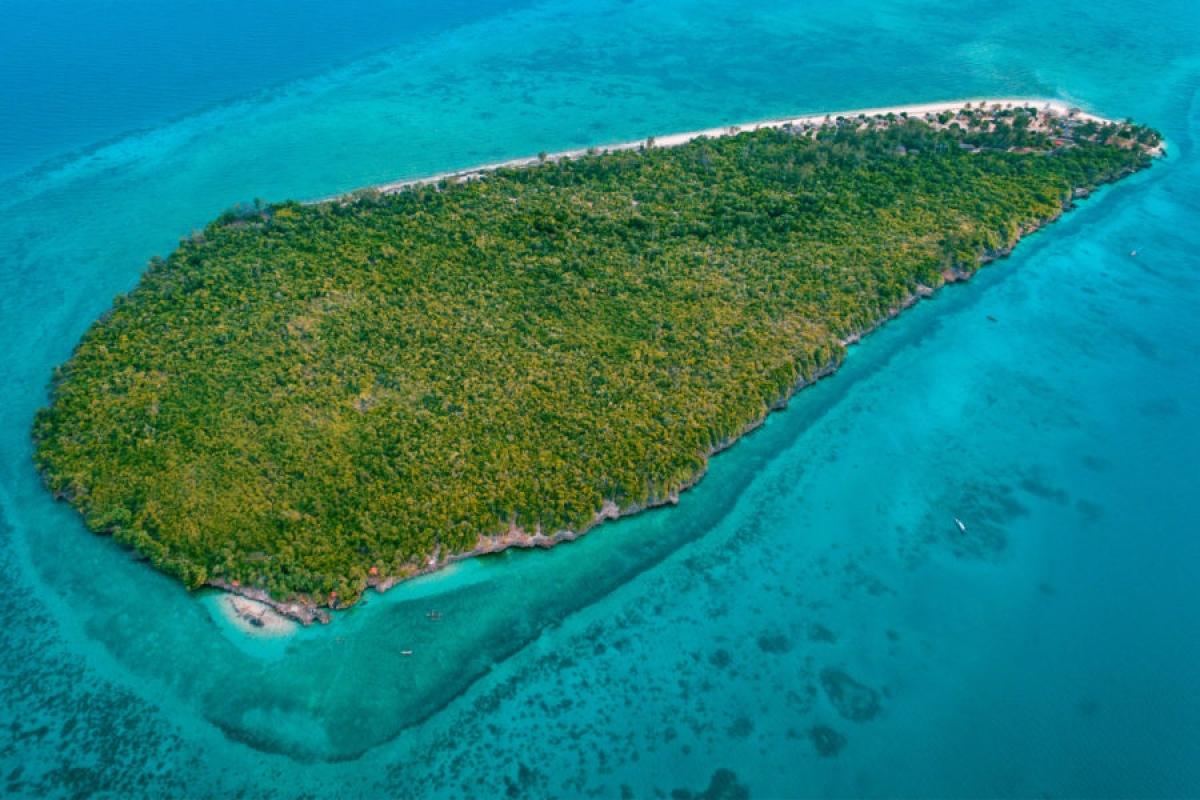
Zanzibar is a semi-autonomous archipelago off Tanzania's east coast, made up primarily of Unguja Island, commonly called Zanzibar Island, and the smaller Pemba Island to the north. It is one of the most visited stops covered by Tanzania Tours, combining beach time with a documented history stretching back to Persian, Arab, Indian and European trading eras. Zanzibar has its own president and House of Representatives, operating with a degree of autonomy within the United Republic of Tanzania. Stone Town, the old quarter of Zanzibar City, was inscribed as a UNESCO World Heritage Site in 2000 for its coral-stone architecture and Swahili urban layout.
Beyond Stone Town, the island splits roughly into a calmer, historically rich west coast and a string of white-sand beaches along the north and east. Nungwi and Kendwa in the north offer swimming largely unaffected by tides, while Paje and Jambiani on the east coast see more dramatic tidal shifts and have become centers for kitesurfing. Zanzibar's nickname as the Spice Island reflects its 19th-century role as a major exporter of cloves, nutmeg and cinnamon, a history still visible on working spice farms near Stone Town.
Stone Town's narrow streets hold some of the archipelago's most significant historical sites. The former slave market, once one of East Africa's largest trading points for enslaved people, is now the site of Christ Church Cathedral, built in the 1870s partly as a memorial to those held there. Freddie Mercury, born in Zanzibar in 1946, spent his early childhood in a house near Kenyatta Road that visitors can still see from the outside. Carved wooden doors, a distinctive feature of Swahili and Omani architecture, remain visible throughout the old town's alleys.
The House of Wonders, completed in 1883 as a ceremonial palace and once the tallest building in East Africa, stands near the harbor and was among the first structures in the region fitted with electricity and an elevator. Part of the building collapsed in 2020 and restoration work has continued since. Nearby, the Old Fort, built by Omani forces in the early 18th century, now hosts cultural performances and a small amphitheater within its coral-stone walls.
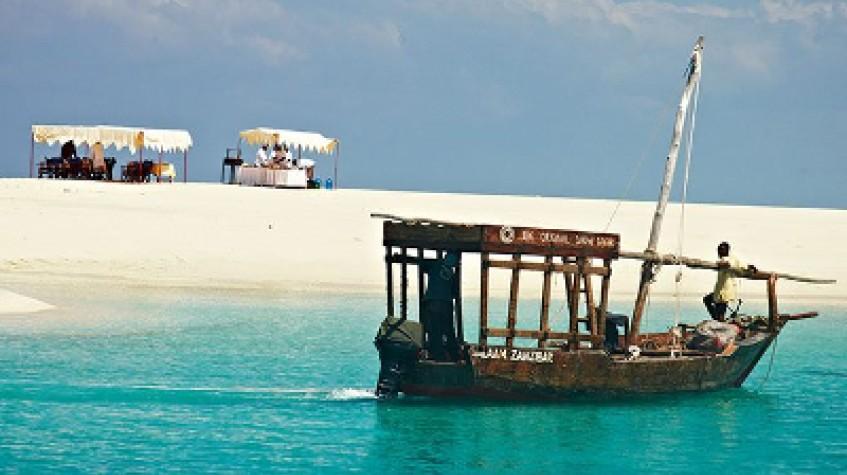
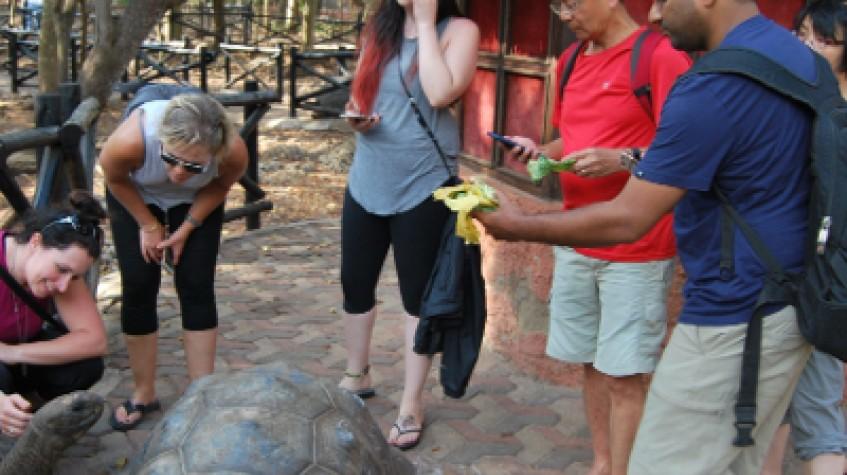
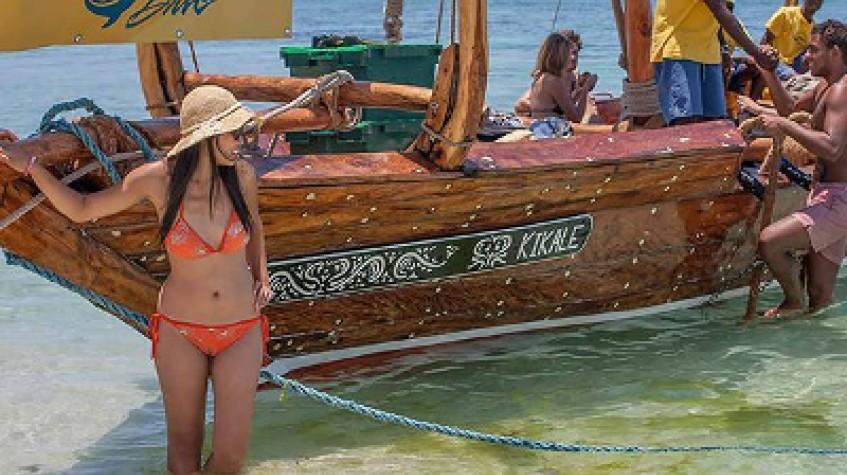
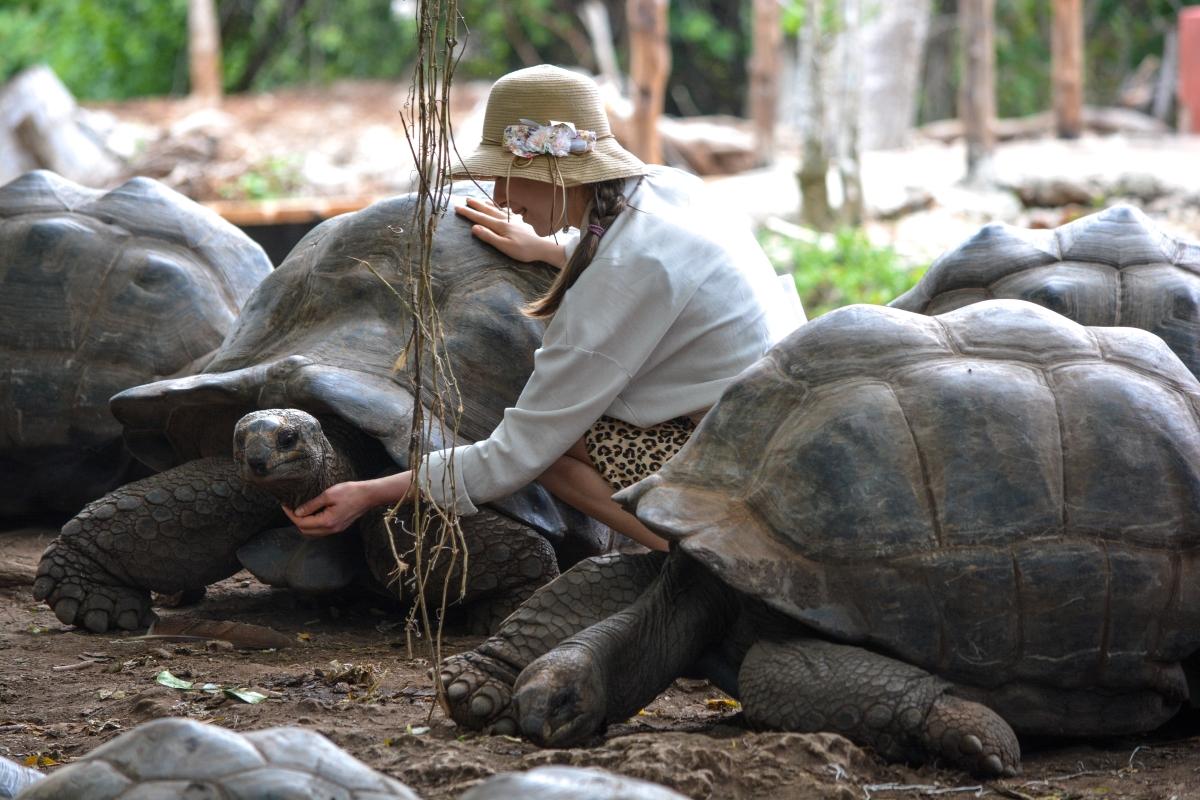
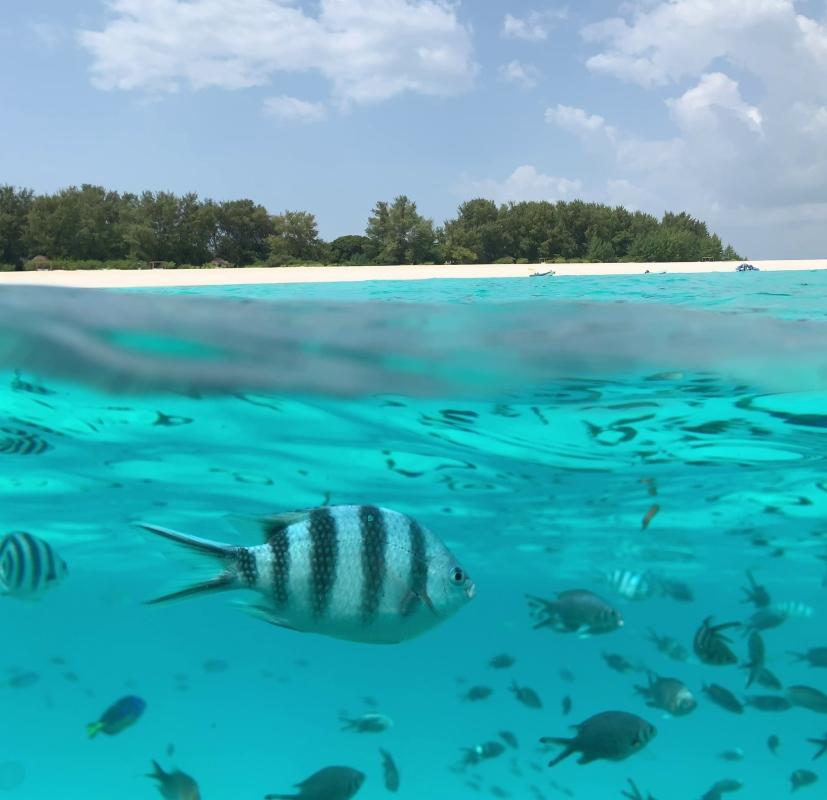
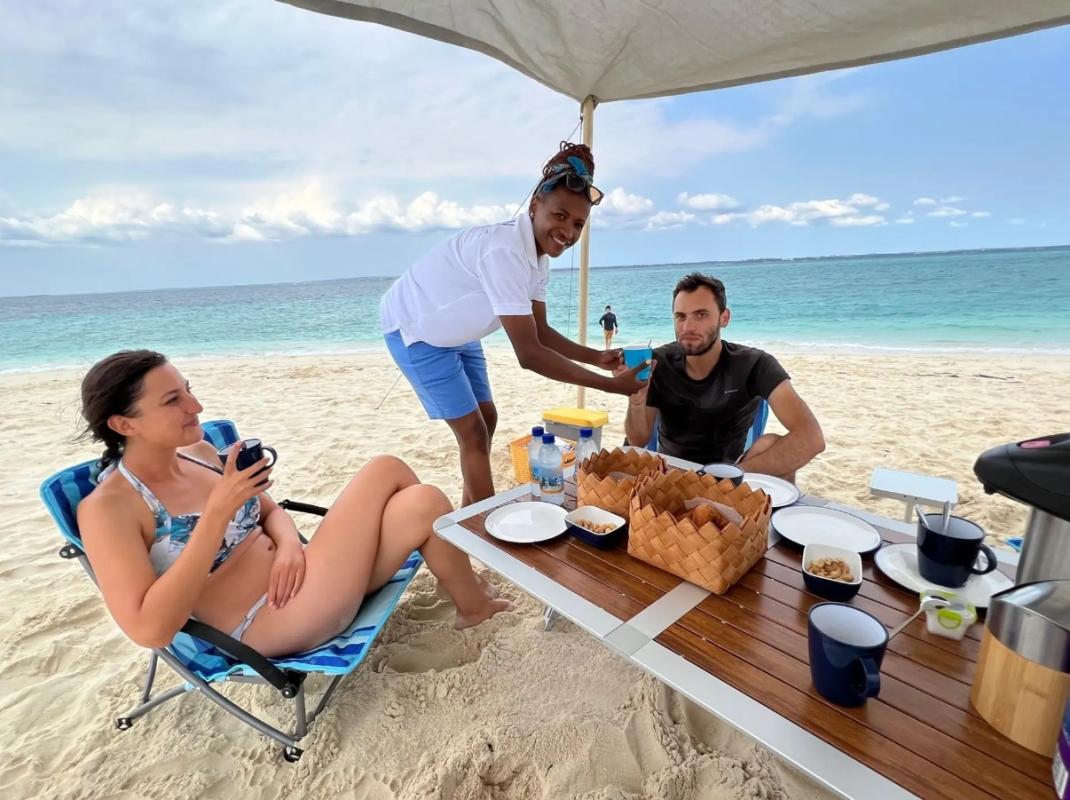
A short boat ride from Stone Town leads to Prison Island, officially Changuu Island, which was built as a quarantine station in the 19th century rather than a working prison and today functions as a sanctuary for Aldabra giant tortoises introduced from Seychelles. Nakupenda Beach, a sandbank that appears off the southwest coast at low tide, is a common destination for day trips built around snorkeling and a beach lunch. Both sites are typically visited by boat as half-day excursions from Zanzibar City.
The tortoises on Prison Island descend from a small group given by the British governor of Seychelles in the late 19th century, and the population has grown enough that keepers now run feeding sessions visitors can observe up close. Snorkeling around the island's fringing reef is often paired with the tortoise visit, since calm, shallow water surrounds much of the shoreline.
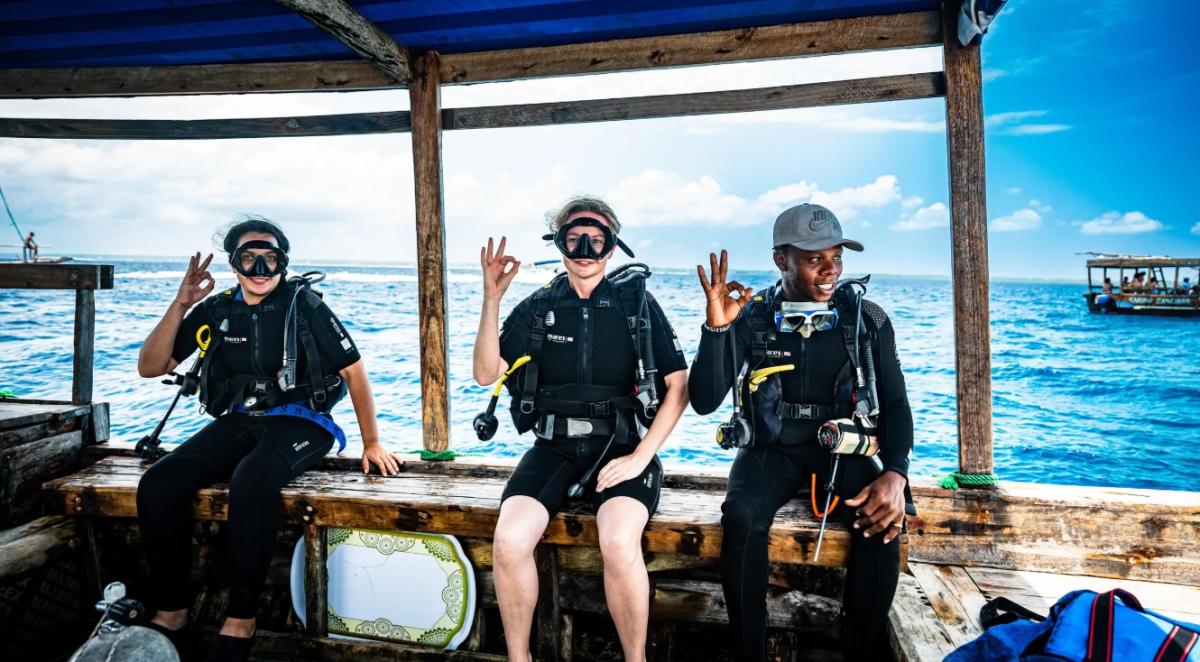
Paje Beach, on the island's southeast coast, has grown into one of East Africa's main kitesurfing destinations, helped by consistent trade winds and a wide, shallow lagoon at low tide. Snorkeling and diving trips run from several coastal towns, including excursions to Mnemba Atoll off the northeast tip of the island. Visitors splitting time between history and beach activity often base themselves in Stone Town for a few nights before moving to the coast.
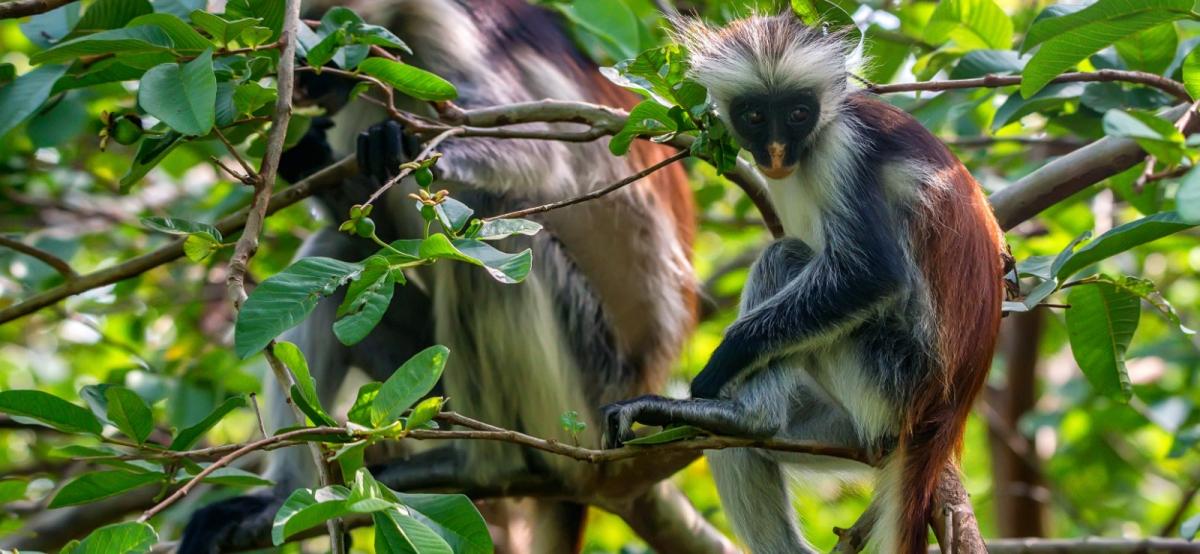
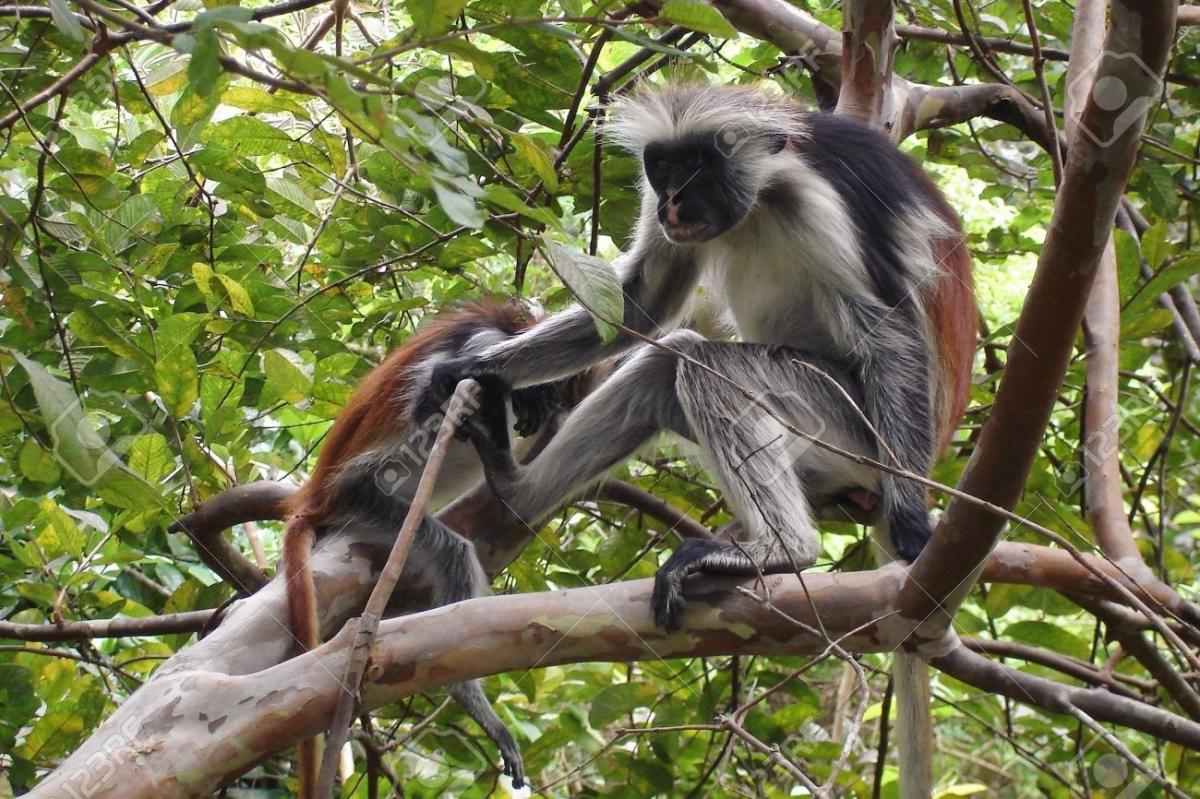
Inland from the east coast, Jozani Chwaka Bay National Park protects one of the last patches of natural forest on the island and is home to the Zanzibar red colobus monkey, a subspecies found nowhere else in the world. Guided boardwalk trails through the park's mangrove section are usually paired with monkey viewing, and the park sits conveniently along the route between Stone Town and the beaches of Paje or Jambiani, making it an easy stop on the way to or from the coast.
Zanzibar has two dry seasons, from June to October and from December to February, both offering the most reliable weather for beach days and boat trips. The long rains fall between March and May, when some hotels close temporarily and boat trips to Prison Island or Nakupenda Beach may be affected by weather. Temperatures stay warm throughout the year, so rainfall matters more for planning than heat.
Stone Town rewards slow exploration on foot, since its layout of narrow lanes was built for pedestrians rather than vehicles and many sites sit within walking distance of each other. A guided outing such as the Old Stone Town Tour typically covers the former slave market and cathedral, the old fort, the exterior of the House of Wonders, and the daily produce and fish markets, giving context that is easy to miss without a local guide.
Spice tours run separately from the town walk and usually visit working farms outside the city, where guides point out cloves, vanilla, cinnamon bark and other crops still grown much as they were during the 19th-century plantation era. Demonstrations often include tasting fresh nutmeg, cardamom and black pepper straight from the plant, followed by a sample meal cooked with the same spices toward the end of the visit. Many visitors pair the two half-day trips together, splitting a morning between Stone Town and an afternoon spice farm, or the reverse.