-high.jpg&w=1920&q=75 "8 Day 7 Night Guangzhou 3 Night Hong Kong Tour")
Free Cancellation
Hong Kong Tours cover a compact territory where dense high-rise skyline, harbor views and Cantonese food culture sit within a short ferry or tram ride of forested hiking trails and outlying islands. Built around Victoria Harbour, the city divides between Hong Kong Island and the Kowloon peninsula, with the New Territories and islands such as Lantau extending beyond both. Reclaimed land along the harbor has expanded the built-up area considerably since the mid-20th century, though the surrounding hills and outlying islands remain largely undeveloped.
Decades as a British colony followed by return to Chinese sovereignty in 1997 left Hong Kong with a distinct mix of Cantonese, British and mainland Chinese influences still visible in its architecture, legal system and street life. Many visitors treat Hong Kong as a short stopover between longer trips through Asia, and the city is well suited to that role: its airport, metro and ferry network make it possible to see the main sights in two or three days.
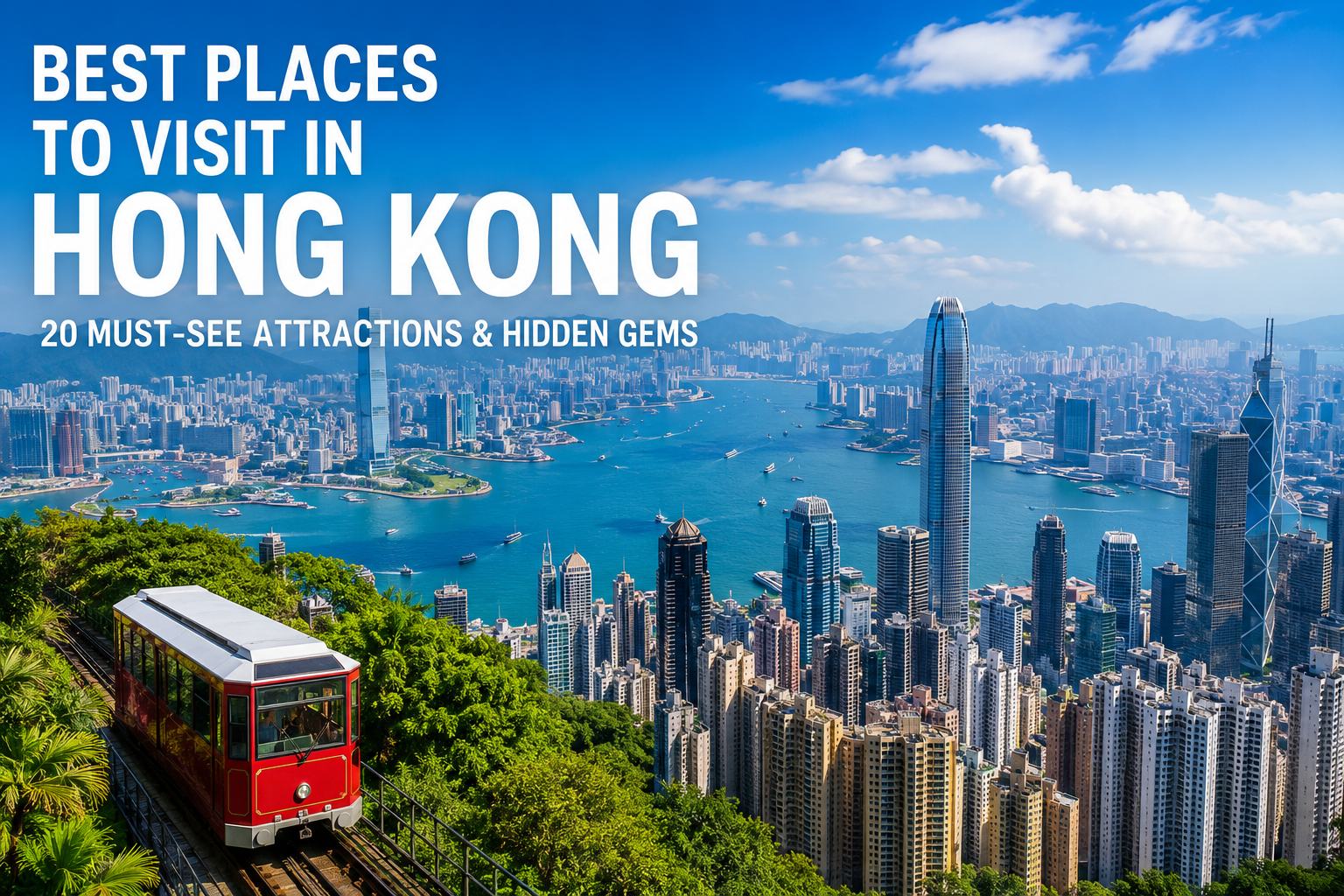
The Peak Tram has carried passengers up Victoria Peak since 1888, climbing a steep track to the highest point on Hong Kong Island. The summit viewing terraces look down over the harbor, the Kowloon skyline and, on clear days, the hills of the New Territories beyond.
Crossing Victoria Harbour since 1888, the Star Ferry still links Hong Kong Island and Kowloon for a fraction of the cost of other harbor transport. At night, the buildings on both shores light up in a coordinated display visible from either waterfront.
Temple Street Night Market in Kowloon fills with food stalls, fortune tellers and vendors after dark, while the Mong Kok district nearby packs specialized markets for flowers, goldfish and street fashion into a few dense blocks. Both offer a street-level look at daily commerce that contrasts with the city's shopping malls and skyscrapers.
The Tian Tan Buddha, known locally as the Big Buddha, sits on a hilltop on Lantau Island and is reached by the Ngong Ping 360 cable car from Tung Chung. The bronze statue, seated above the Po Lin Monastery, is among the largest of its kind and draws visitors for both the site itself and the cable car views over the island's hills and coastline.
Beyond Lantau, ferries from Central reach smaller islands such as Cheung Chau and Lamma, both largely free of cars and known for seafood restaurants along their waterfronts. Hong Kong's country parks cover roughly forty percent of its land area, and trails such as the MacLehose Trail wind through hills and along coastline within a short ride of the built-up city center.
Dim sum, small dishes traditionally served with tea, remains central to Hong Kong dining, with teahouses ranging from decades-old establishments to modern restaurants that still send out trolleys of steamed dumplings and buns. Cantonese roast meats, congee and noodle soups round out a food scene shaped by mainland Chinese, British and international influences layered over more than a century.
Markets and cha chaan teng, informal Hong Kong-style cafes serving a mix of Cantonese and Western dishes, offer a more casual alternative to dim sum halls and remain popular for quick, affordable meals throughout the day.
Because Hong Kong sits close to mainland China, several packages combine it with cities such as Guangzhou into a single regional itinerary. 8 Day 7 Night Guangzhou 3 Night Hong Kong Tour follows this pattern, pairing time in Guangzhou with several nights based in Hong Kong.
The MTR subway network reaches most of the territory quickly and cheaply, supplemented by trams on Hong Kong Island, buses, ferries and the Peak Tram. An Octopus card covers fares across nearly all of these systems, making it possible to move between neighborhoods and islands without planning around individual tickets. Taxis remain relatively affordable, and cross-harbour tunnels connect Hong Kong Island with Kowloon for those who prefer road transport over the MTR or ferries.
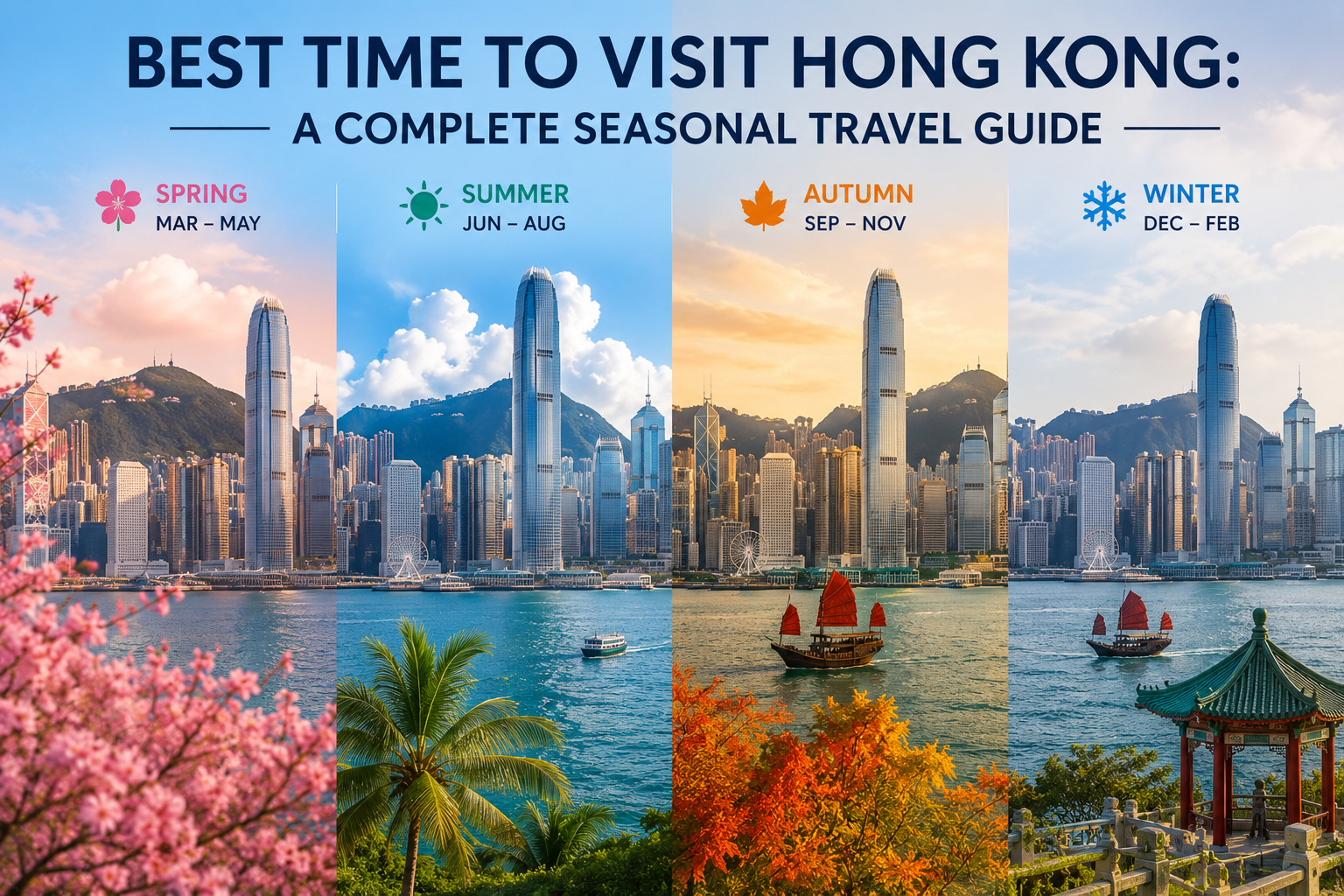
October through December brings the most comfortable weather, with lower humidity and mild temperatures suited to walking and outdoor sightseeing. Spring stays mild but often humid, while summer months from June to September bring heat, high humidity and the main risk of typhoons affecting travel plans. Typhoon signals occasionally suspend ferries and outdoor attractions for a day at a time during these months, so travelers visiting in summer should build some flexibility into their plans.