Free Cancellation


Qatar occupies a small peninsula on the Arabian Gulf, with its capital, Doha, holding most of the country's hotels, museums and dining within a compact, walkable stretch of coastline. As a major air hub for connections between Europe, Asia and Africa, Qatar draws both stopover travelers with a few hours to spare and visitors planning a stay of several days. Qatar's population, concentrated almost entirely within the greater Doha area, has grown rapidly over the past two decades alongside the country's energy exports. Tours here sit within the broader set of Asia tours covering the wider region.
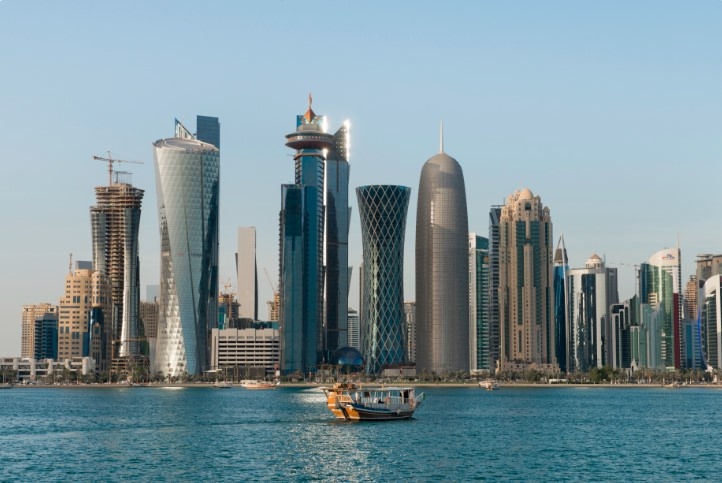
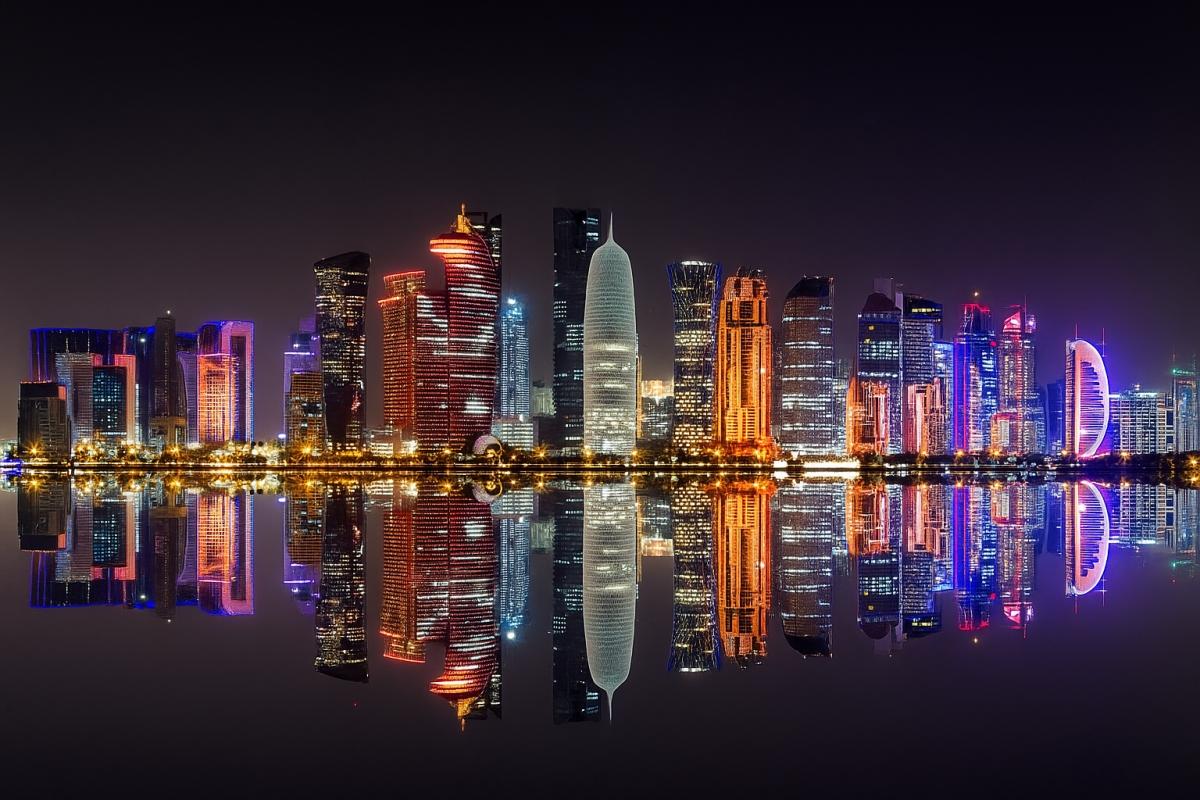
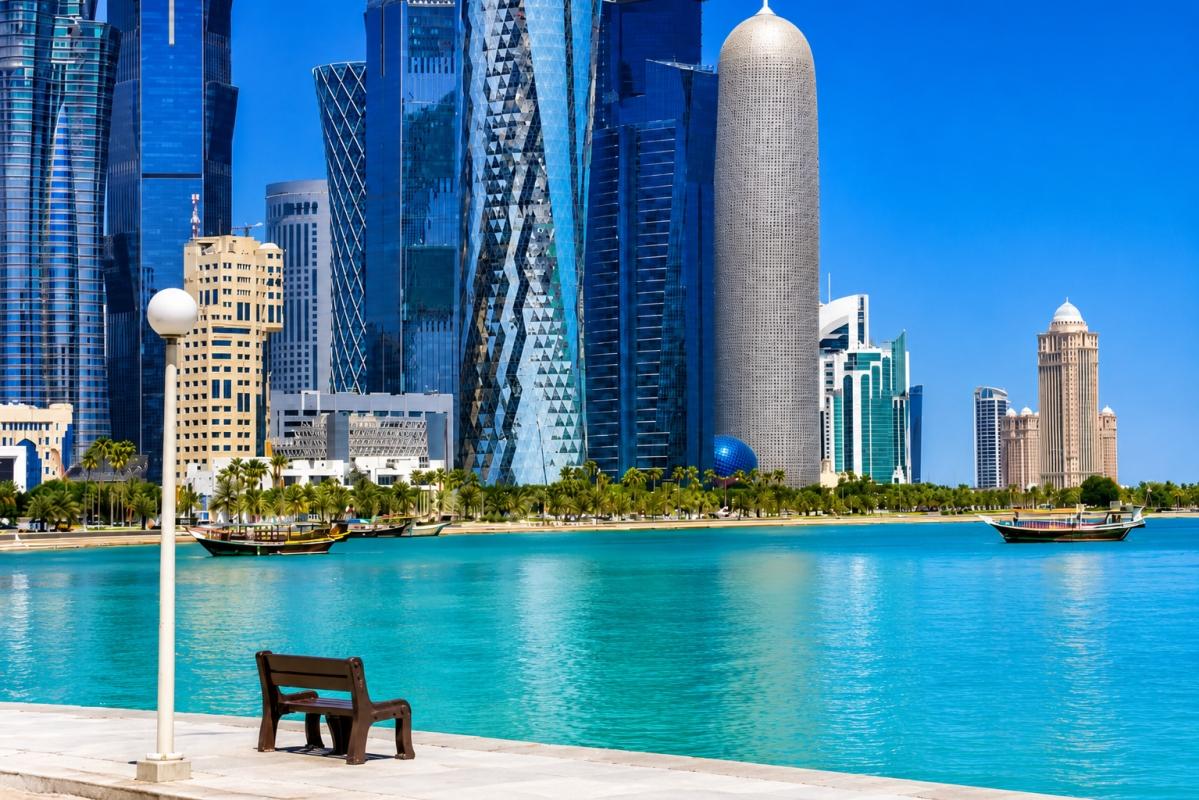
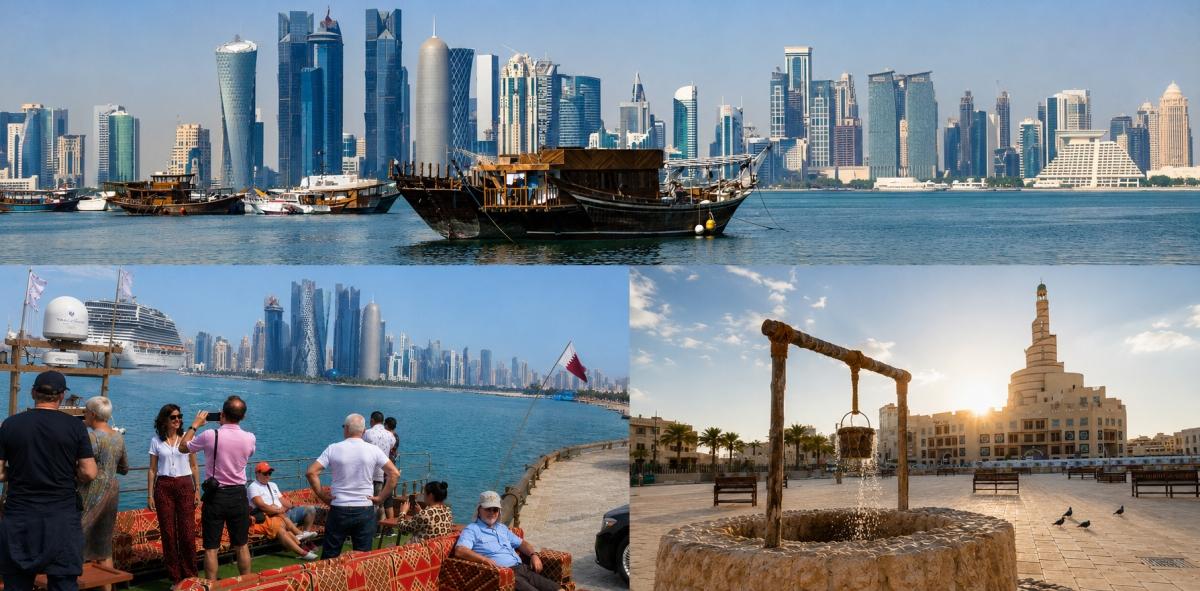
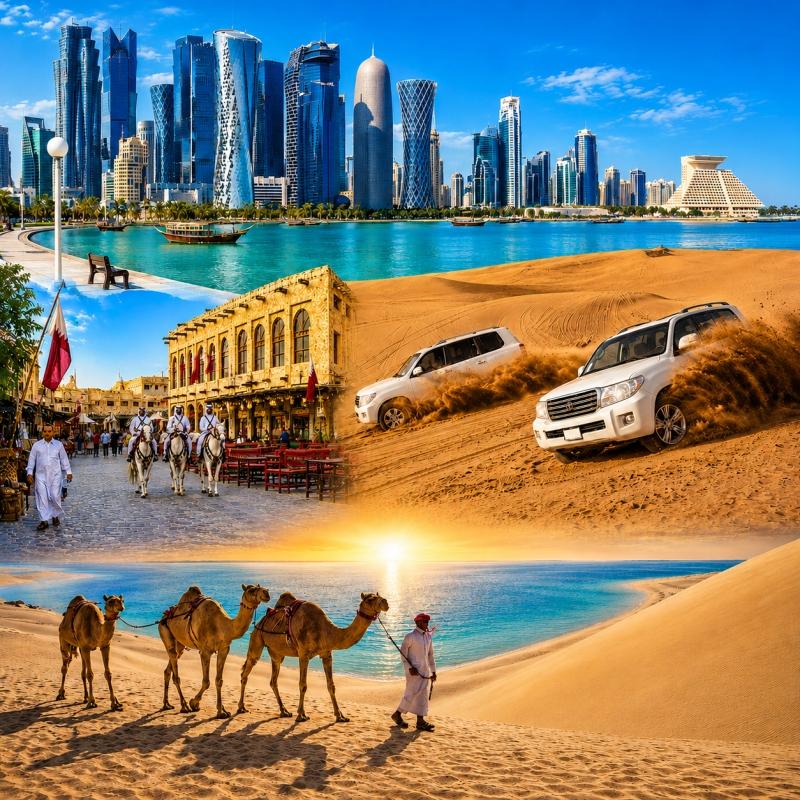
Doha's skyline, a cluster of glass towers along the West Bay district, has grown largely over the past two decades on revenue from the country's natural gas reserves, among the largest in the world. Several stadiums built for the 2022 FIFA World Cup remain in use for local matches and events, adding another recent layer to the city's skyline. Despite the modern construction, the city preserves an older waterfront character along the Corniche, a curved bayfront promenade lined with palm trees and views back toward the towers.
The Museum of Islamic Art, designed by architect I. M. Pei and set on its own island at the edge of the bay, holds a collection spanning more than a thousand years of Islamic art from Spain to Southeast Asia. Pei drew on centuries of Islamic architecture for the building's geometric form, a design he refined after visiting mosques and fortresses across the Middle East while researching the project. Along the Corniche, the National Museum of Qatar occupies a building shaped after the desert rose mineral formations found in the region, designed by architect Jean Nouvel. Its galleries trace the country's history from its pre-oil pearling economy through the discovery of natural gas and the rapid growth of Doha in recent decades. A dedicated gallery covers the pearling industry that supported the economy before oil and gas revenue took over in the mid-20th century.
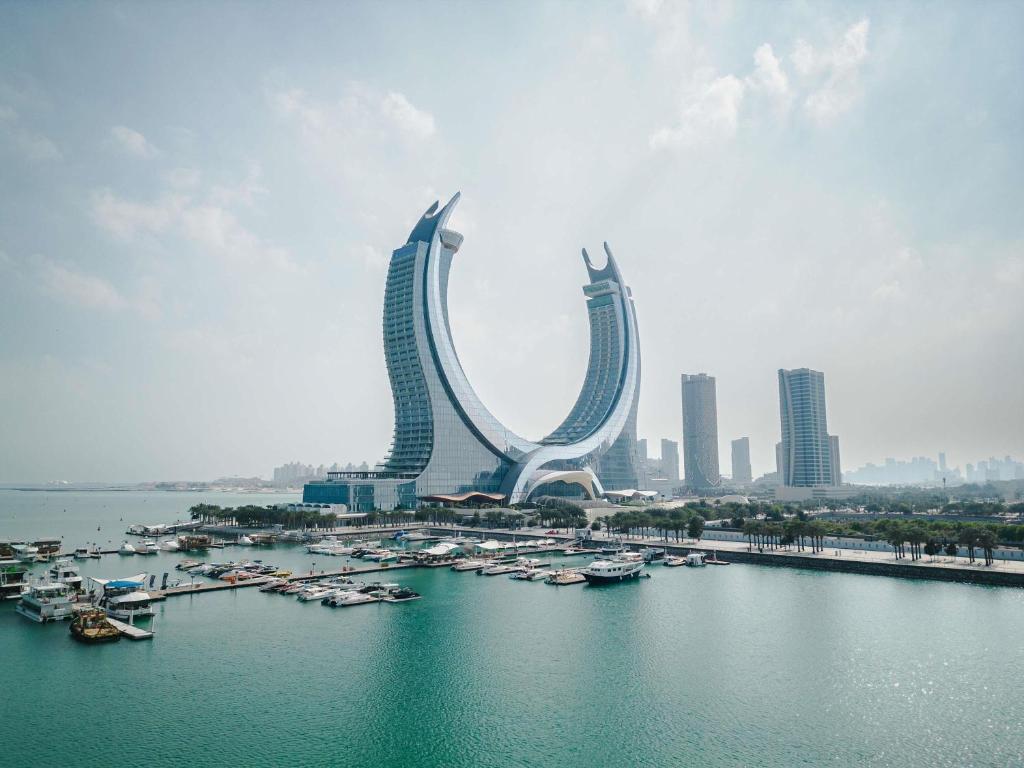
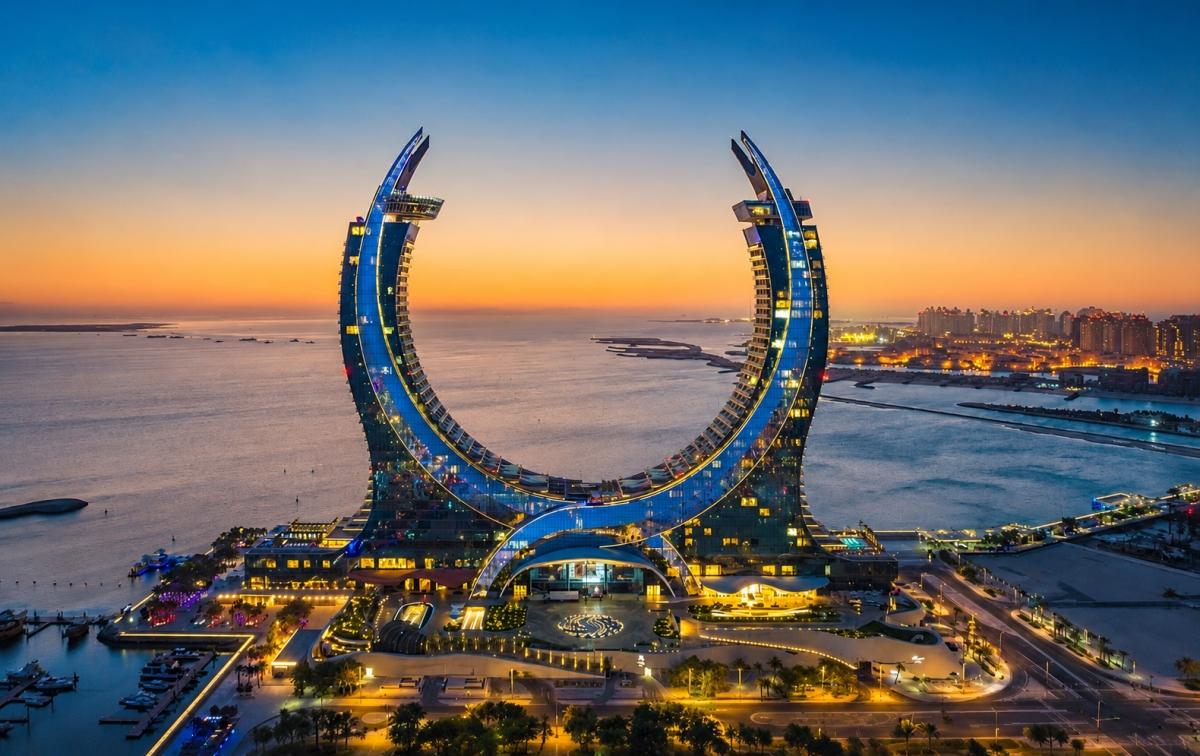
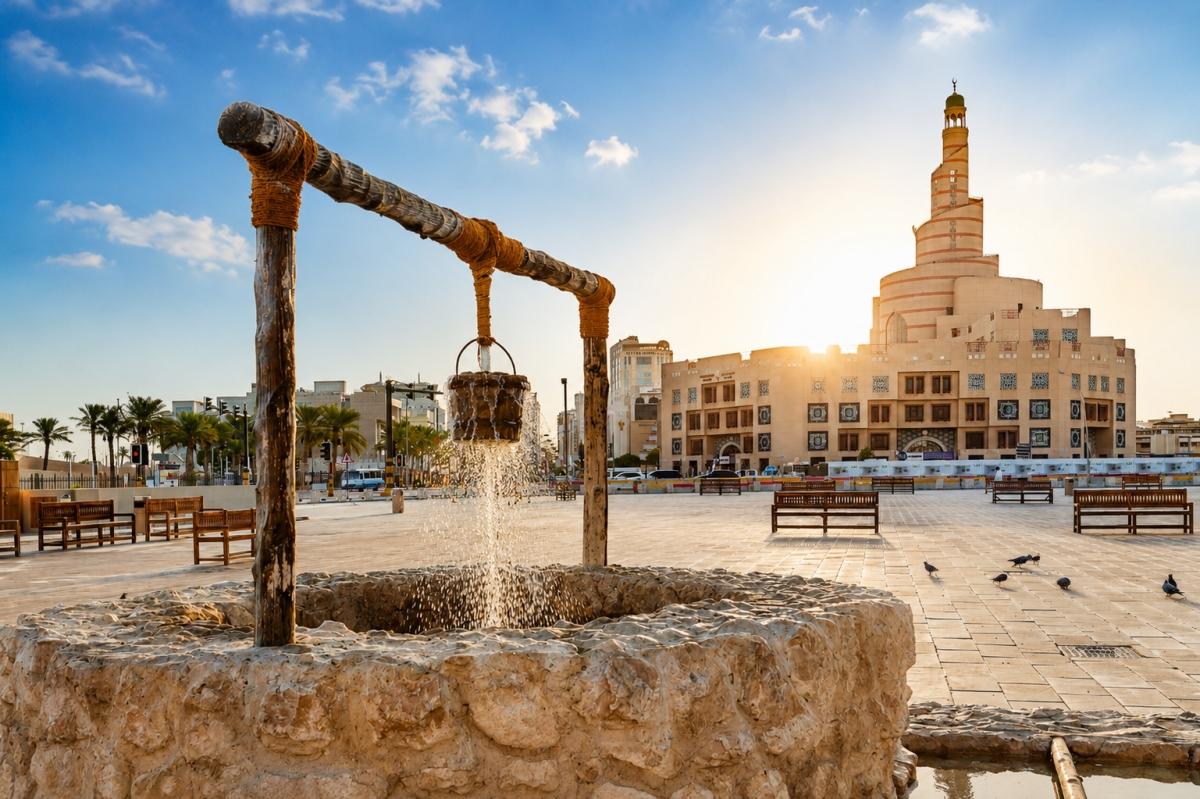
Souq Waqif occupies a restored historic market along the Corniche, with narrow lanes of spice stalls, textile shops, falconry supplies and restaurants built around the site's original mudbrick architecture. A dedicated falcon souq within the market sells birds, hoods and other equipment tied to a tradition of falconry that remains active in Qatar today. Restaurants here serve Qatari dishes such as machboos, a spiced rice dish with meat or fish, alongside karak, a strong milk tea common throughout the Gulf. Katara Cultural Village, built along the coast between West Bay and the newer Pearl-Qatar development, hosts an amphitheater, art galleries and a public beach within a single walkable district. The Pearl-Qatar, an artificial island built on reclaimed land nearby, adds a marina lined with restaurants and residential towers, a contrast to the older architecture found in the souq.
The Doha Metro, a driverless rail system that opened in 2019, connects the airport, West Bay, Souq Waqif and several other districts frequently visited by tourists. Taxis and ride-hailing apps cover the rest of the city, including routes to Katara and the Pearl-Qatar that fall outside the current metro lines. Distances within Doha are generally short compared to other Gulf capitals, and most sightseeing can be organized around a single day or two in the city.
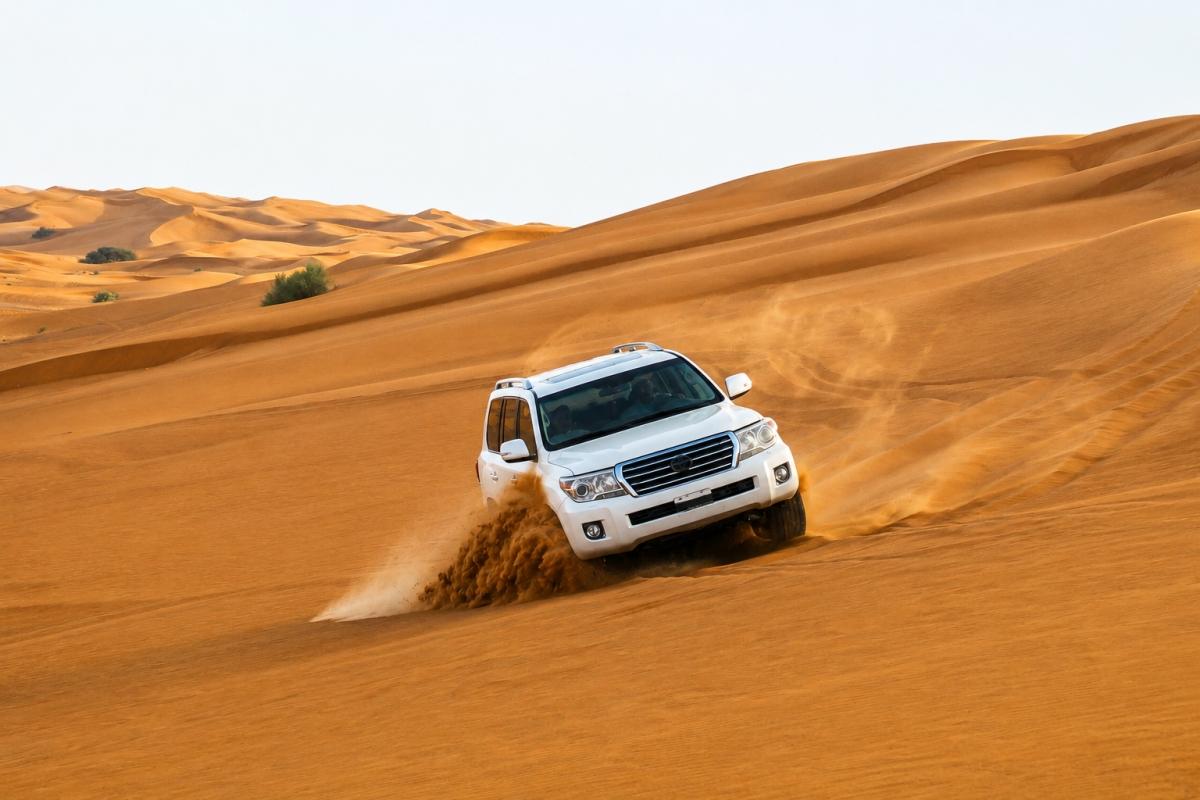
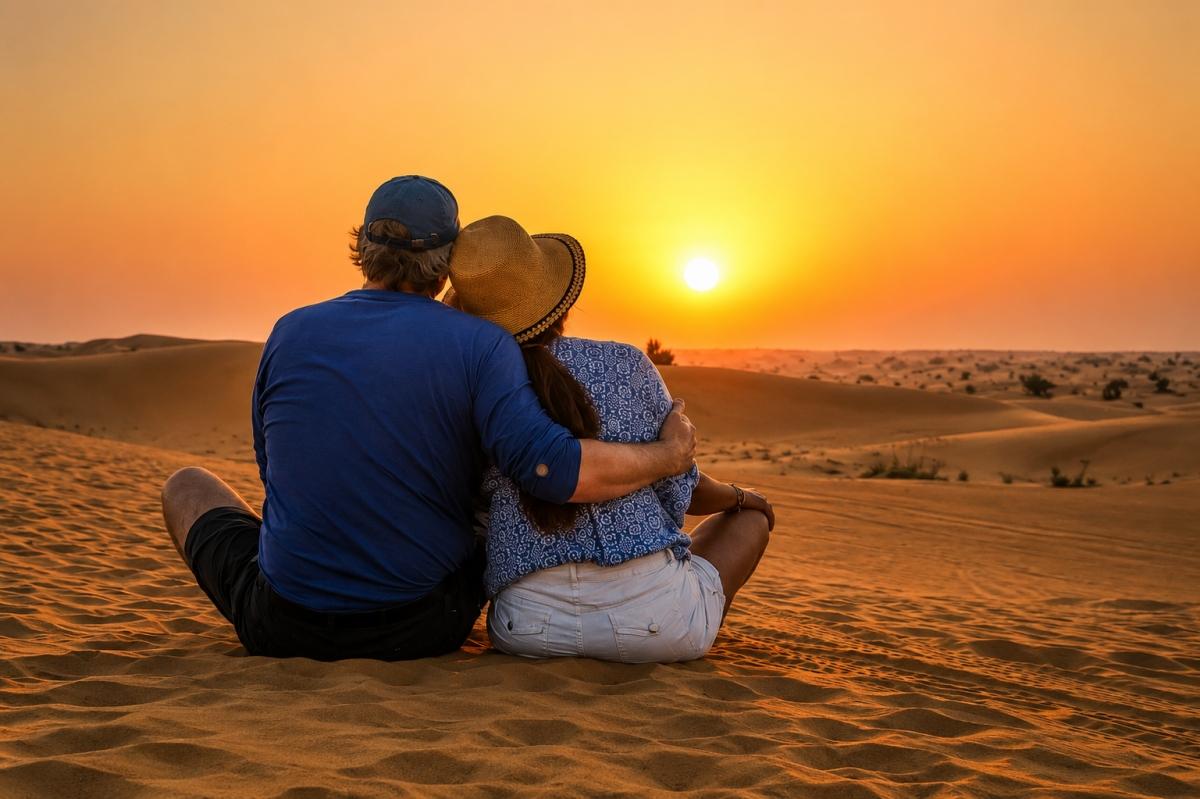
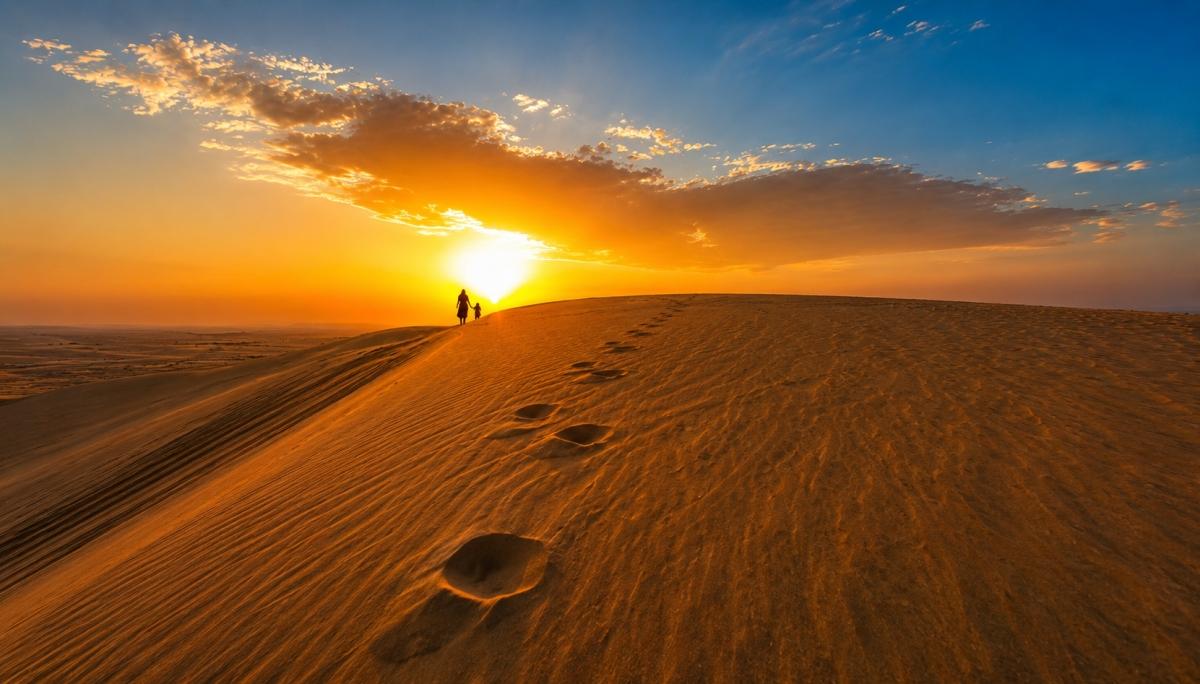
South of the city, the Inland Sea, known locally as Khor Al Adaid, forms where the desert meets the Gulf directly, with towering sand dunes dropping straight into the water. Dune-bashing tours in four-wheel-drive vehicles cross this terrain, often paired with camel rides, sandboarding or an overnight camp under the desert sky. Overnight camps typically include dinner, traditional entertainment and stargazing away from the light of the city. Desert landscape covers much of Qatar's interior, and the country receives very little rainfall over the course of a year, keeping conditions dry for safaris in nearly every month. To the northwest, Al Zubarah, a UNESCO World Heritage site, preserves the remains of a fortified pearling and trading town abandoned in the early 20th century, with excavated courtyard houses, a harbor and a restored fort.
Because Qatar Airways routes a large share of its network through Hamad International Airport, many travelers pass through Doha on a layover long enough for a short city tour rather than a multi-day stay. Many nationalities can enter Qatar without a visa for short stays, which simplifies planning for travelers adding a stopover tour to a longer journey. Layover tours are typically built around the length of the connection, often covering the Corniche, Souq Waqif and one of the main museums within a few hours. A private Doha layover tour covers the main sights during a single stopover, timed around flight connections rather than a standard overnight schedule.
November through March brings mild, dry conditions that suit walking tours of the Corniche, Souq Waqif and outdoor desert excursions. Summer months from June to September bring intense heat, often above 40 degrees Celsius, combined with high humidity along the coast, which pushes most outdoor activity toward early morning, evening or air-conditioned indoor sites like the Museum of Islamic Art. Qatar also observes Ramadan according to the Islamic lunar calendar, a period when daytime dining and business hours shift, so travelers visiting during that stretch should check opening hours in advance. Desert safaris run year-round but are considerably more comfortable outside the summer heat.