Free Cancellation
-high.jpg&w=1920&q=75 "Private Full-Day Jeddah Discovery: Al Balad, Corniche & Local Culture")
Saudi Arabia's tourism sector opened to international leisure visitors only in 2019, and the rock-cut tombs of Hegra, the country's first UNESCO World Heritage Site, have become the headline reason to visit. Spread across the AlUla region in the northwest, Hegra's facades were carved by the same Nabataean civilization responsible for Petra in Jordan, and the site sat largely closed to outside visitors for decades. Government investment through initiatives such as Vision 2030 has driven much of this recent opening, funding new resorts, museums and transport links across the country's historic sites. The wider set of Asia tours places Saudi Arabia alongside other destinations across the continent for travelers building a longer itinerary.
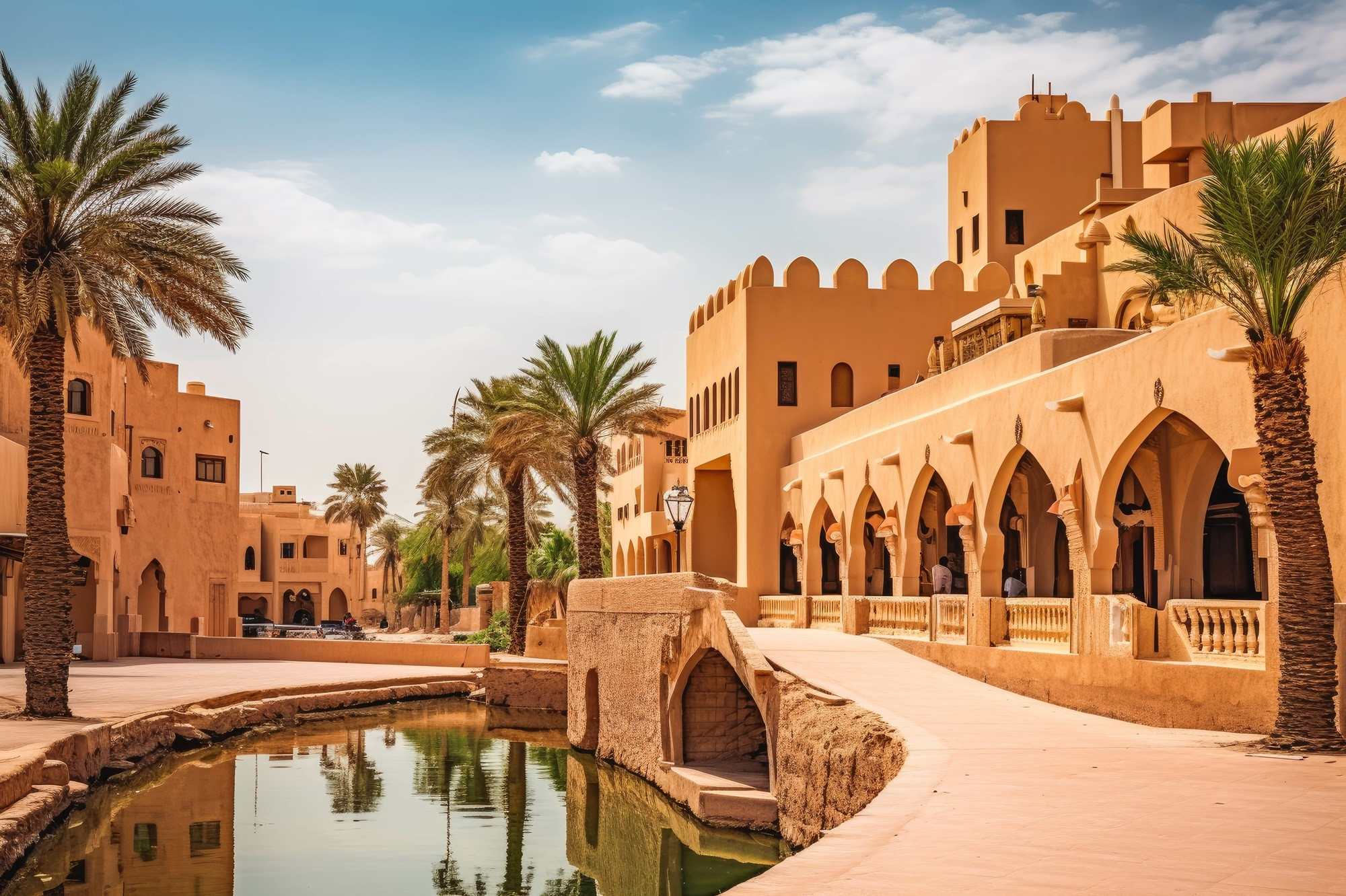
Beyond AlUla, the country pairs Red Sea coastline, the old coral-stone architecture of Jeddah and the modern capital Riyadh with desert landscapes that make up most of its interior. A trip typically moves between two or three of these regions rather than staying in a single city, since flights connect them faster than the long desert drives between them.
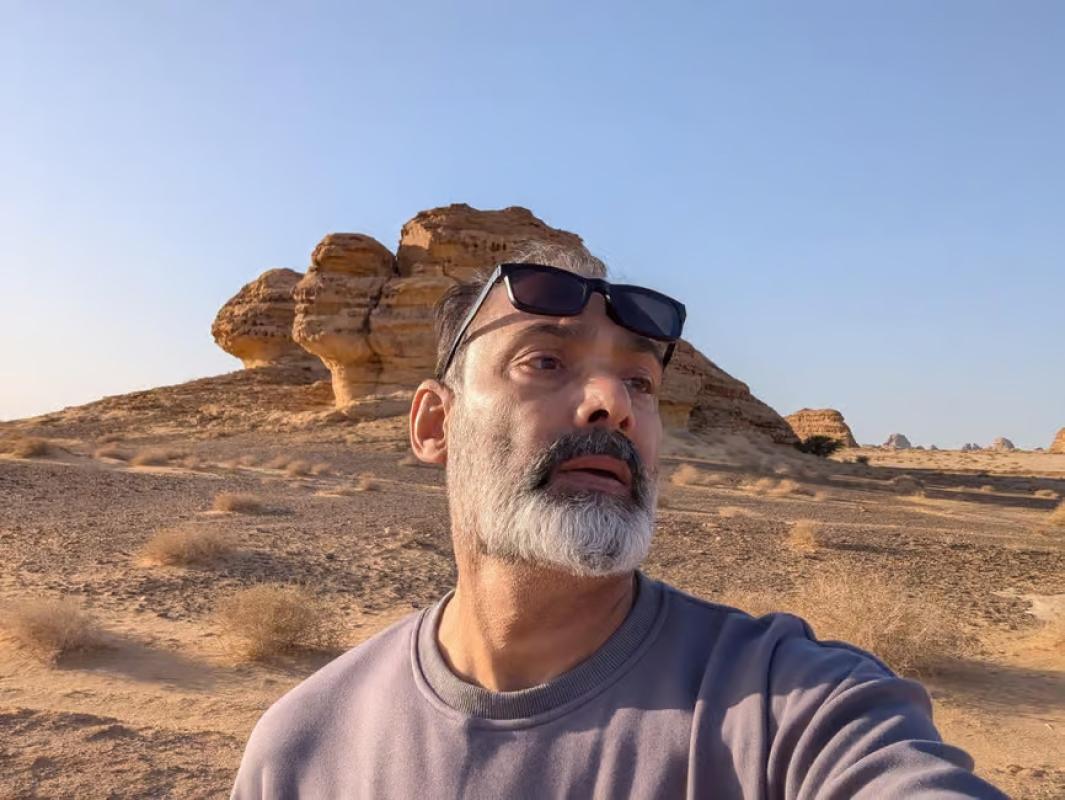
Hegra's more than 100 monumental tombs are carved directly into sandstone outcrops, many with facades that have survived intact for close to two thousand years. AlUla Old Town, a mud-brick settlement occupied until the 1980s, sits nearby and is now open for walking tours, while Elephant Rock and the Maraya concert venue, one of the world's largest mirrored buildings, round out the area's newer attractions. Jabal Ikmah, a sandstone outcrop near Hegra known as an open-air library, carries thousands of inscriptions in Dadanitic, Aramaic, Nabataean and other ancient scripts left by traders and travelers over more than a thousand years, and nearby Dadan, capital of the earlier Dadanite and Lihyanite kingdoms, adds a second archaeological layer to the valley that predates the Nabataean tombs at Hegra.
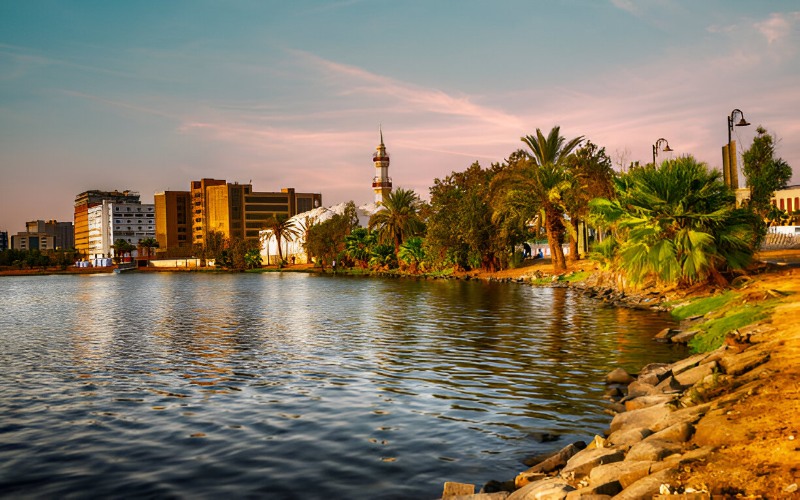
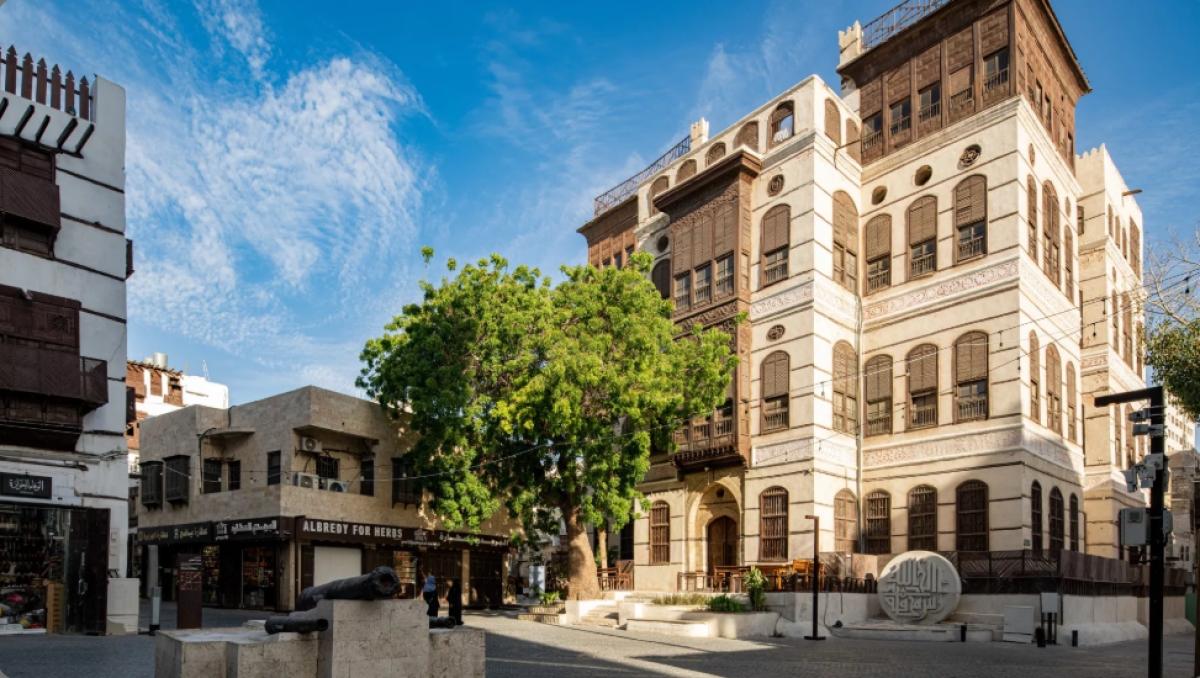
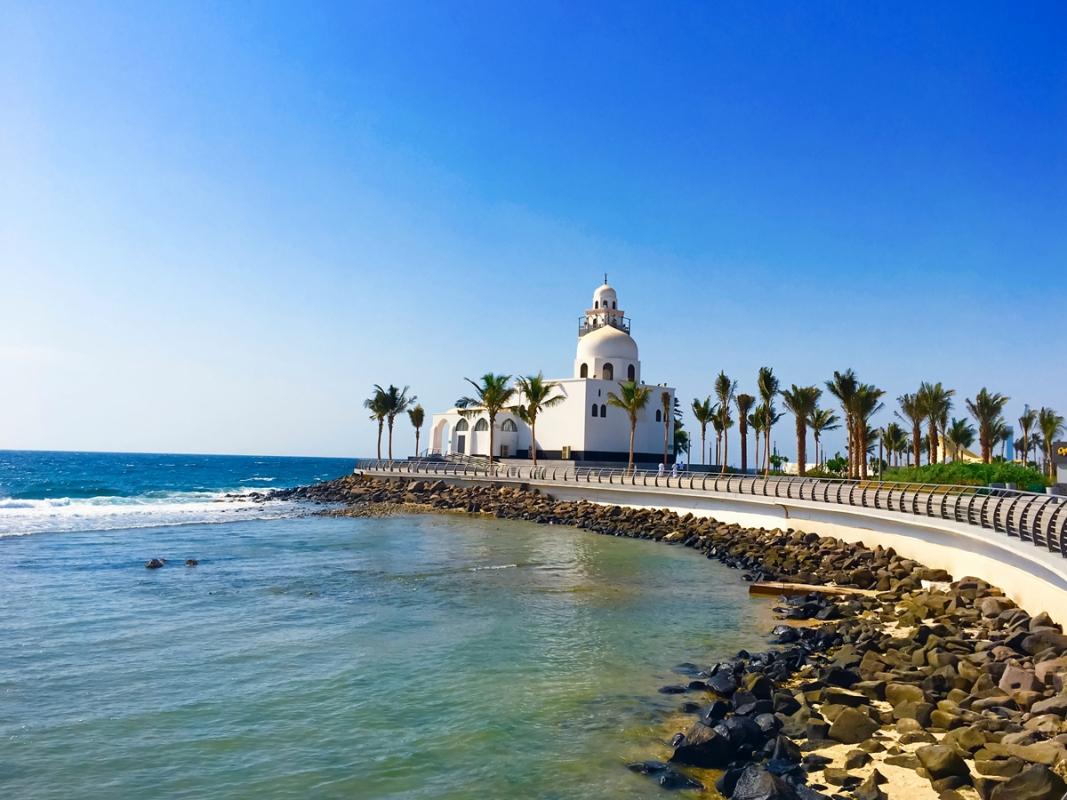
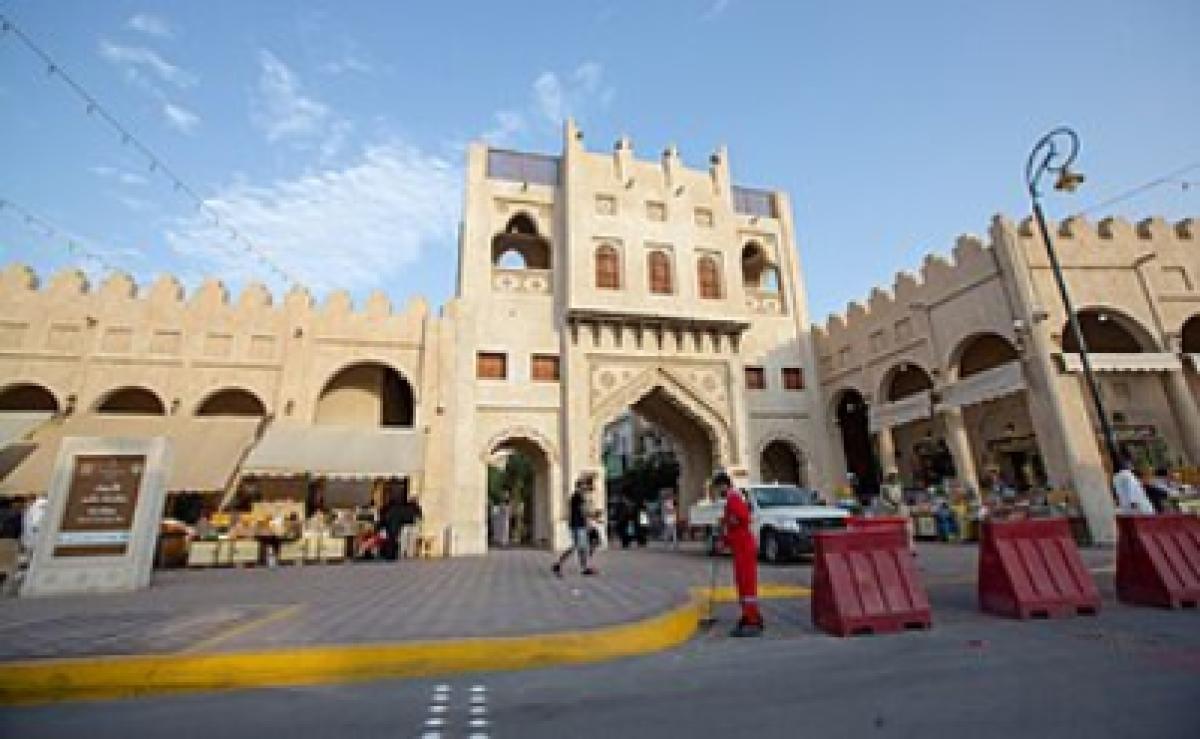
Al-Balad, Jeddah's historic core, is a UNESCO-listed district of coral-stone merchant houses with carved wooden balconies known as rawasheen, built from coral limestone once quarried along the Red Sea shore. The district also served historically as the arrival point for pilgrims traveling to Mecca by sea, and its narrow lanes and covered souks still function as a working market alongside their preserved architecture. Jeddah's Corniche runs along the waterfront for several kilometers, lined with public art installations and fish restaurants that draw residents and visitors in the evening.
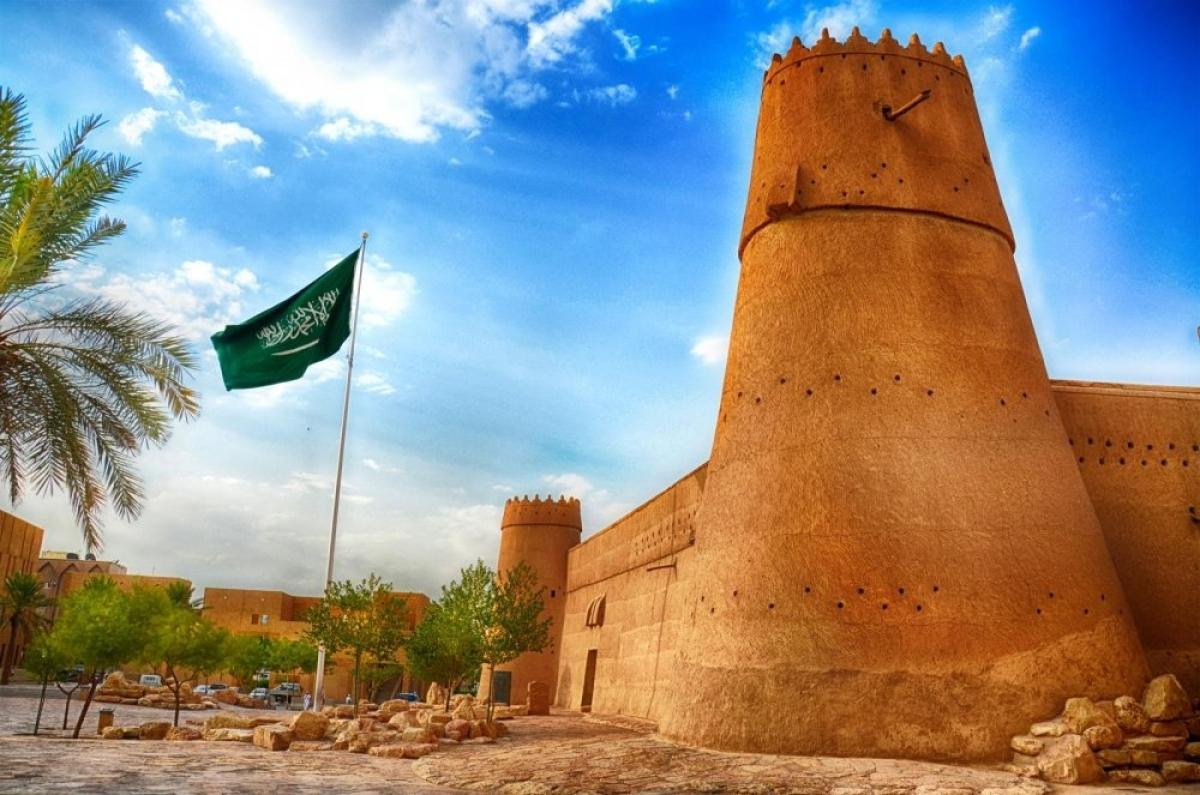
Riyadh, the capital, combines the mud-brick ruins of At-Turaif in Diriyah, the Saudi royal family's original seat and a UNESCO World Heritage Site, with the modern Kingdom Centre Tower and King Abdullah Financial District. The National Museum in Riyadh gives context for the rest of a trip, covering the Arabian Peninsula's history from pre-Islamic kingdoms through the country's unification in the 20th century. Diriyah also hosts an annual arts, culture and entertainment season each winter, drawing crowds to concerts and exhibitions staged among the mud-brick ruins and the newer developments built around them.
The Asir region, in the country's southwest along the Red Sea escarpment, sits at a much higher elevation than the rest of Saudi Arabia and stays noticeably cooler, with fog and cloud forest around the town of Abha for much of the year. Traditional stone and mud-brick villages, including the terraced settlements around Rijal Almaa, are built into the mountainside and remain occupied rather than preserved as open-air museums. The annual Janadriyah cultural festival, historically held near Riyadh, has drawn performers and craftspeople from across the country's regions, including the Asir, to demonstrate traditional dance, weaving and cuisine.
The Red Sea coast offers reef diving and snorkeling around Jeddah and the newer resort developments farther north, with visibility and coral cover comparable to established Red Sea destinations in Egypt and Jordan. Inland, desert excursions from Riyadh reach the Edge of the World, a dramatic escarpment cliff line, and the Red Sand Dunes, both feasible as half or full-day trips from the capital. Farasan Islands, off the southern Red Sea coast near Jizan, add a quieter alternative for snorkeling and birdwatching away from the busier northern resorts, reachable by a short ferry crossing.
Saudi Arabia introduced an e-visa for tourists from many countries in 2019, processed online in advance of travel, and modest dress is expected in public for visitors, particularly around mosques and other religious sites. Alcohol remains prohibited nationwide, and Friday functions as part of the weekend alongside Saturday. English signage and airport transfers are well established in AlUla, Jeddah and Riyadh, though smaller towns in the Asir and along the Red Sea coast rely more on Arabic, and a guided tour smooths over that gap for first-time visitors.
Cooler months from October to April suit travel across most of the country, since summer temperatures in the interior and along the Red Sea regularly climb well past 40 degrees Celsius. AlUla's own tourist season is scheduled around this same window, with major sites and cultural events concentrated between October and March.
Because AlUla, Jeddah and Riyadh sit hours apart by road, most itineraries fly between them rather than driving, and each city works well as a base for two to three nights. The Riyadh city tour covers the capital's own sites for travelers who want Riyadh included alongside AlUla and Jeddah on a wider trip.