
Free Cancellation
-high.jpg&w=1920&q=75 "7 Days Vietnam Northern Tour")




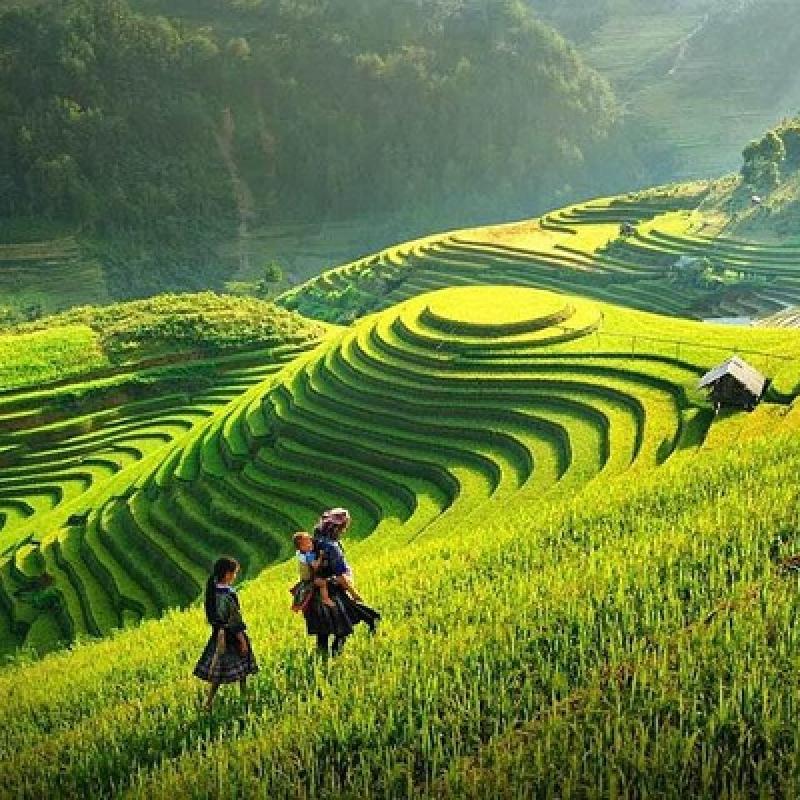
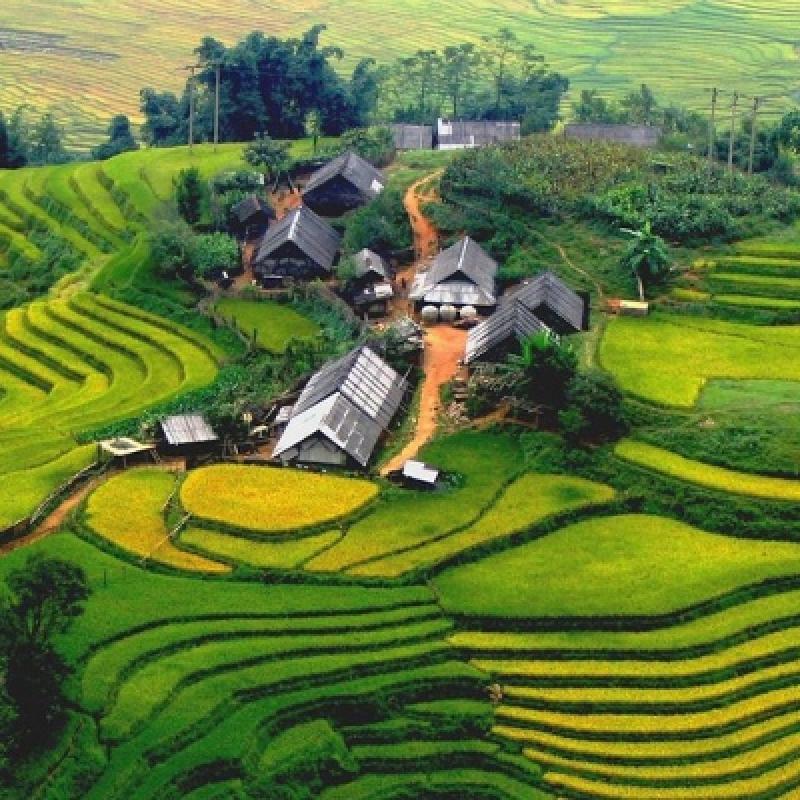
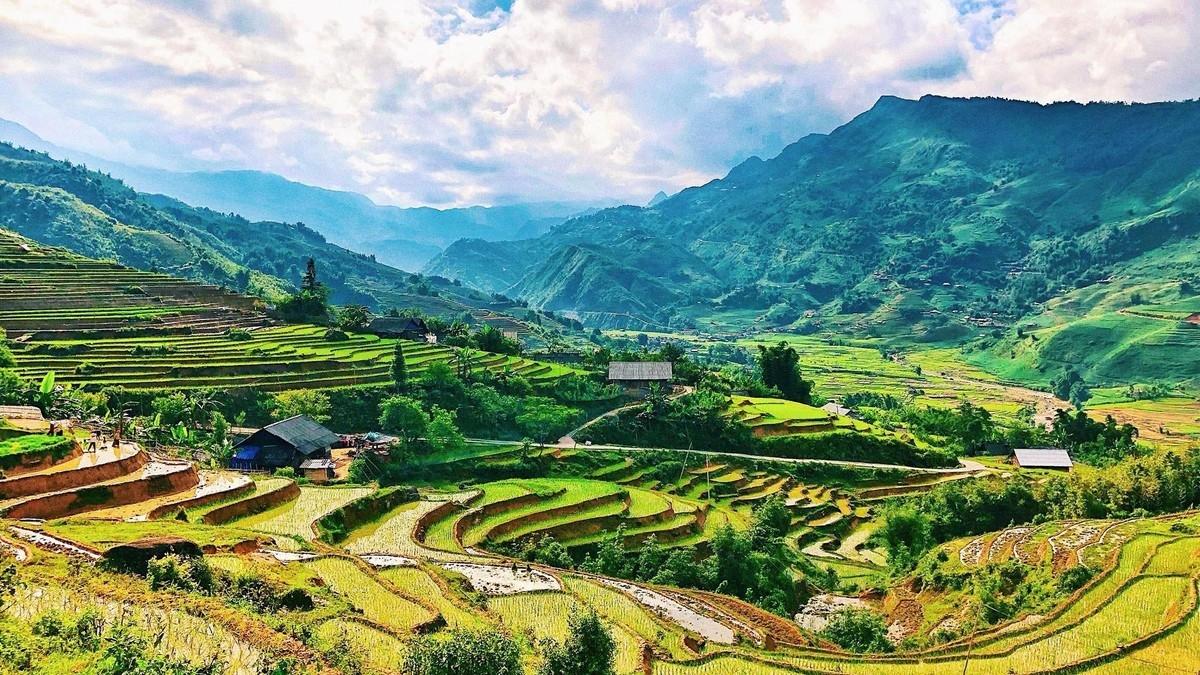
Sa Pa rises above the Muong Hoa Valley in Vietnam's far north, close to the Chinese border, where terraced rice fields step down the hillsides between villages worked by Hmong, Dao and other ethnic communities. Vietnam tours built around trekking and mountain scenery tend to center on Sa Pa, which has grown from a French hill station into the main base for exploring this part of the country on foot.
The town sits at around 1,500 meters, cool enough that French colonists built villas here in the early 20th century to escape the lowland heat, and that altitude still shapes the climate and the crops today. Around it, the valley floor and hillsides are cut into rice terraces farmed by hand for generations, connected by trails that pass through Hmong and Dao settlements. Most visits combine at least one day of trekking with a night in a village homestay, and many add a trip up Fansipan, Vietnam's highest peak, which rises directly behind the town.
The valley below Sa Pa holds some of the region's best-known trekking routes, linking villages such as Cat Cat, Lao Chai, Ta Van and Giang Ta Chai along trails that run through rice terraces and across streams on simple bridges. Routes range from a few hours to multi-day treks, typically covering 8 to 12 kilometers a day on dirt paths that turn muddy after rain, so sturdy footwear matters more than technical hiking skill. Local Hmong and Dao guides often lead the way and point out farming techniques still used on the terraces. The valley also holds a cluster of ancient stone carvings near Ta Van, etched with symbols whose meaning is still debated by researchers, a rare archaeological note in a landscape mostly defined by its living communities.
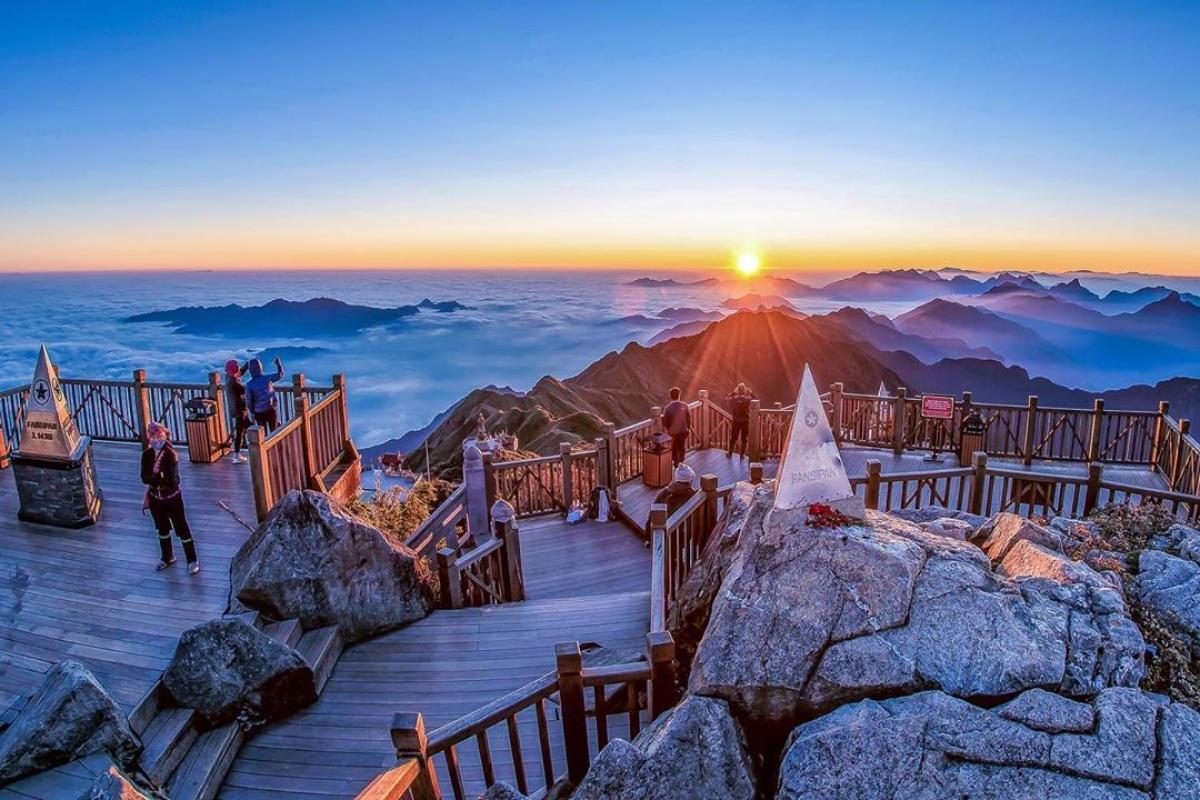
At 3,143 meters, Fansipan is the highest point in Vietnam and often called the roof of Indochina. Reaching the summit once required a two- to three-day trek, and that option still exists for hikers who want it, but a cable car opened in 2016 now covers the climb in about 20 minutes, making the peak accessible to travelers without technical hiking experience. A complex of pagodas and statues built near the upper station has become part of the visit in its own right, drawing travelers who come mainly for the views rather than the summit itself. On clear days the top gives views across the mountain ranges toward the Chinese border, though cloud cover is common and can close off the view with little warning.
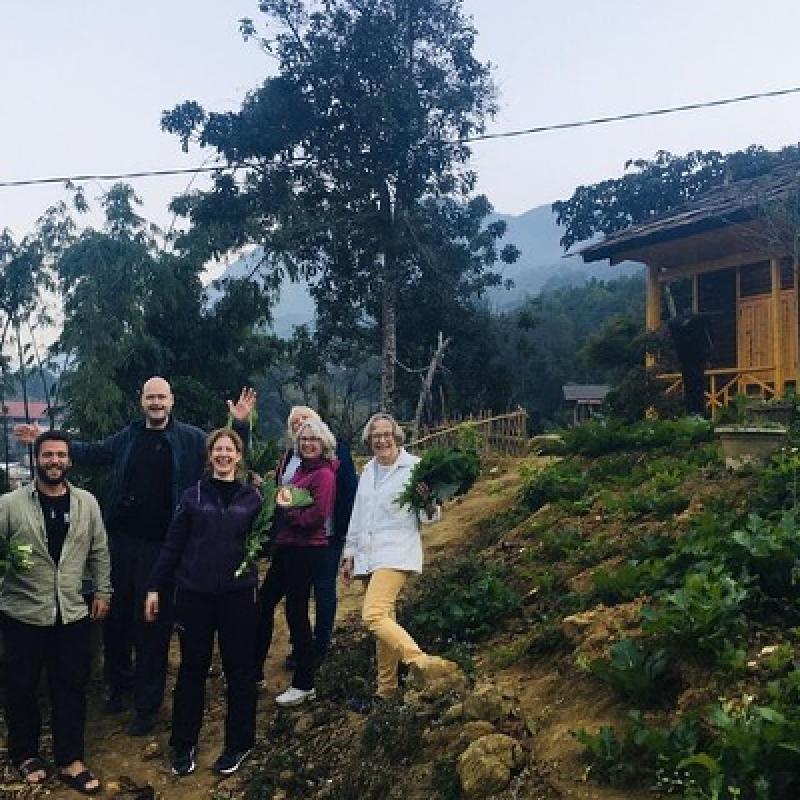
An overnight stay in a village homestay has become one of the defining parts of a Sa Pa trip, with families in Ta Van, Lao Chai and nearby settlements hosting travelers in wooden houses built on stilts. Evenings typically involve a home-cooked meal and a chance to see daily routines up close, from indigo dyeing among Black Hmong communities to the embroidery work associated with Red Dao households. The network of homestays extends across several valleys, and some trekking routes link one village to the next over two days rather than returning to Sa Pa town each night. The Sapa 2 Days 1 Night from Hanoi tour follows this format, pairing a day of trekking with an overnight stay in Ta Van village before returning to Hanoi.
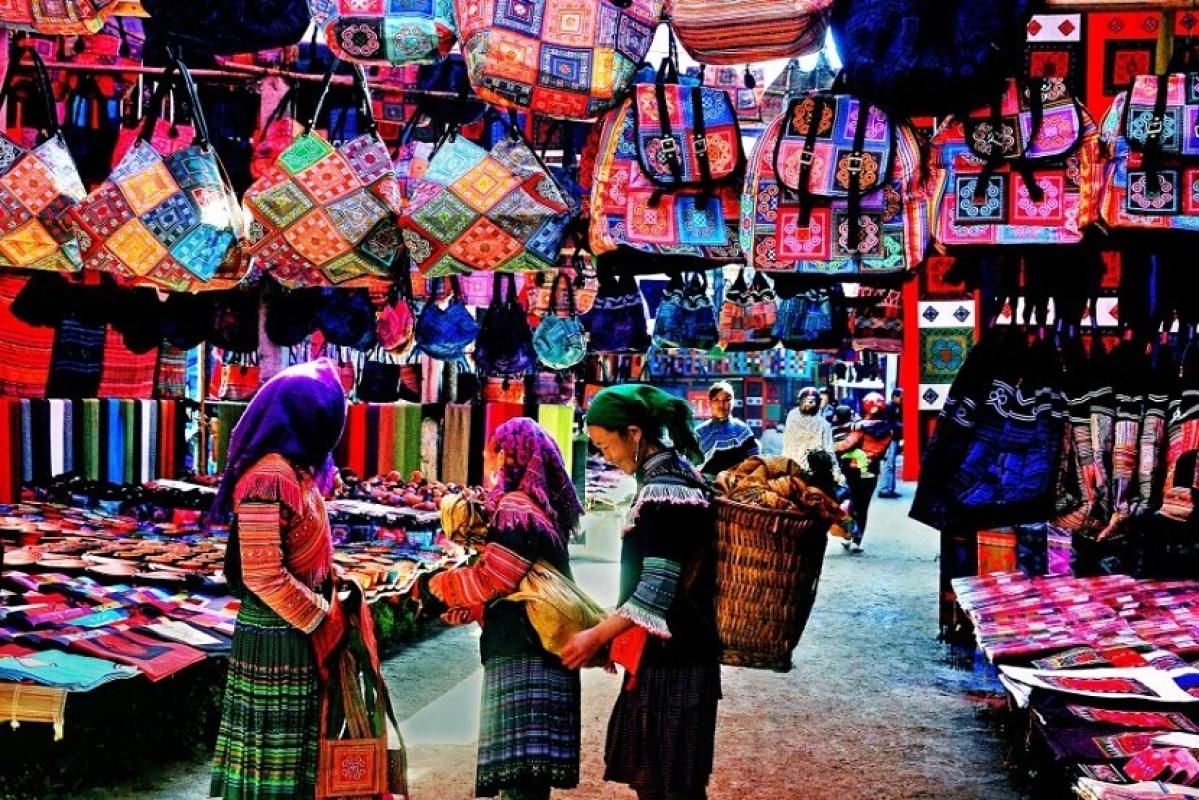
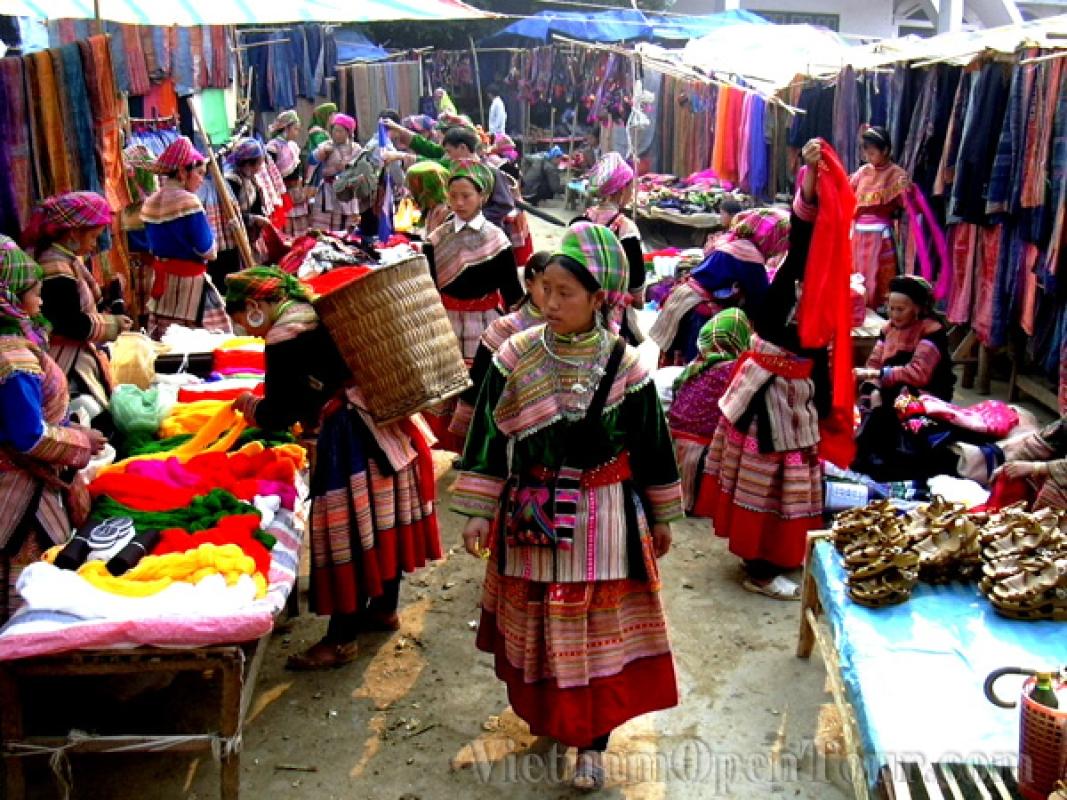
Sa Pa town itself holds a daily market where Hmong, Dao and other communities sell produce, textiles and household goods, smaller and more low-key than the larger weekly markets found elsewhere in the province. It sits close to the town center and the stone church that has become a landmark of Sa Pa, making it an easy stop before or after a day of trekking rather than a destination in its own right.
The cool climate around Sa Pa supports crops rarely grown elsewhere in Vietnam, including temperate vegetables and farmed salmon and trout, both of which show up on restaurant menus grilled or in hot pot. Thang co, a stew traditionally made with horse meat and organs, remains a specialty among Hmong communities, along with corn wine distilled in the surrounding villages. Restaurants in Sa Pa town also serve milder, more familiar Vietnamese dishes for travelers who prefer them.
Most travelers reach Sa Pa by train to Lao Cai followed by an hour's drive up into the mountains, though a newer highway now allows a direct bus or car journey from Hanoi in around five hours. Either route climbs steadily from the lowlands, with the temperature dropping noticeably as the road gains altitude toward the town.
Northwest of town, the road toward Lai Chau climbs over the Tram Ton Pass, Vietnam's highest mountain pass, passing the Silver Waterfall where water drops close to 100 meters down a rock face beside the road. A viewpoint known as Heaven's Gate sits near the top of the pass, giving views back across the valleys on clear days. Both stops are usually reached by car or motorbike rather than on foot, making them an easy half-day addition alongside the trekking routes closer to town.
September through November brings the rice terraces to gold before harvest and generally offers the clearest mountain views, while March through May covers the planting season when the fields fill with water and turn a bright, reflective green. Winter months from December through February can be cold and foggy at this altitude, occasionally dropping close to freezing, which limits visibility on Fansipan even when the cable car keeps running.