
Free Cancellation
-high.jpg&w=1920&q=75 "10 Days Vietnam in Style Tour")


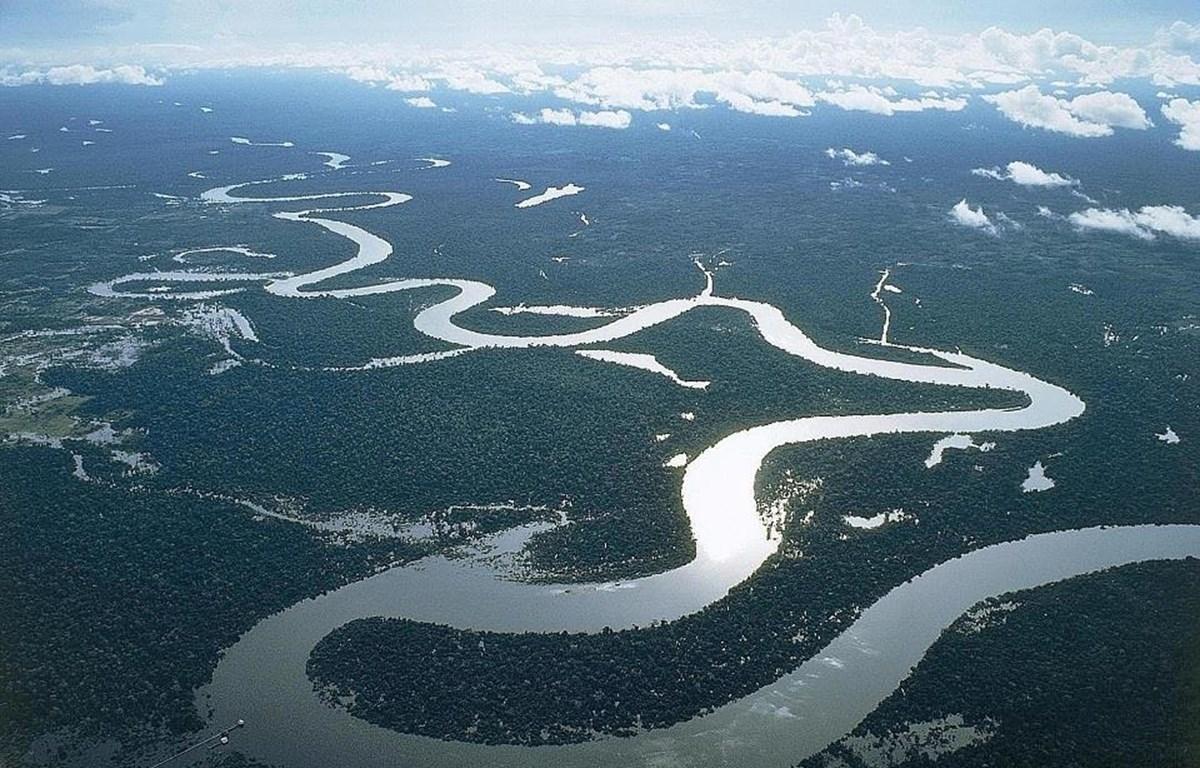
South of Ho Chi Minh City, the Mekong River fans out into nine branches before it reaches the South China Sea, a pattern that gave the delta its Vietnamese name, Cuu Long, or Nine Dragons. Flat, green, and cut through by thousands of canals, this delta is one of the most distinctive landscapes covered by Vietnam tours, and a common extension for travelers based in Saigon.
Water shapes daily life here more than roads do. Rice paddies stretch across the horizon, fruit orchards line the canal banks, and villages depend on boats for transport and trade. The delta produces a large share of Vietnam's rice, along with coconuts, dragon fruit, and other tropical produce, earning it a reputation as the country's rice bowl.
The Mekong begins its final stretch in Cambodia and enters Vietnam already wide, then splits into two main branches, the Tien and the Hau, before those divide further into the nine mouths that reach the sea. The delta covers roughly 15,000 square miles of flat alluvial land, built up over centuries by silt the river carries down from the Tibetan Plateau. There are no hills here, only rivers, canals, and paddy fields that run to the horizon. Closer to the coast, the branches widen into brackish estuaries lined with mangrove forest, a transition zone between the fresh water upstream and the open sea beyond.
This flat, silt-rich ground makes the delta Vietnam's largest rice-growing region, producing enough to feed much of the country and to export abroad. Farmers also grow coconuts, dragon fruit, longan, and other fruit in orchards that back onto the smaller canals, while fish and shrimp farming fill the brackish water closer to the coast. Boats do the work that trucks do elsewhere, carrying rice, produce, and people along a network of waterways that has changed little in generations. Two or three rice harvests a year are possible thanks to the warm climate and steady water supply, a cycle that shapes the calendar for much of the rural population.
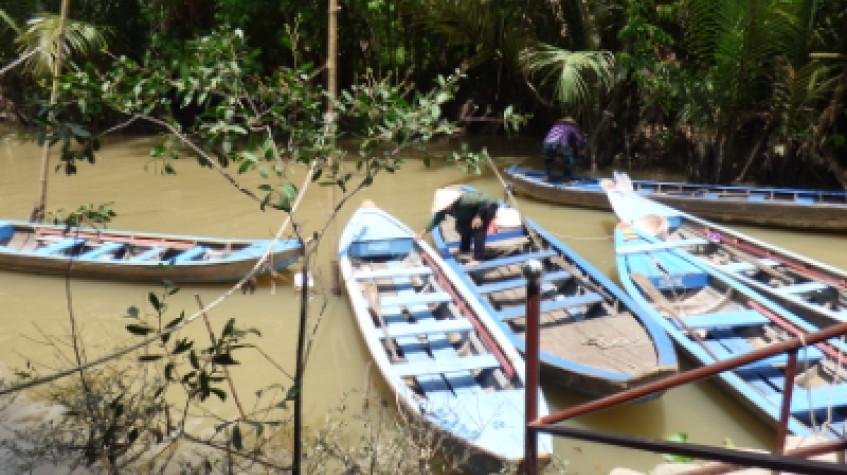
Beyond the main rivers, a maze of smaller canals connects villages that still rely on boats more than cars. Houses stand on stilts along the banks, small markets trade in produce grown a few miles away, and narrow footbridges cross the smallest channels. This canal network extends for thousands of miles across the delta, linking farms, orchards, and towns in a way that roads have only partly replaced.
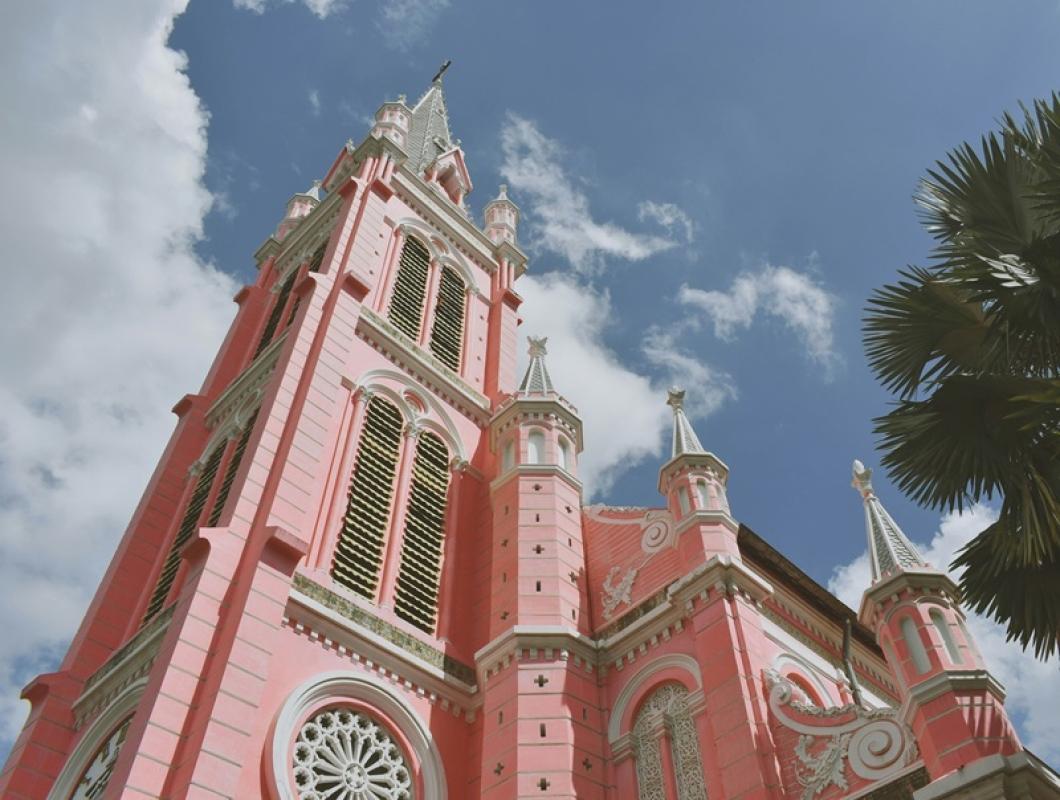
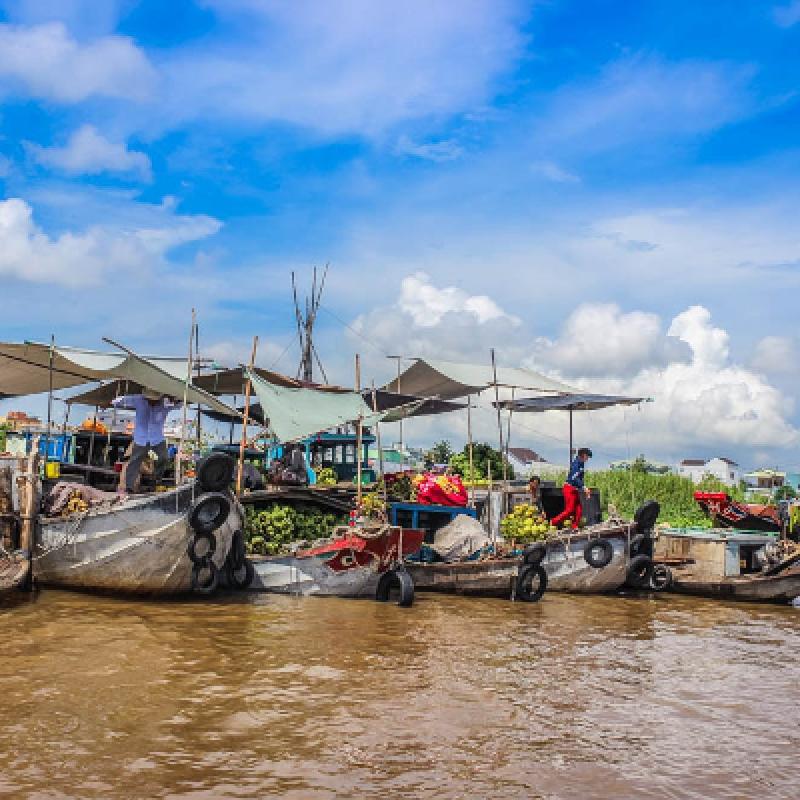
Several towns give travelers a way into this landscape, each with its own focus. Ben Tre, closer to the coast, is known for coconut groves and small workshops that turn coconut into candy and other goods, a quieter counterpart to towns nearer Ho Chi Minh City. Cai Be draws visitors to its floating market and the orchards along its canals, along with a Gothic-style Catholic church unusual for the region. Can Tho, the delta's largest city, serves as an urban base and is home to Cai Rang, the biggest floating market in the region. My Tho, the nearest delta town to Ho Chi Minh City, is a common starting point for a first look at the river and its islands, thanks to the short travel time from the city.
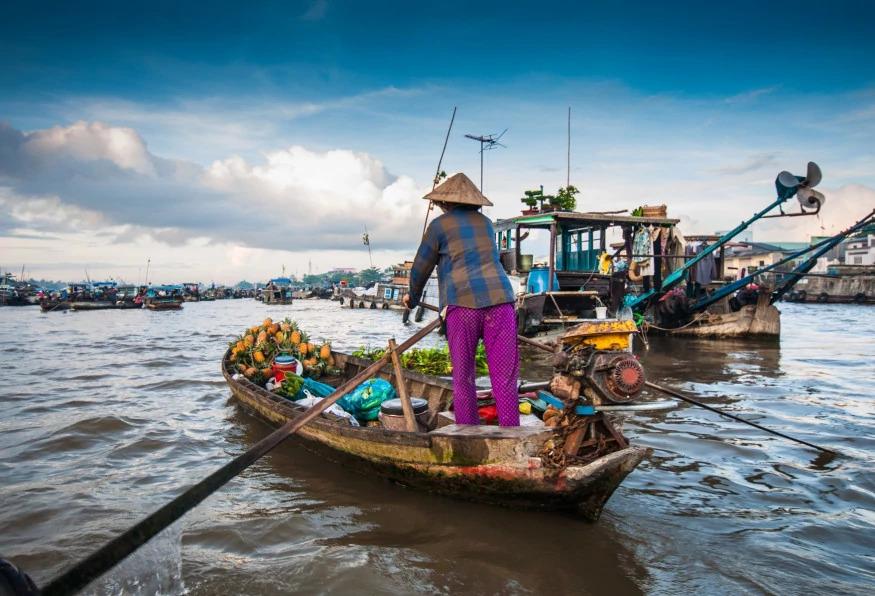
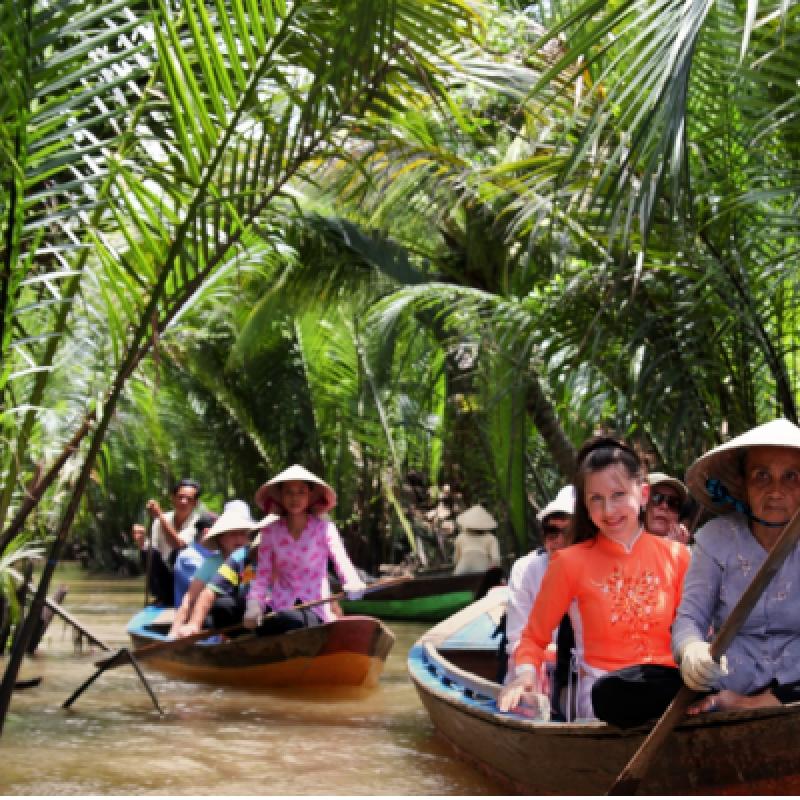
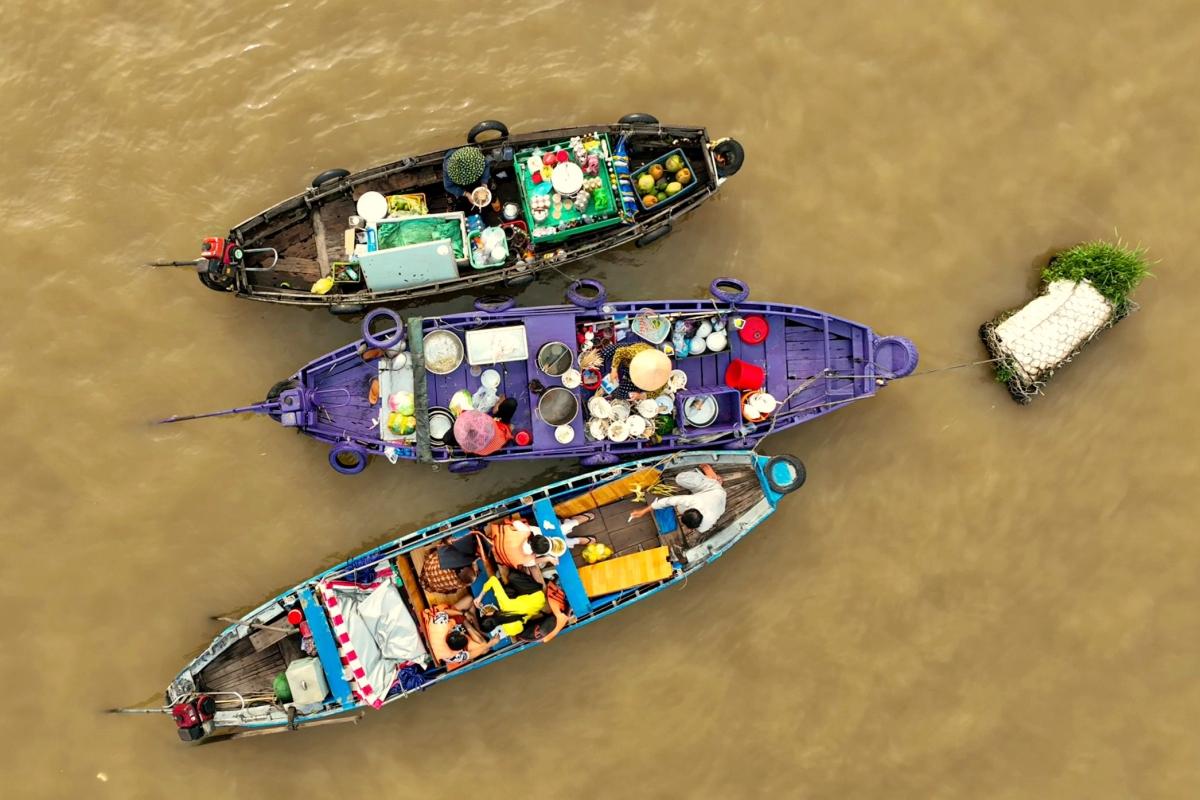
Much of the delta's appeal comes from watching commerce happen on the water. Vendors sell produce from boats piled high with pineapples, watermelon, and other fruit, hanging a sample from a tall pole so buyers can spot what each boat is selling from a distance. Some boats specialize in a single crop, selling only pineapples or only pumpkins in bulk to smaller traders who resell them downstream. Away from the markets, smaller sampans carry visitors along narrow canals shaded by coconut palms, stopping at family workshops that produce rice paper, puffed rice, or coconut candy by hand.
Most delta tours start in Ho Chi Minh City, with My Tho reachable in under two hours by road and Can Tho roughly three hours further south. Boats then take over for the river and canal sections, since much of the delta's interior is easier to reach by water than by road. Travelers with more time occasionally continue from the delta toward Cambodia by river, since the Mekong crosses the border upstream of Vietnam.
The delta stays warm and humid throughout the year. The dry season, from December to April, offers the most reliable weather for boat trips and market visits. The wet season, from May to November, brings afternoon showers and higher water levels, which can flood some low-lying orchards but also keeps the canals lush and green. Market visits work well early in the morning regardless of season, since vendors clear out by midmorning.
Many visitors see the delta on a single day trip from Ho Chi Minh City, combining a boat ride with stops at an orchard and a local workshop. Others stay overnight to reach markets and canals further from the city with less crowding in the early morning. A tour such as the Discover Mekong Delta Cai Be Floating Market Tan Phong Adventure Day Tour covers one of the delta's floating markets along with a stop on Tan Phong island, giving a compact introduction to the region in a single day.