

Free Cancellation
-high.jpg&w=1920&q=75 "3 Days Kathmandu Tour")
-high.jpg&w=1920&q=75 "Kathmandu Day Tour")
-high.jpg&w=1920&q=75 "Jamacho Hike - Best Short-Day Hike Near Kathmandu")
-high.jpg&w=1920&q=75 "Exploring Kathmandu By Rickshaw")
-high.jpg&w=1920&q=75 "Rock Climbing In Kathmandu")
-high.jpg&w=1920&q=75 "7-Day Kathmandu Mindfulness & Wellness Retreat")
Kathmandu, Nepal's capital, fills a broad valley at roughly 1,400 meters and has served as the country's political, religious, and cultural center for over a thousand years. Once three rival kingdoms, Kathmandu, Patan, and Bhaktapur each built their own Durbar Square, and their palaces and temples still define the valley's architecture today. Our Nepal tours center much of their Kathmandu Valley sightseeing around these historic sites.
Beyond its monuments, the city functions as the country's main hub, where trekkers heading to Everest, Annapurna, and other Himalayan regions gather before continuing on. Traffic and density define daily life in the newer parts of the city, but the older quarters keep a slower pace built around temple courtyards, narrow brick lanes, and communities of artisans who still work in wood and metal much as their ancestors did. Newar craftsmanship, developed over centuries in this valley, shows up everywhere from carved roof struts to repoussé metalwork on temple doors.
Kathmandu Durbar Square, a UNESCO World Heritage Site, was the ceremonial seat of the Malla and later Shah kings. Multi-tiered pagoda temples, carved wooden windows, and the Kumari Ghar, home to Nepal's living goddess tradition, cluster around the old royal palace complex. Several structures were damaged in the 2015 earthquake and have since been restored, though visitors can still see the layered construction history in exposed brick and timber.
The square remains a working part of the city rather than a museum piece, with vegetable sellers, pigeon flocks, and daily rituals continuing around the monuments much as they have for generations. Coronations, royal processions, and the annual Indra Jatra festival, when the Kumari is paraded through the old city, have all centered on this square for centuries. The Kathmandu Valley's collection of monument zones, spanning three Durbar Squares and several temple complexes, was inscribed as a single UNESCO listing in 1979, recognizing the valley as one interconnected historic landscape rather than a set of isolated sites.
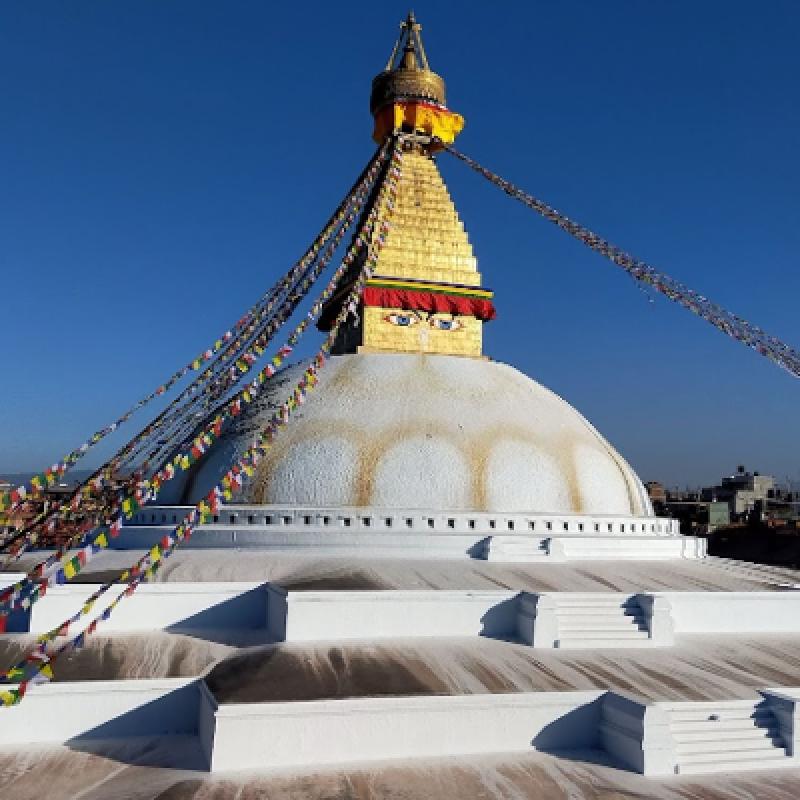
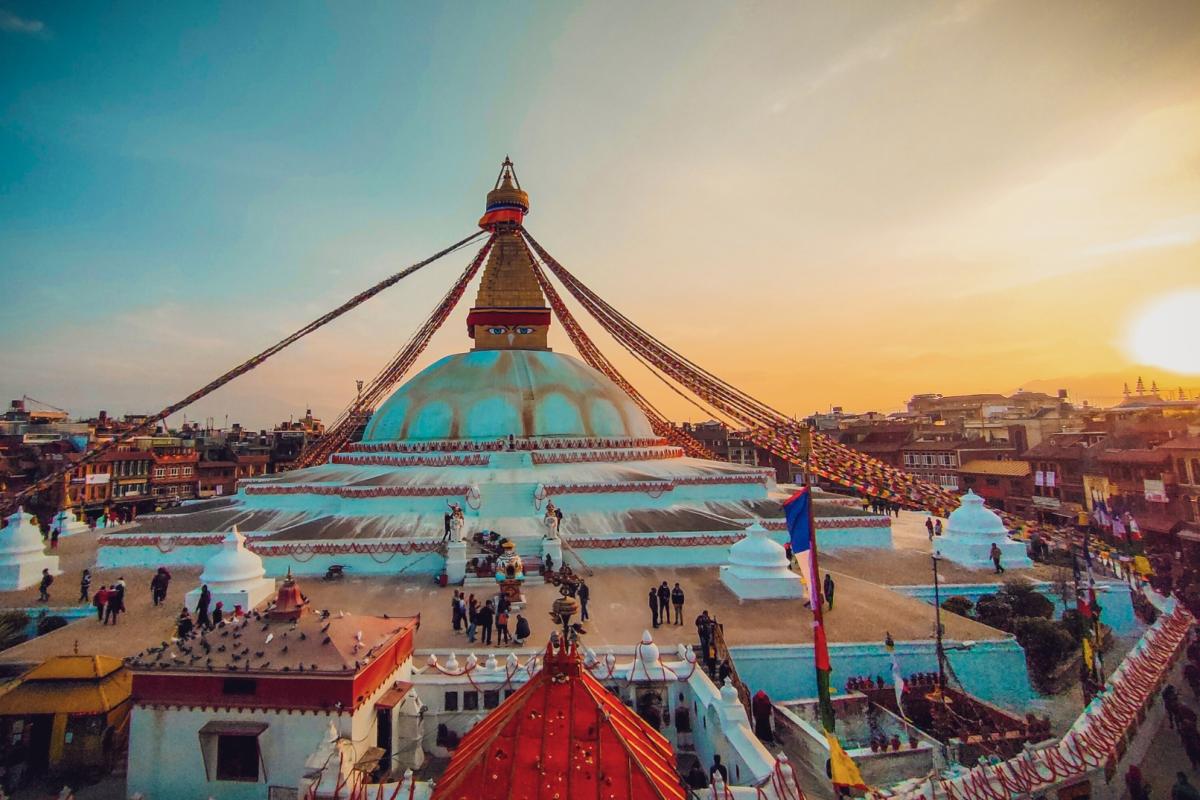
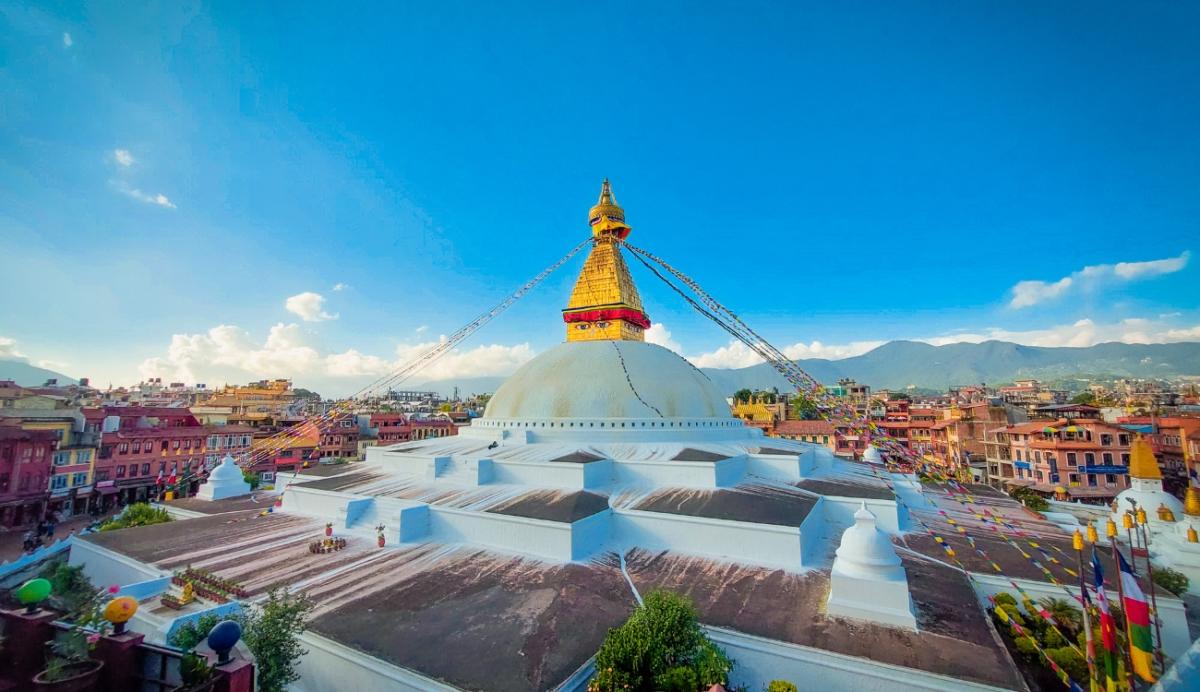
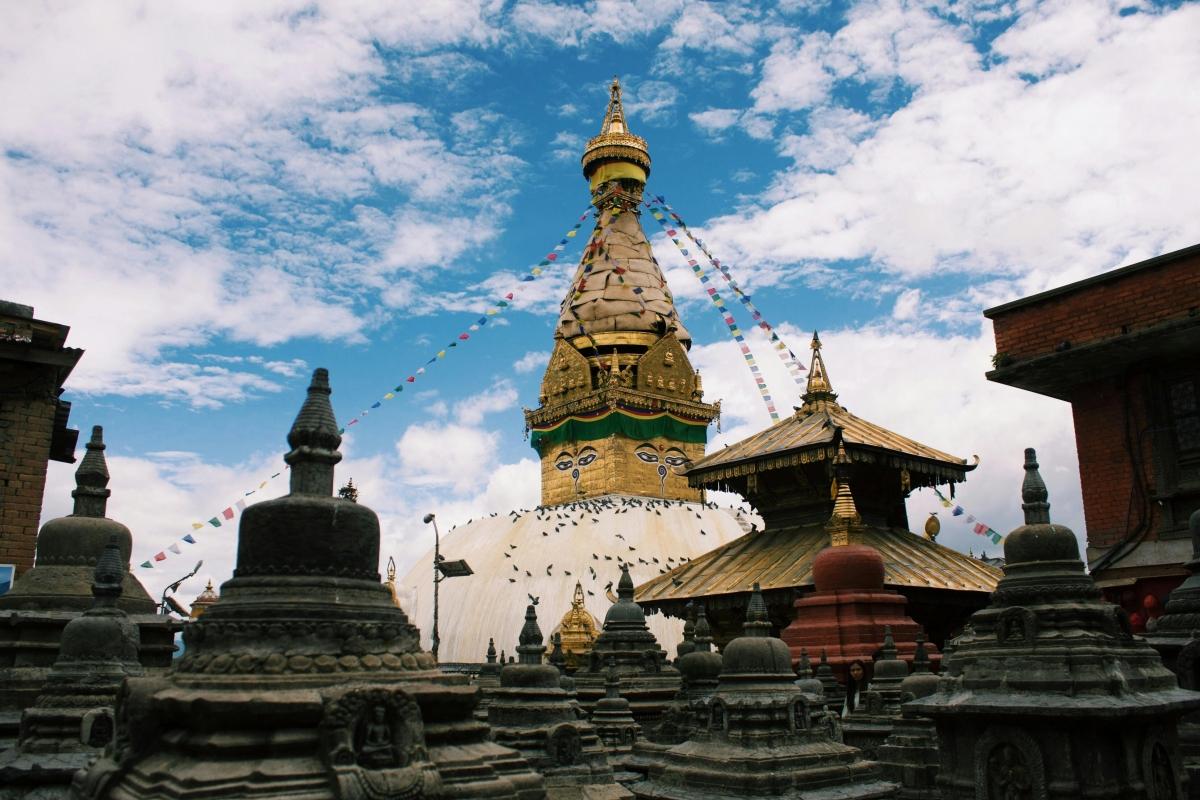
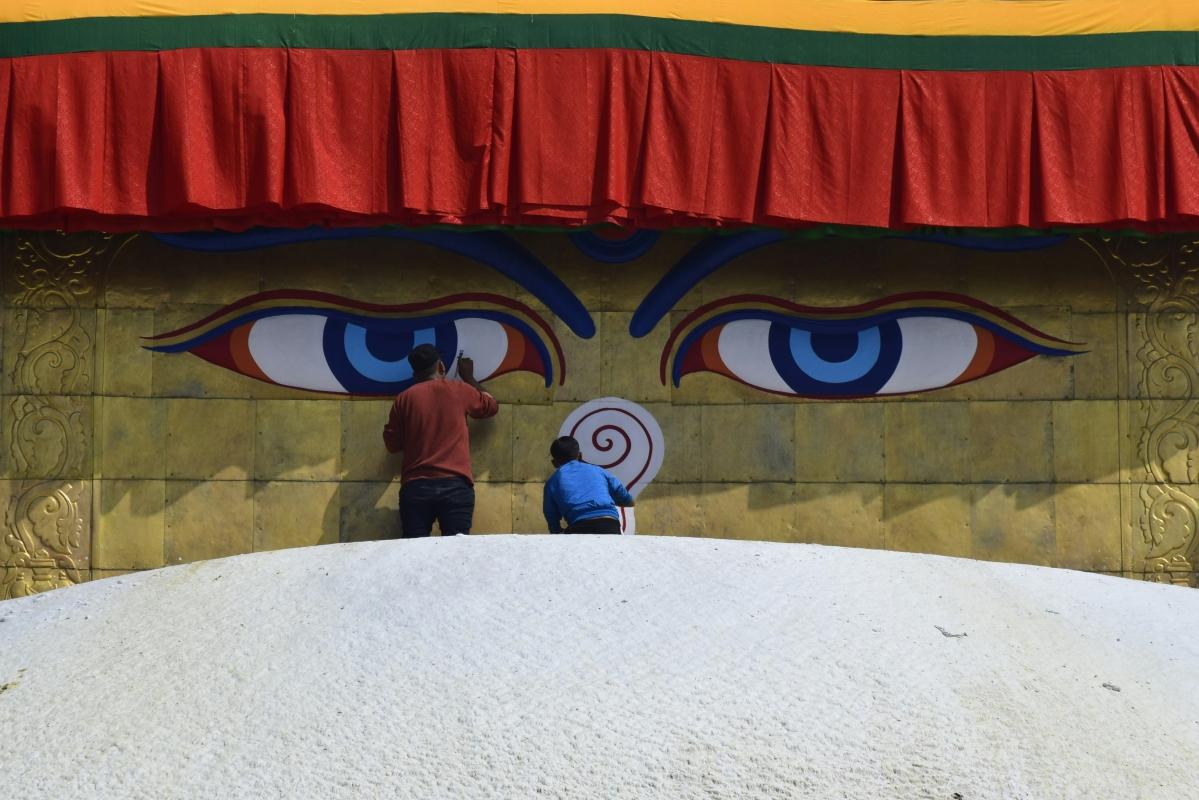
Swayambhunath, known informally as the Monkey Temple, crowns a hilltop west of the city center and is thought to be more than 1,500 years old, with the Buddha's watchful eyes painted on all four sides of its central stupa. Boudhanath, on the eastern side of the valley, ranks among the largest stupas in the world and anchors one of the largest Tibetan Buddhist communities outside Tibet, with monasteries and prayer-flag-lined courtyards surrounding its base. Both sites draw pilgrims who circle the stupas clockwise while spinning prayer wheels.
Reaching Swayambhunath means climbing several hundred stone steps guarded by resident macaques, while Boudhanath sits on flat ground and can be circled at leisure by cafes and rooftop restaurants overlooking the stupa. Tibetan refugees settled around Boudhanath in large numbers after 1959, and the neighborhood today functions as a genuine center of Tibetan Buddhist life rather than a recreated one.
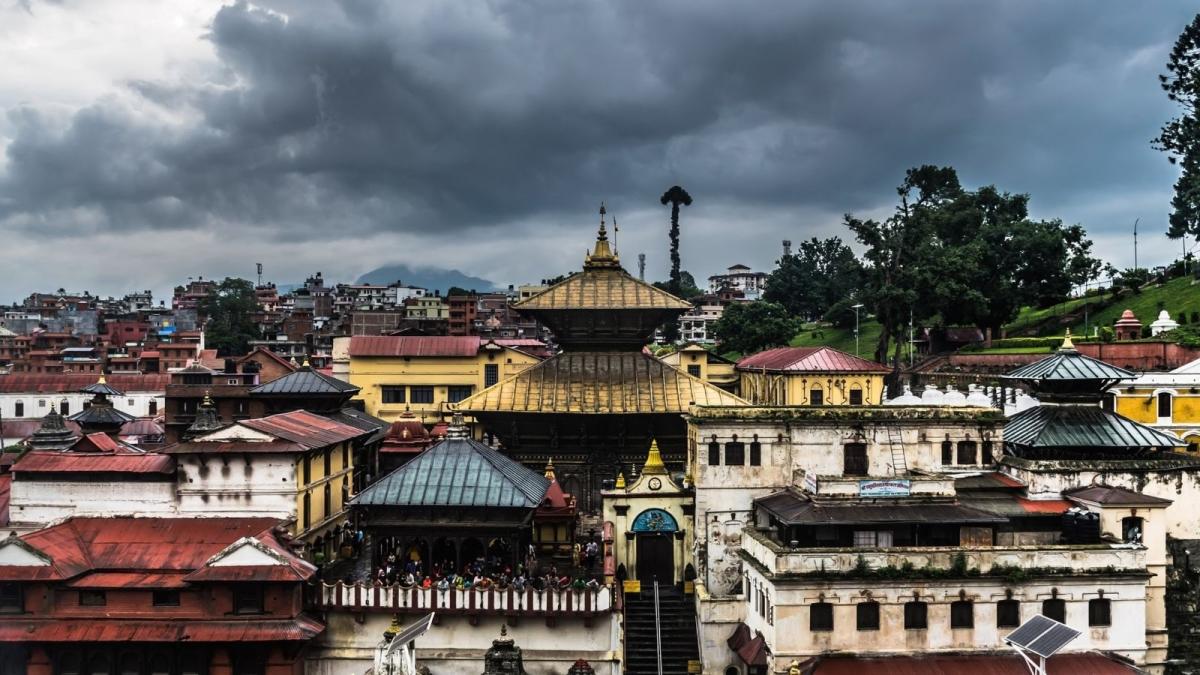
Pashupatinath, one of the most significant Shiva temples in the Hindu world, sits along the Bagmati River on the city's eastern edge. Cremation ghats line the riverbank here, and non-Hindu visitors, who cannot enter the main temple, can still observe rituals and daily life from across the water. The complex draws sadhus, pilgrims, and mourners in roughly equal measure, giving it a different atmosphere from the valley's more purely tourist-oriented sites. Pilgrims travel to Pashupatinath from across Nepal and northern India, particularly during the Maha Shivaratri festival, when the temple grounds fill with visitors honoring Shiva through an all-night vigil.
Across the Bagmati River, Patan preserves its own Durbar Square within a compact old city known for bronze casting and stone carving, a tradition still practiced in workshops near the main square. Bhaktapur, roughly an hour from central Kathmandu, keeps a slower, more preserved character overall, with pottery squares, temple-lined courtyards, and buildings that largely escaped the dense modern construction found closer to the capital. Many visitors treat all three Durbar Squares as a single day's circuit through the valley's Malla-era history.
Each of the three cities developed its own artistic style and rivalries during the Malla period, when Kathmandu, Patan, and Bhaktapur operated as separate kingdoms competing to build the most elaborate palaces and temples. That competition left the valley with an unusually dense concentration of historic architecture for such a small geographic area, one reason the region draws repeat visitors interested in Newar art and urban design rather than a single monument.
Thamel, Kathmandu's tourist district, packs guesthouses, gear shops, restaurants, and trekking agencies into a compact grid of alleys near the old city. Almost every overland trip into the Himalaya starts or ends here, whether travelers are outfitting for Everest Base Camp, arranging permits for Annapurna, or simply resting before a flight home. Bookshops, rooftop restaurants, and outdoor gear stores selling everything from down jackets to trekking poles line its main streets, and the district has grown around this steady flow of travelers passing through on their way to or from the mountains.
Nearby Freak Street, Thamel's quieter predecessor as the city's traveler hub in earlier decades, still holds a scattering of budget guesthouses and cafes near Kathmandu Durbar Square, offering a calmer alternative for visitors who want easy walking access to the old city. For a broader look at the valley's temple towns and mountain views in one trip, the Nepal Twin Valley tour combines Kathmandu with neighboring Pokhara.