Free Cancellation
-high.jpg&w=1920&q=75 "4 Days Seoul City Package Tour from South Korea")

-high.jpg&w=1920&q=75 "11 Days South Korea Tour")
-high.jpg&w=1920&q=75 "Seoul + Busan Package (4 Nights / 5 Days)")
South Korea Tours cover a country that pairs the fast-paced capital of Seoul with coastal cities, mountain national parks and the ancient sites of the former Silla kingdom. Decades of rapid development sit alongside centuries-old palaces, Buddhist temples and fortress walls, giving visitors a mix of contemporary culture and preserved history within a compact, well-connected country.
Most itineraries are built around Seoul before extending south to Busan, Gyeongju or the volcanic island of Jeju, often as part of a wider Asia trip alongside Japan or China. South Korea Tours combine palace visits, traditional markets, and the country's fast rail network to link cities that can otherwise feel far apart.
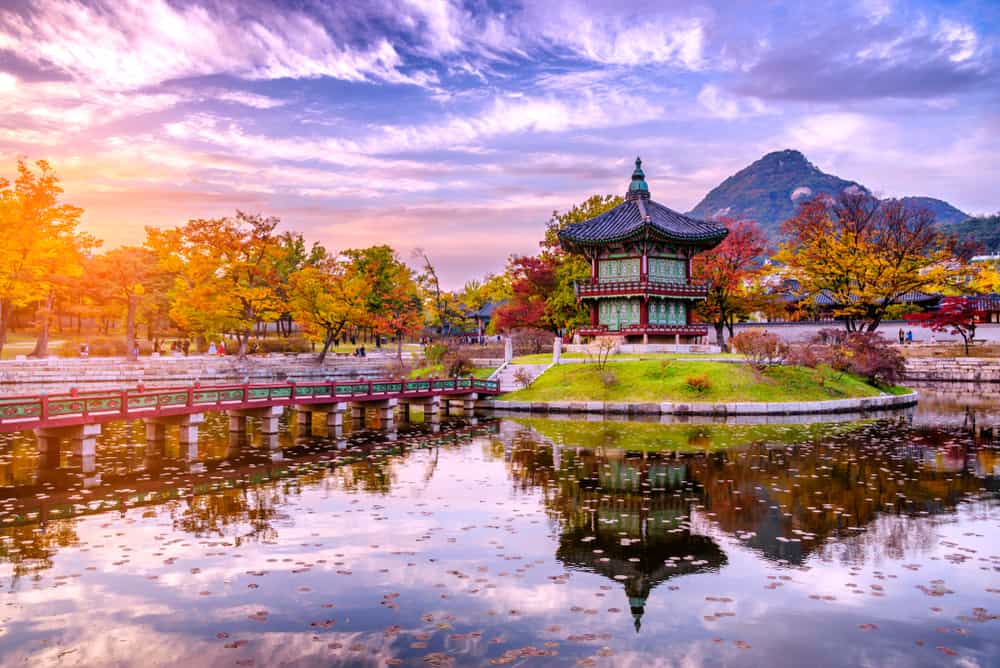
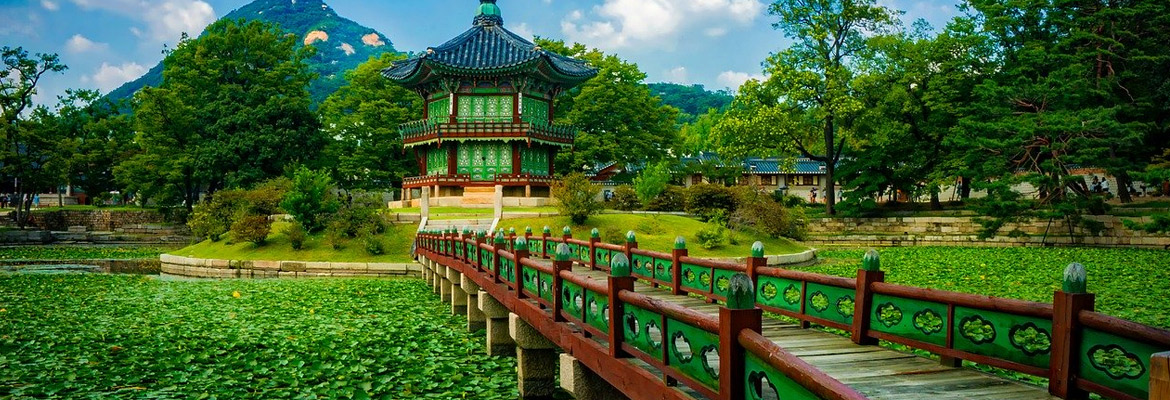
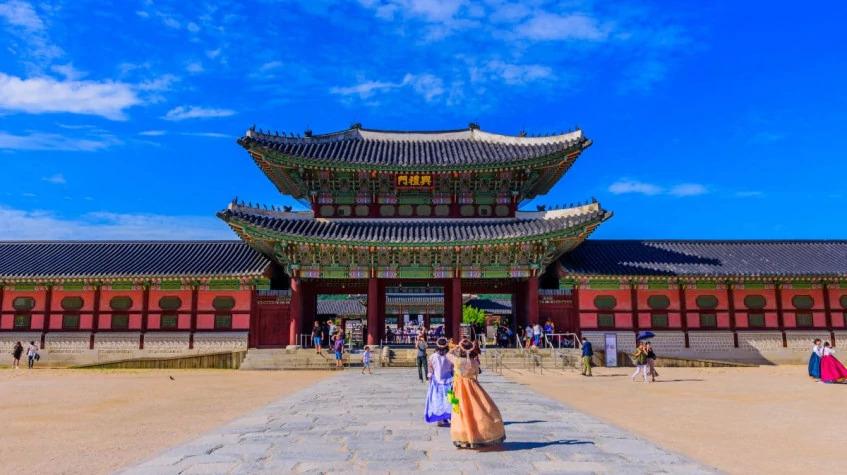
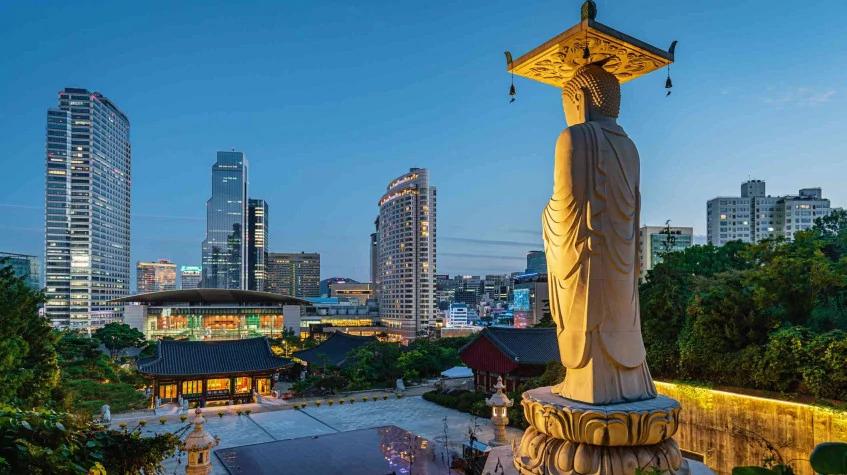
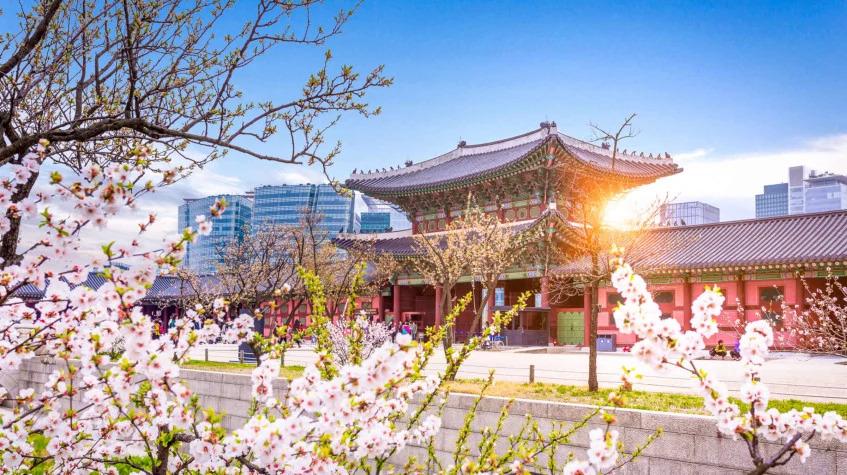
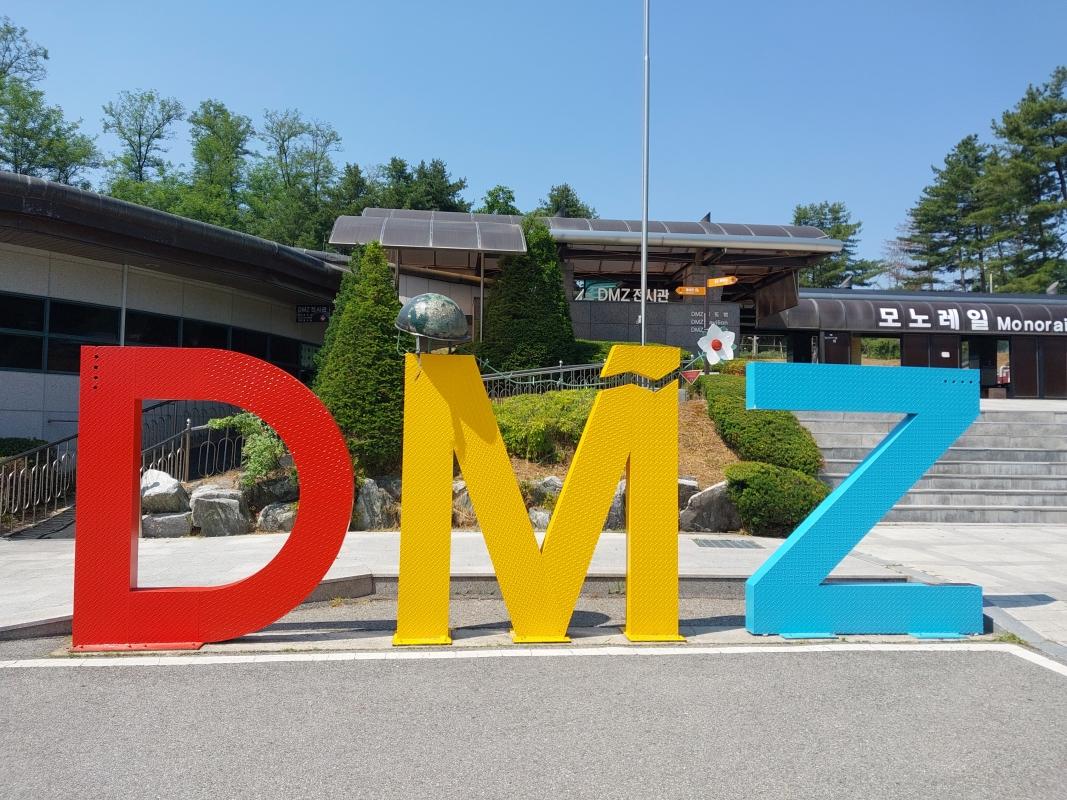
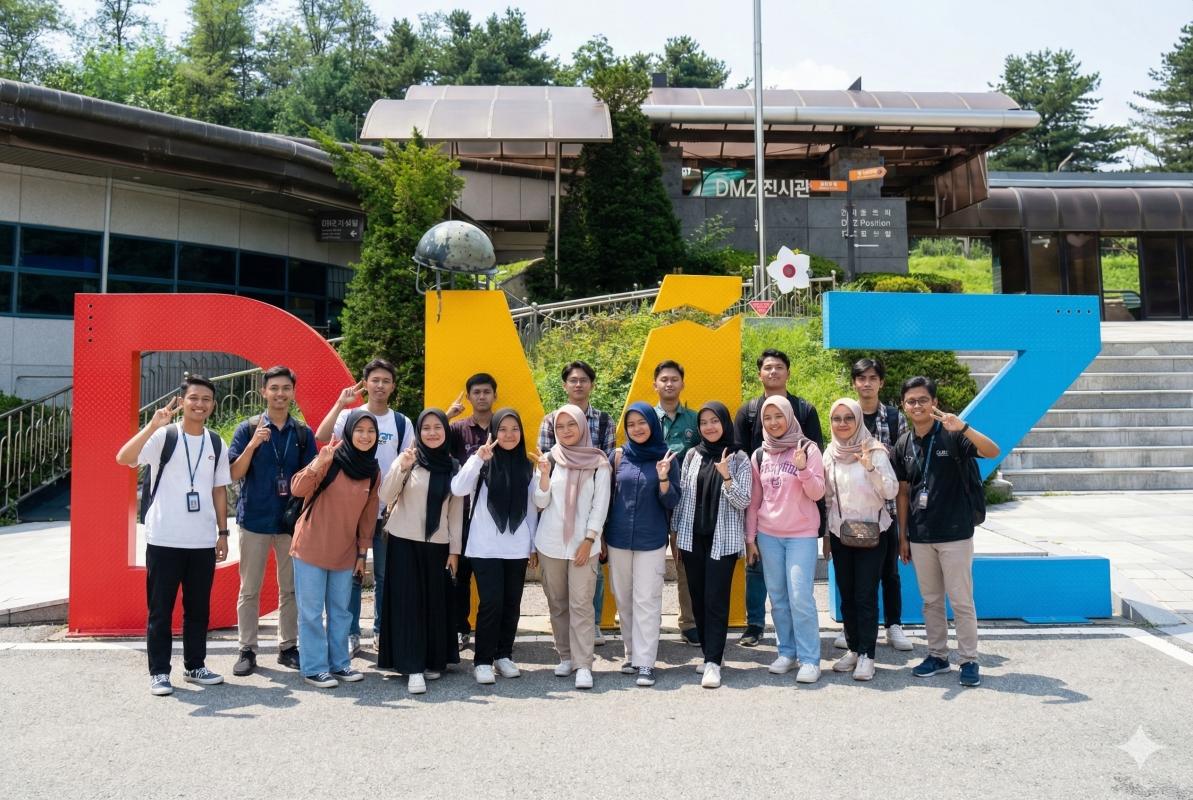
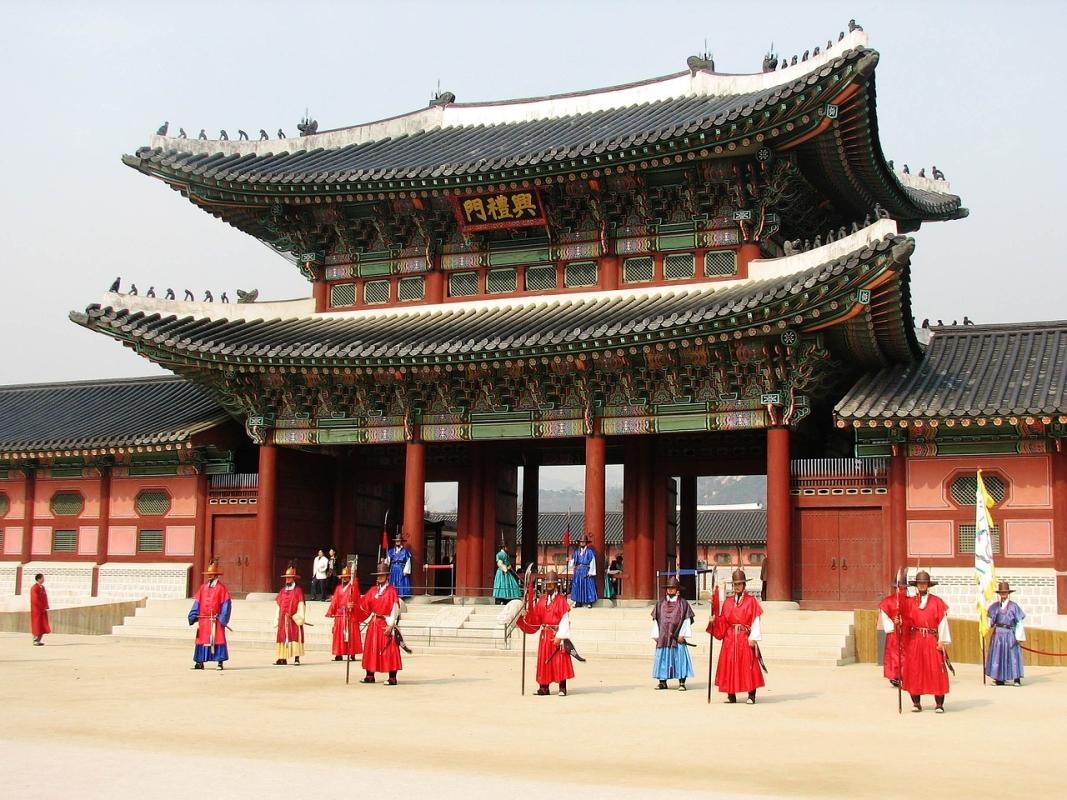
Gyeongbokgung Palace, the largest of Seoul's five Joseon-era royal palaces, anchors most first-day itineraries, often paired with the nearby Bukchon Hanok Village of traditional wooden houses and the shopping streets of Myeongdong. Namsan Mountain and its Seoul Tower offer skyline views over the Han River, while the DMZ, the demilitarized zone dividing North and South Korea, is a common half-day excursion from the capital for travelers interested in the peninsula's modern history.
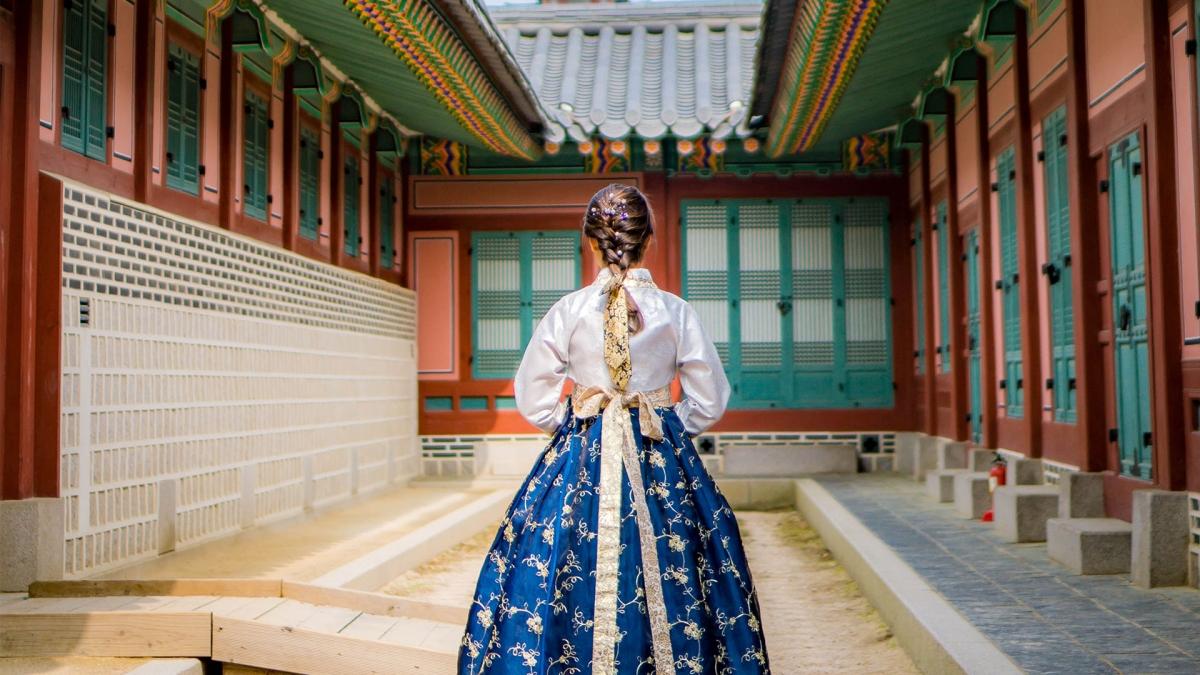
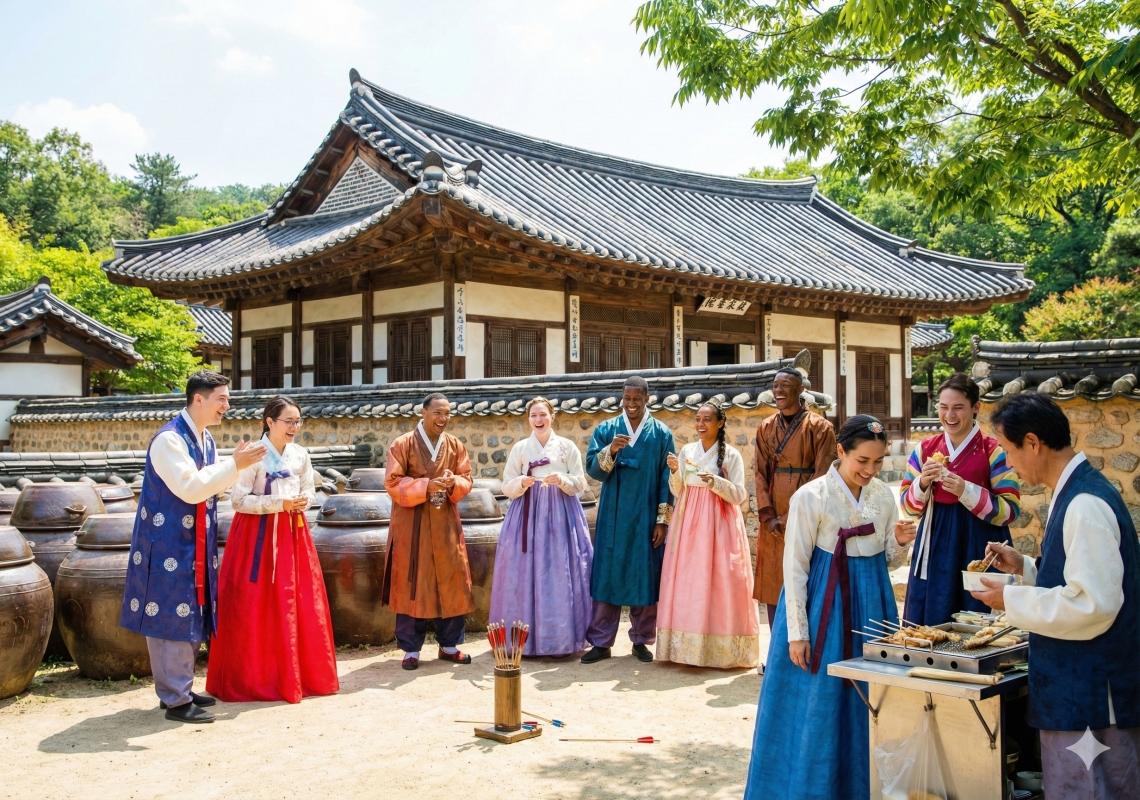
Insadong's antique shops and tea houses, along with the riverside paths along the restored Cheonggyecheon stream, give visitors a quieter counterpart to Myeongdong's crowds, and many first-time visitors combine a hanbok rental with a palace visit to take photographs in traditional Korean dress.
Busan, South Korea's second-largest city, is known for Haeundae Beach, the Jagalchi fish market and the hillside village of Gamcheon, whose pastel houses have earned it comparisons to a small-scale Santorini. The city is reached from Seoul by high-speed KTX train in around two and a half hours, making it a practical addition to itineraries with a few extra days.
Gyeongju, the capital of the Silla kingdom for close to a thousand years, holds a concentration of royal tombs, the Bulguksa Temple and the Seokguram Grotto, both UNESCO World Heritage Sites, and the star-gazing tower of Cheomseongdae. Its historic sites differ from Seoul's Joseon-era palaces and are usually visited on the way to or from Busan.
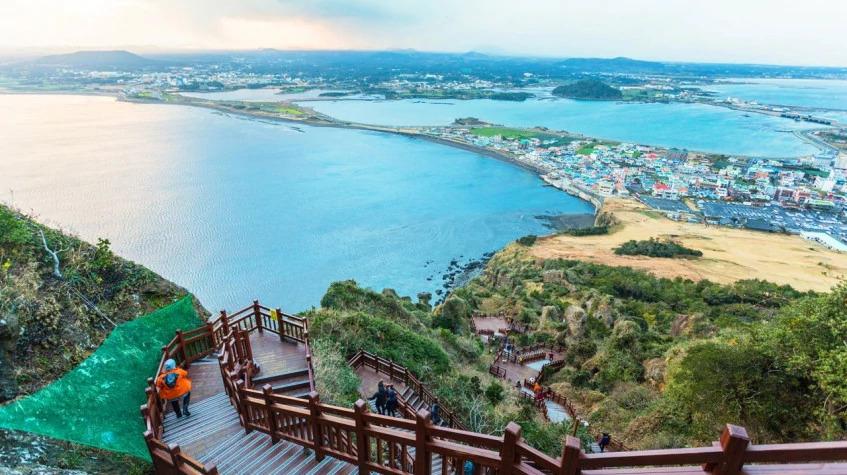
Jeju, a volcanic island off the southern coast, is reached by a short domestic flight from Seoul and offers a landscape distinct from the mainland, including the extinct volcanic cone of Seongsan Ilchulbong, lava tube caves and the waterfalls around Seogwipo. Its subtropical climate and beaches make it a common extension for travelers with additional time, and the island's central volcano, Hallasan, South Korea's highest peak, draws hikers to its crater lake trails.
Beyond Seoul and Gyeongju, temples such as Haeinsa, home to a set of thirteenth-century Buddhist scripture woodblocks, offer travelers the option of a temple stay, spending a night following the daily schedule of resident monks. The folk village of Andong, in the country's southeast, preserves Joseon-era clan houses and Confucian academies and hosts a well-known mask dance festival each autumn.
Jeonju, roughly two hours south of Seoul by train, holds the country's largest concentration of traditional hanok houses within a single district, many now converted into guesthouses, tea rooms and craft workshops. The city is also considered the birthplace of bibimbap, and food-focused visitors often combine a walk through the hanok village with a stop at Jeonju's traditional market.
South Korea Tour Packages typically combine transportation, accommodation and guided sightseeing across the included cities. Seoul-focused packages such as the 7 Days Seoul City Package Tour cover the capital's palaces, markets and surrounding attractions, while longer itineraries add Busan, Gyeongju or Jeju for travelers wanting to see beyond the capital.
Korean cuisine centers on rice, banchan side dishes and dishes such as bibimbap, bulgogi and Korean barbecue, widely available in Seoul's markets including Gwangjang and Namdaemun. Street food stalls throughout the capital sell tteokbokki, hotteok and other quick dishes, and a growing number of food-focused tours walk visitors through several markets in a single evening.
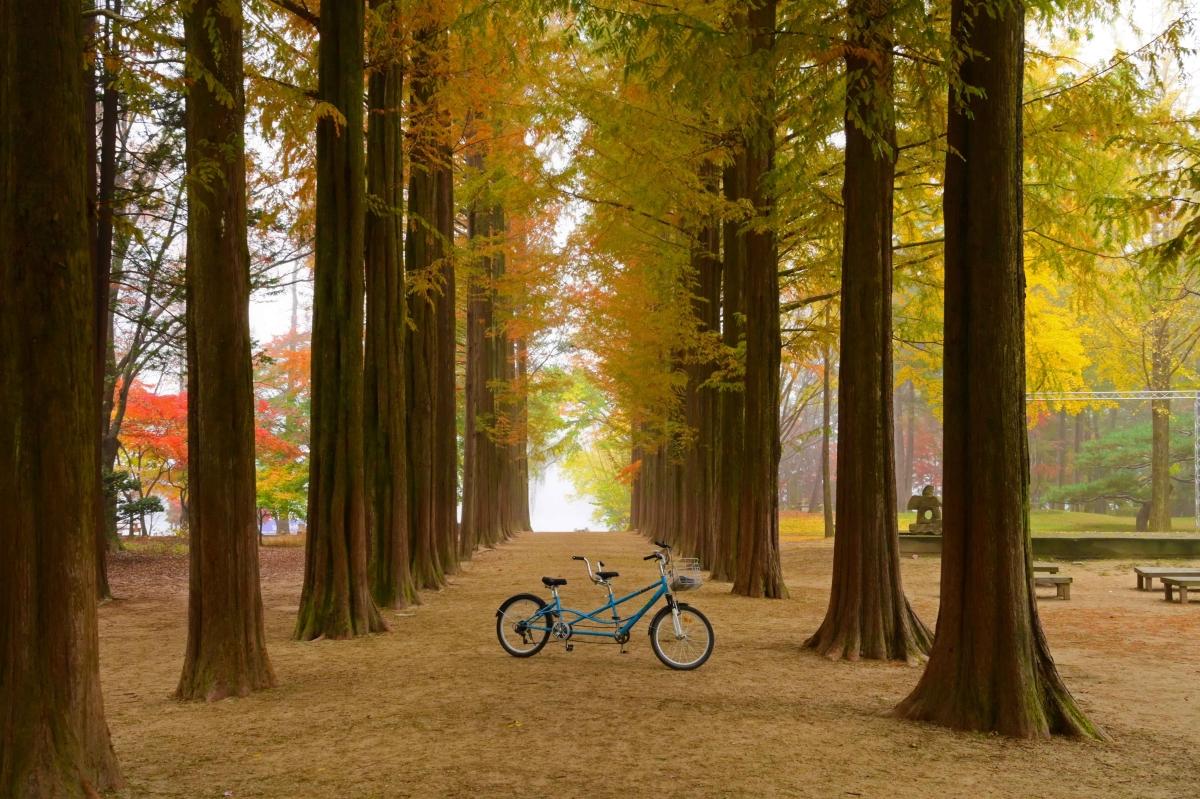
Seasonal festivals mark the country's calendar, from cherry blossom celebrations in spring to lantern festivals tied to Buddhist holidays, and autumn foliage draws visitors to national parks such as Seoraksan. Winter brings ice festivals in the country's colder regions, drawing a different set of visitors than the spring and autumn peak seasons. Shopping districts such as Myeongdong and the underground malls near Seoul Station stay busy year-round, and duty-free stores throughout the capital are a common stop before departure.
The KTX high-speed rail network connects Seoul to Busan, Gyeongju and most other major cities in under three hours, making multi-city itineraries practical without internal flights. Seoul itself is served by an extensive subway system, while Jeju, not connected to the mainland rail network, is reached only by air or ferry.
Seoul's reputation for skincare and cosmetics has made neighborhoods such as Myeongdong and Hongdae a draw for shopping in their own right, while K-pop and Korean drama fandom has turned certain filming locations and entertainment company districts into informal sightseeing stops for younger travelers.
April and May bring cherry blossoms to Seoul and the southern coast, while September through November offers similarly mild temperatures along with autumn foliage in the mountains. Summer is hot and humid with a monsoon season in July, and winter can bring cold temperatures and snow, particularly inland and around Seoraksan National Park.