
Free Cancellation


-high.jpg&w=1920&q=75 "Indo-Islamic Tour From Delhi & Agra With Fatehpur Sikri 2-Day")



Fatehpur Sikri Tours visit a Mughal capital that lasted barely fifteen years before being abandoned, left largely intact ever since in the dry climate of northern India. Emperor Akbar ordered the city built in 1571, reportedly to honor the Sufi saint Salim Chishti, who had predicted the birth of Akbar's son at the site. The court moved on by the 1580s, most likely due to an inadequate water supply, and what remains today is one of the most complete examples of Mughal architecture anywhere in the country.
Sitting roughly forty kilometers from Agra, Fatehpur Sikri fits naturally into a Golden Triangle route through northern India, usually visited on the road between Agra and Jaipur. Unlike a living city, Fatehpur Sikri functions as a single connected site, its red sandstone palaces, courtyards and mosque forming one of the most complete records of Akbar's reign.
The Buland Darwaza, or Gate of Victory, rises fifty-four meters above the entrance to the Jama Masjid courtyard and was added around 1576 to commemorate Akbar's military campaign in Gujarat. Built from red sandstone with white and black marble inlay, it ranks among the tallest gateways constructed anywhere in the world.
The Jama Masjid, one of the largest mosques built in India during Akbar's reign, was reportedly modeled in part on the layout of the mosque at Mecca, with an expansive courtyard bordered by cloisters on three sides. Construction combined red sandstone with white marble detailing around the prayer hall's arched entrances, a pairing repeated throughout Fatehpur Sikri's other major buildings.
Inside the mosque courtyard, the tomb of Salim Chishti stands in white marble, a striking contrast to the red sandstone surrounding it. Pilgrims still visit and tie threads to its carved marble screens in hopes their own wishes will be granted, continuing a practice that predates the site's abandonment as an imperial capital.
Beyond the mosque, Fatehpur Sikri's palace buildings include the five-story Panch Mahal, an open pavilion built for the women of the royal court, and the Diwan-i-Khas, where Akbar is said to have held religious debates among scholars of different faiths from a central raised platform. The Jodha Bai Palace, named for one of Akbar's wives, combines Hindu and Islamic architectural elements in a single courtyard building, reflecting the emperor's broader approach to religious tolerance.
A large courtyard known as the Pachisi Court takes its name from a board game said to have been played there using slave girls dressed in colored costumes as living pieces, according to accounts recorded by court chroniclers. Nearby, the Ibadat Khana, or House of Worship, hosted the interfaith discussions Akbar convened among Muslim, Hindu, Christian and Zoroastrian scholars.
Historians generally attribute the city's abandonment to an insufficient water supply, though some accounts also point to unrest in the northwestern territories that drew the imperial court's attention elsewhere. Whatever the exact cause, the speed of the move meant Fatehpur Sikri was left without the later renovations and rebuilding that reshaped many of India's other historic cities, preserving its late sixteenth-century layout largely as built.
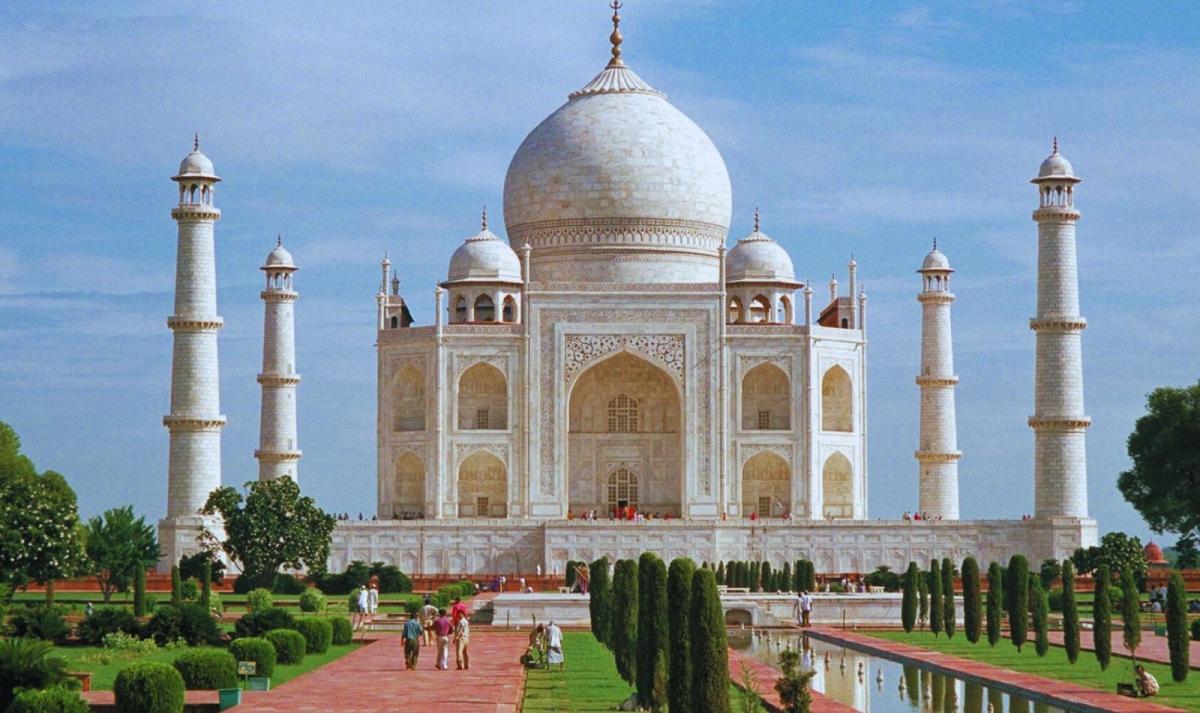
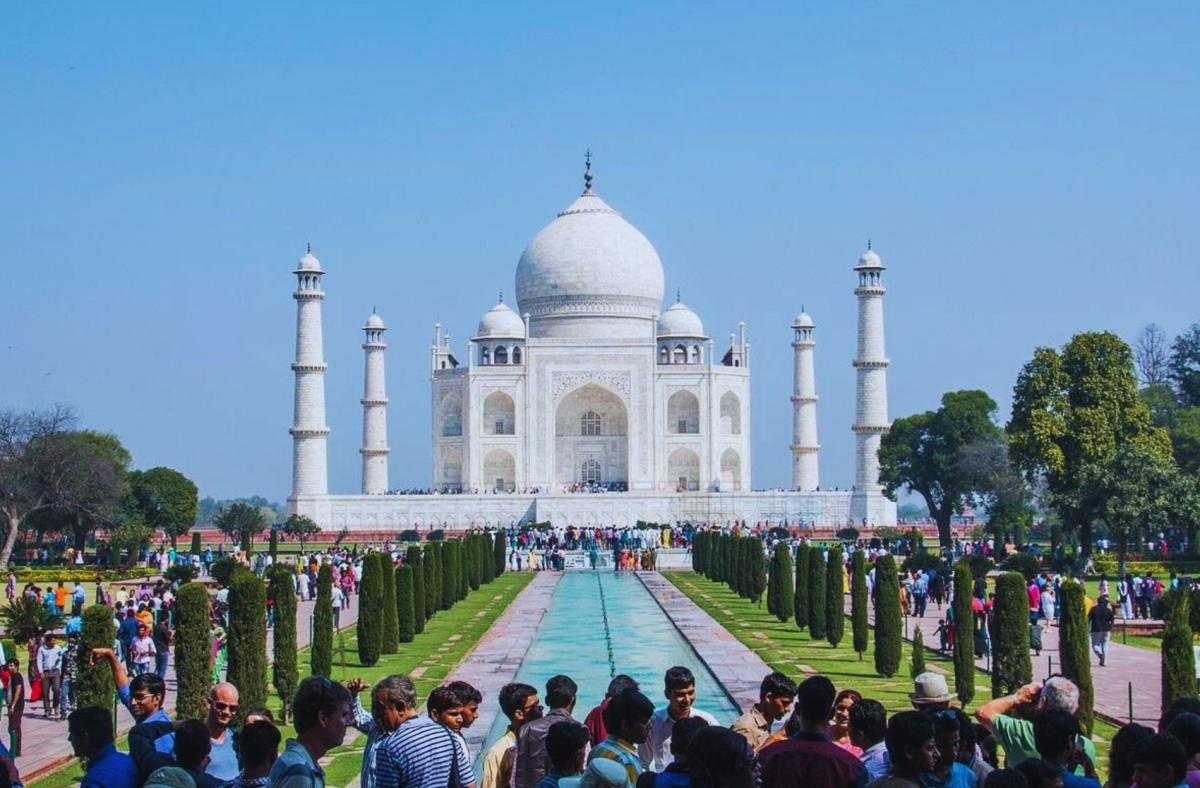
Most visitors reach Fatehpur Sikri on a half-day excursion from Agra, often paired with the Taj Mahal and Agra Fort earlier in the same trip, before continuing on toward Jaipur.
October through March brings cooler temperatures suited to walking the site's open courtyards, which offer little shade during the middle of the day. Early morning visits are worth planning for even outside the hottest months, since the sandstone surfaces absorb heat quickly once the sun is up.