
Free Cancellation
-high.jpg&w=1920&q=75 "From New Delhi: Same Day Jaipur Tour By Car")
Jaipur is the capital of Rajasthan and the third corner of India's Golden Triangle, roughly 170 miles from Delhi and a comparable distance from Agra. Known across the country as the Pink City for the terracotta wash applied to its old town in 1876 to welcome the Prince of Wales, Jaipur was founded in 1727 by Maharaja Sawai Jai Singh II as one of the first planned cities in India, laid out on a grid according to principles of Vastu Shastra architecture.
Tours of the city typically combine its hilltop forts, palace complexes and walled bazaars with day trips into the surrounding Aravalli hills, often as one stop on a longer India circuit that also covers Delhi and Agra. Jaipur alone holds enough sights to fill several days, from Mughal-era forts to a still-functioning eighteenth century observatory.
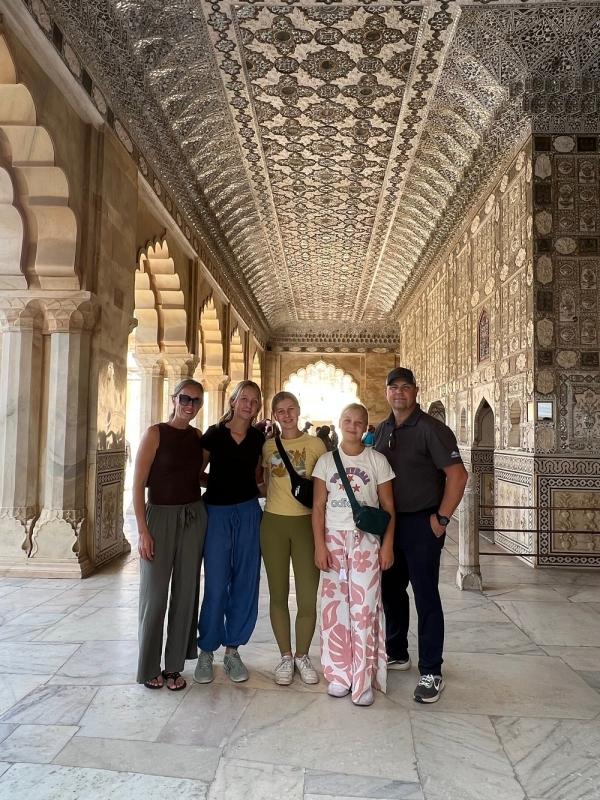
Amber Fort stands on a ridge above Maota Lake, about seven miles outside the city center, and is Jaipur's most visited monument. Built from pale yellow and pink sandstone beginning in 1592, the fort combines Rajput and Mughal architectural styles across a series of courtyards, including the mirrored Sheesh Mahal, where thousands of tiny glass fragments were set into the ceiling to reflect candlelight. Visitors climb to the fort on foot, by jeep, or on elephant back along the cobbled ramp once used by royalty.
Two further forts sit on the same ridge line above the city. Nahargarh Fort, built in 1734, overlooks Jaipur from the north and offers panoramic views across the pink-washed grid below, along with a restaurant and a stepwell built into its walls. Jaigarh Fort, connected to Amber Fort by an underground passage, was built primarily to guard the royal treasury and now displays the Jaivana cannon, cast in 1720 and still counted among the largest cannons on wheels ever built.
At the center of the old town, the City Palace remains part museum and part residence, still home to a portion of the former royal family. Its courtyards hold the Chandra Mahal, the Mubarak Mahal reception hall and an armory displaying Rajput weaponry, while the Diwan-i-Khas courtyard contains a pair of silver vessels once used to carry Ganges water for a maharaja's voyage to England, said to be among the largest silver objects in the world.
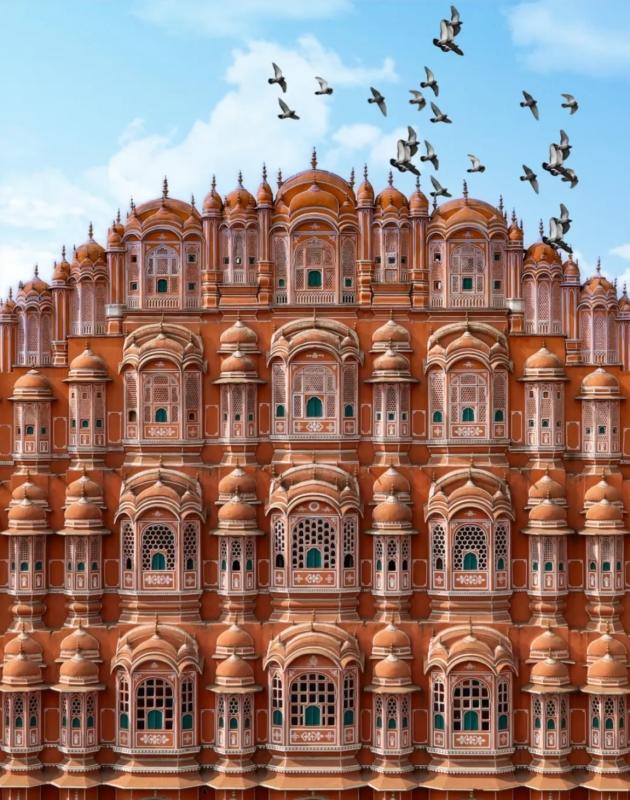
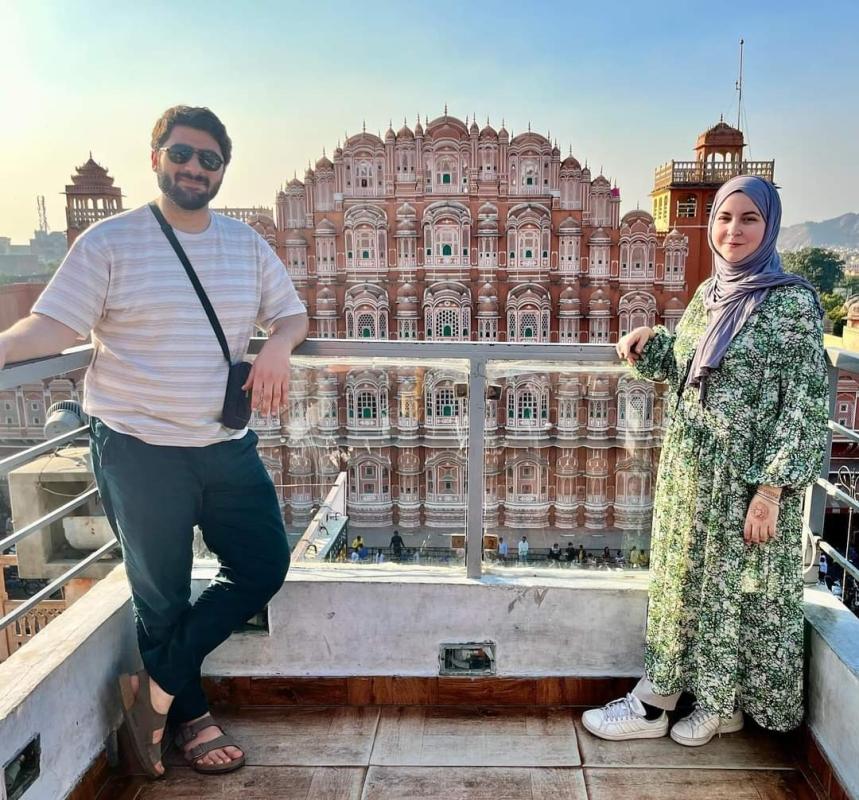
Facing a busy street in the old city, the Hawa Mahal, or Palace of Winds, is a five-story pink sandstone facade honeycombed with 953 small latticed windows. Built in 1799, the design allowed royal women to observe street life below without being seen from outside, while the perforated screens drew a natural draft through the palace during Jaipur's hot summers. Photographers typically view the facade from across the street in the early morning, when direct light catches the pink sandstone most clearly.
Next to the City Palace, the Jantar Mantar observatory holds nineteen astronomical instruments built of stone and marble by Jai Singh II in the 1730s. The largest, a sundial roughly 90 feet tall, can tell local time to within two seconds, and the complex is one of five such observatories the maharaja built across northern India. It was inscribed as a UNESCO World Heritage Site in 2010, and each instrument still functions well enough that guides commonly demonstrate a live reading against a visitor's wristwatch.
Jaipur's walled old town is organized into specialized bazaars that have operated on the same streets for generations. Johari Bazaar deals in gemstones and jewelry, Bapu Bazaar in textiles and leather juttis, and Chandpole Bazaar in the region's distinctive block-printed and tie-dye fabrics. Blue pottery, hand-painted with cobalt and turquoise glazes, is another craft closely associated with the city and widely sold near Amber Fort and around the old town. On the city's outskirts, the village of Sanganer is known for hand block printing and handmade paper, and a number of workshops there are open to visitors as a half-day add-on to a Jaipur itinerary.
Multi-day packages built around Jaipur usually combine the major forts and palaces with a bazaar visit and, depending on the itinerary, a stop at Nahargarh Fort for sunset views over the city. The Jaipur the Pink City Tour covers the core sights of the old town alongside Amber Fort, a common starting point for travelers building a longer Rajasthan or Golden Triangle itinerary.
Rajasthani cuisine in Jaipur leans on dishes suited to a dry climate and long-lasting ingredients, among them dal baati churma, a combination of lentils, baked wheat rolls and a sweet crumble, and gatte ki sabzi, gram flour dumplings cooked in a spiced yogurt gravy. Street stalls around the old city sell pyaaz kachori and other fried snacks, while sweet shops near Johari Bazaar are known for ghewar, a disc-shaped dessert soaked in sugar syrup. Milk-based sweets and lassi stalls cluster around the old city's main intersections, a category of street food distinct from the fried snacks sold elsewhere in the bazaars.
October through March offers the most comfortable temperatures for walking between forts and bazaars, with cooler evenings well suited to rooftop views over the old city. Summer months bring intense heat that makes midday sightseeing difficult, while the monsoon season from July to September cools the air, greens the surrounding Aravalli hills and can limit visibility from the hilltop forts.