
Free Cancellation
-high.jpg&w=1920&q=75 "Delhi Private Full-Day Tour: Old & New Delhi")
-high.jpg&w=1920&q=75 "From New Delhi: Same Day Jaipur Tour By Car")



-high.jpg&w=1920&q=75 "Indo-Islamic Tour From Delhi & Agra With Fatehpur Sikri 2-Day")
New Delhi Tours center on the planned capital that the British built alongside the older city of Delhi in the early twentieth century, a district of wide avenues, government buildings and diplomatic compounds distinct in character from the dense lanes of Old Delhi nearby. Construction began in 1911, after King George V announced the transfer of India's capital from Calcutta, and continued until the new city was formally inaugurated in 1931.
Most itineraries covering the broader India circuit pass through New Delhi at some point, and city tours here focus on the planned capital itself: its architects, its central axis and the government quarter that still functions as the seat of national power. Old Delhi's Mughal-era monuments, covered in depth on that part of the city's own dedicated tours, feature only briefly on New Delhi itineraries as a contrast to the colonial-era planning nearby.
New Delhi takes its layout from the British architect Edwin Lutyens, who led the design of the new capital together with Herbert Baker. Lutyens favored a hexagonal grid of broad, tree-lined avenues radiating from central points, a design intended to project imperial authority while folding elements of Mughal and Rajput architecture into a largely classical framework of domes, colonnades and red sandstone.
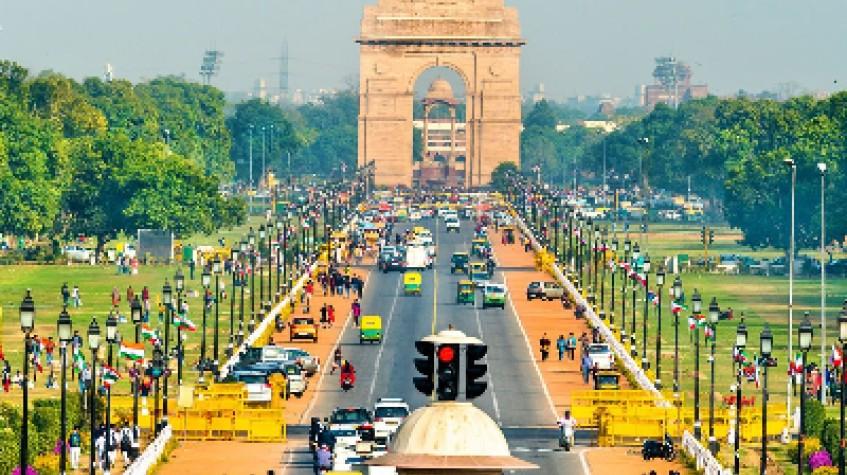
The ceremonial axis running from Rashtrapati Bhavan, the presidential residence Lutyens designed with Baker, to India Gate forms the spine of New Delhi's layout. Renamed Kartavya Path after a 2022 redevelopment, this stretch of lawns and processional road hosts the Republic Day parade each January 26 and remains the most recognizable stretch of the planned city, flanked by the sandstone Secretariat buildings that house government ministries.
India Gate anchors the eastern end of Kartavya Path, a sandstone and granite war memorial completed in 1931 and inscribed with the names of more than 13,000 Indian soldiers who died in the First World War and the Third Anglo-Afghan War. Lutyens designed the arch himself, and its placement at the terminus of the ceremonial avenue makes it one of the fixed points around which the rest of New Delhi's layout was planned.
West of the central axis, Chanakyapuri was laid out after Indian independence as a dedicated diplomatic quarter, home to most of the foreign embassies and high commissions based in Delhi. Its wide, low-density streets extend Lutyens-era planning principles into the post-independence city, with embassy compounds often designed by architects from their respective countries.
Connaught Place, New Delhi's commercial heart, was built in the 1930s as a circular colonial-era market modeled on Georgian architecture, its white-colonnaded blocks arranged around a central park. Today the ring of shops, cafes and offices remains one of the busiest commercial districts in the capital, and its geometry stands as one more example of the formal planning that defines New Delhi.
Flanking Rashtrapati Bhavan on either side, North Block and South Block form the Secretariat Building, designed by Baker to house the most senior offices of the Indian government, a role they have held since before independence in 1947. The domed pair, built in cream and red sandstone, sit at a slightly higher elevation than Rajpath, a deliberate piece of Lutyens' design meant to give Rashtrapati Bhavan visual prominence as visitors approach from India Gate.
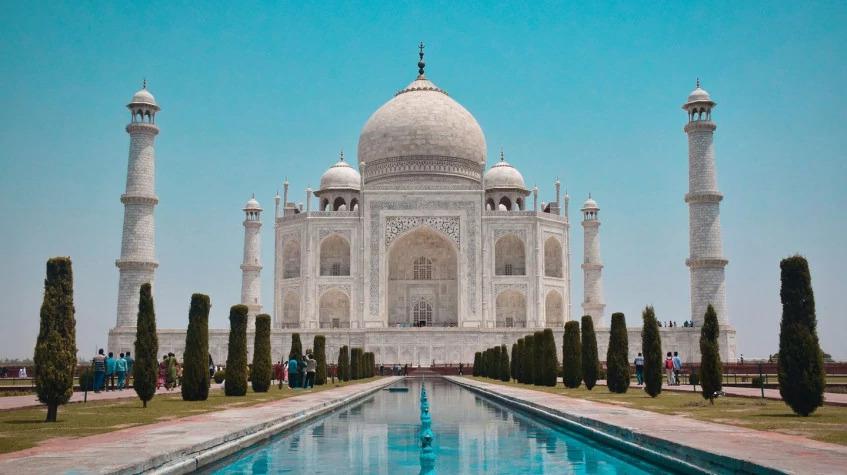
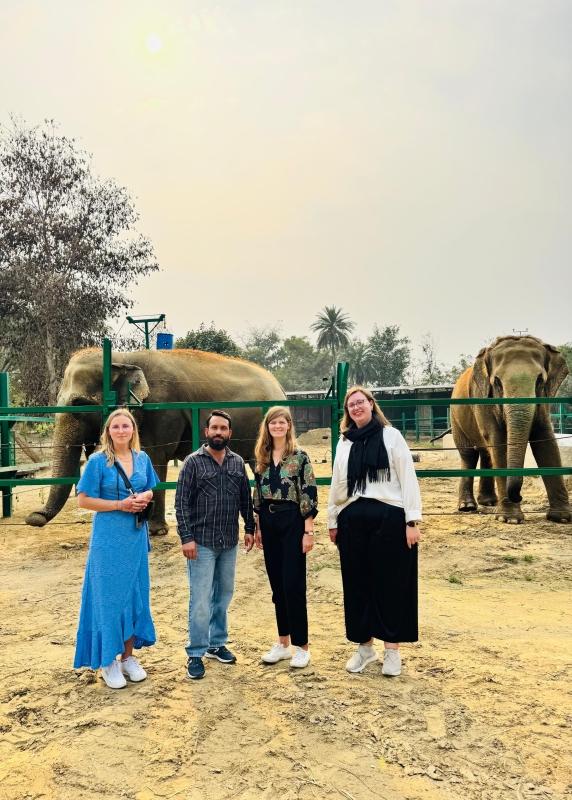
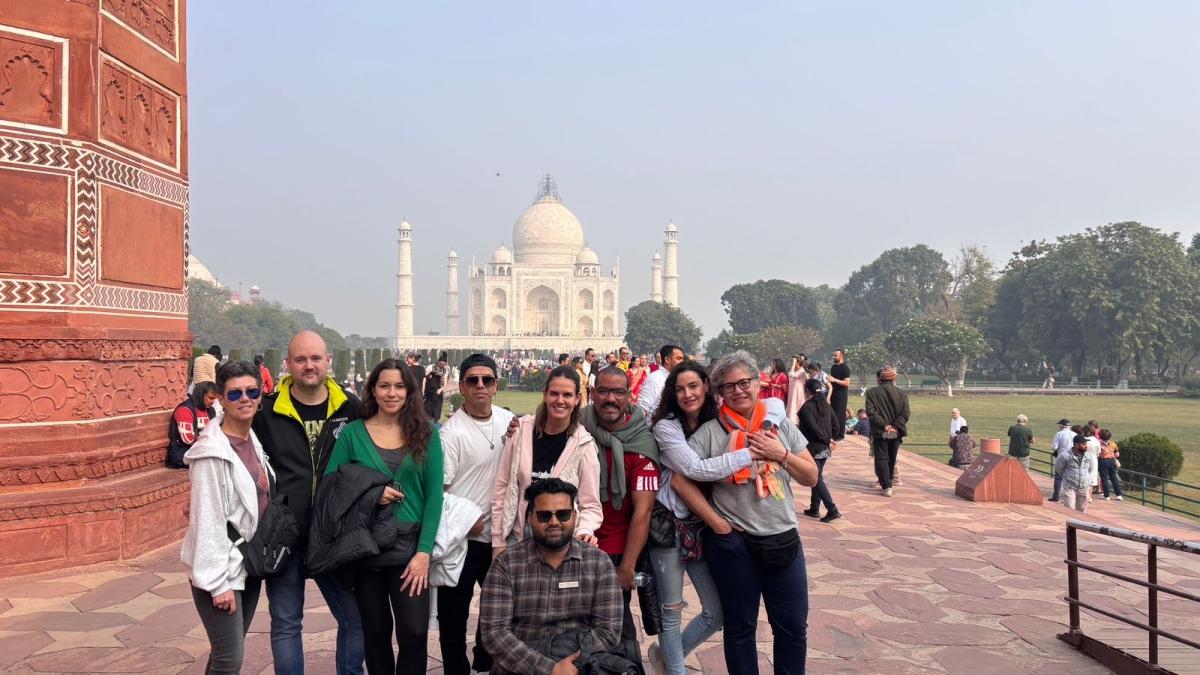
New Delhi Tour Packages typically combine a day in the government and diplomatic districts with a side trip to Agra. Same day Taj mahal & Agra Fort Tour with Elephant Sanctuary is one option for pairing the capital with the Taj Mahal in a single day.
October through March brings New Delhi's most comfortable weather for walking its avenues and government districts, with cool mornings and mild afternoons. April through June turns hot ahead of the monsoon, which arrives around July and brings humidity along with periodic heavy rain through September.