
Free Cancellation
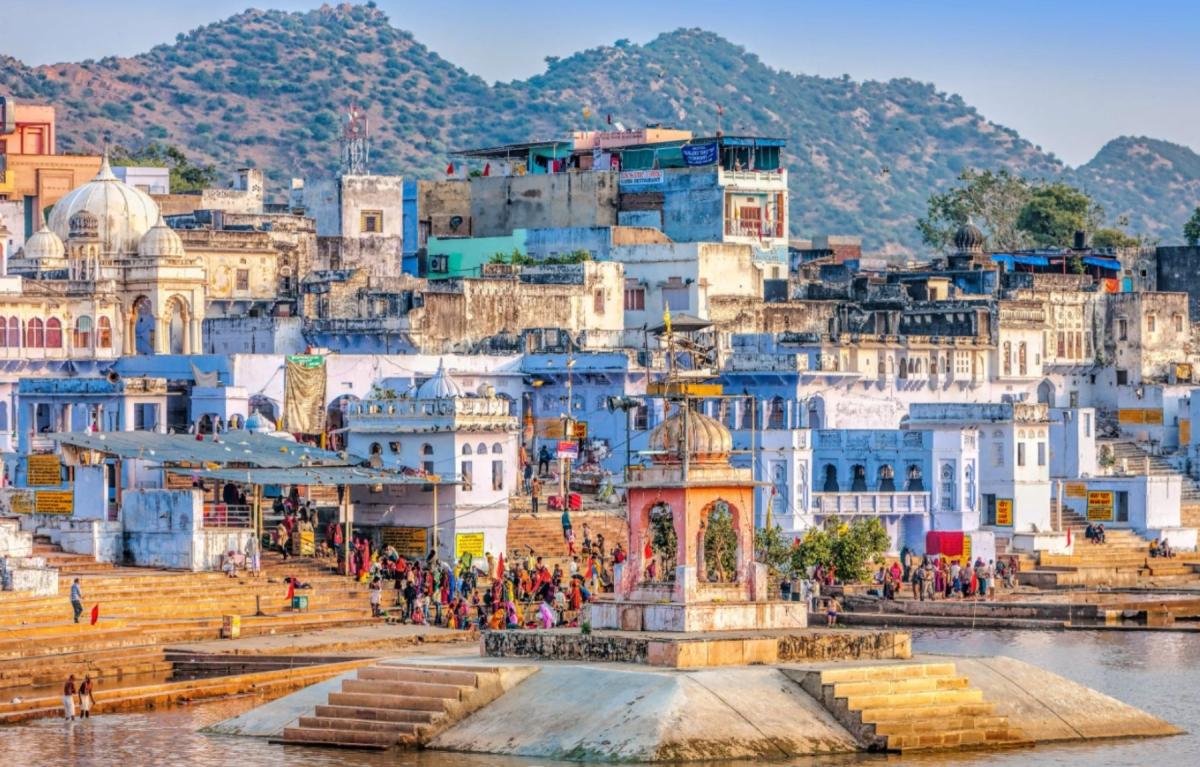
Pushkar Tours center on one of Rajasthan's principal pilgrimage towns, built around a lake considered sacred in Hindu tradition and ringed by more than fifty bathing ghats. Hindu belief holds that the lake formed where a lotus fell from the hand of Brahma, the creator god, and the town's central Brahma Temple is one of the very few temples anywhere dedicated to Brahma, which gives Pushkar a religious weight well beyond its modest size.
The town itself is small and largely whitewashed, its narrow lanes lined with temples, guesthouses and stalls selling marigold garlands for the ghats. Pushkar sits a short drive from Ajmer, and the two are frequently visited together, with Pushkar usually included as part of a longer India route through Rajasthan.
The ghats around Pushkar Lake are where most visits begin, watching pilgrims bathe at sunrise or sunset and, in many cases, taking part in a short puja ceremony led by a local priest. Photography around the ghats is handled with some sensitivity, since bathing here carries genuine religious meaning rather than functioning purely as a sight for visitors. Vendors along the lakeside paths sell flower offerings and small clay lamps, and evening aarti ceremonies, with lamps and chanting performed at the water's edge, draw both pilgrims and visitors to the same steps.
Pushkar is also a vegetarian town by local ordinance, and neither meat nor alcohol is sold within its limits, a rule tied directly to the town's status as a pilgrimage site built around the sacred lake.
Marked by a red spire and a hamsa, or goose, as its emblem, the Brahma Temple draws pilgrims from across India specifically because temples dedicated to Brahma are so rare. Hindu tradition attributes the scarcity to a curse from Brahma's wife Saraswati, and the story is a common part of the temple's retelling by local guides. Steps behind the temple climb toward the Savitri Temple on the ridge above town, reachable on foot or, for part of the way, by a cable car, and the hilltop view takes in the lake, the town's white rooftops and the desert scrub beyond.
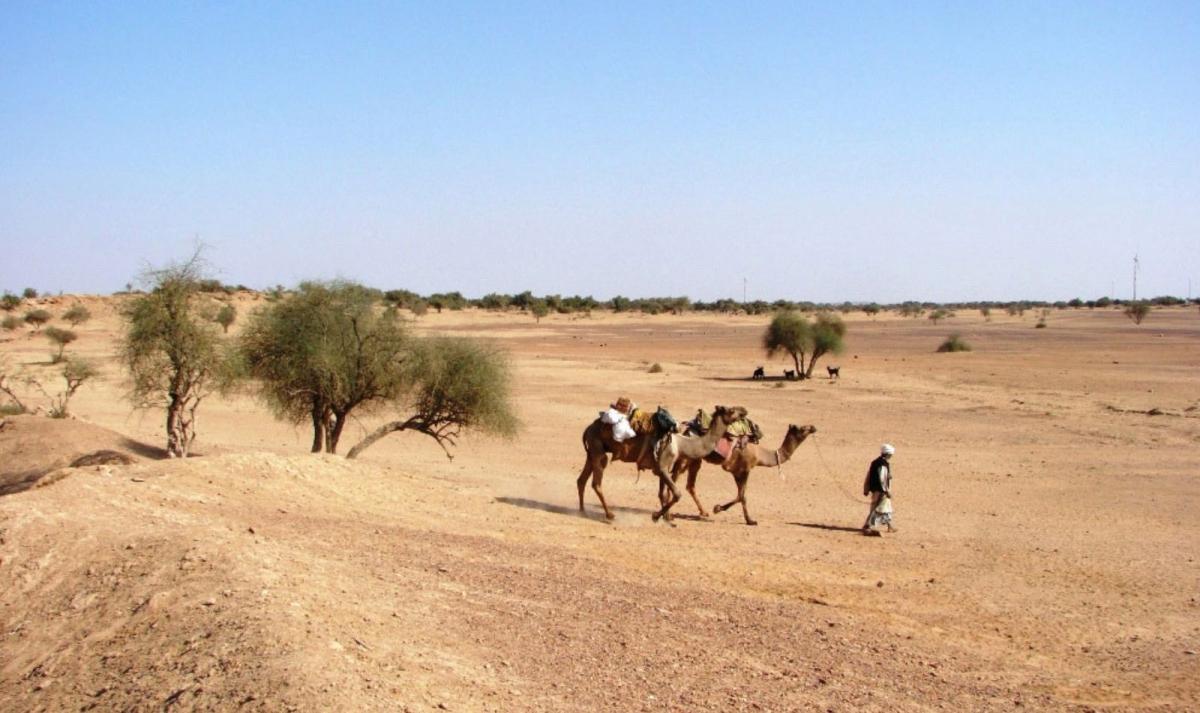
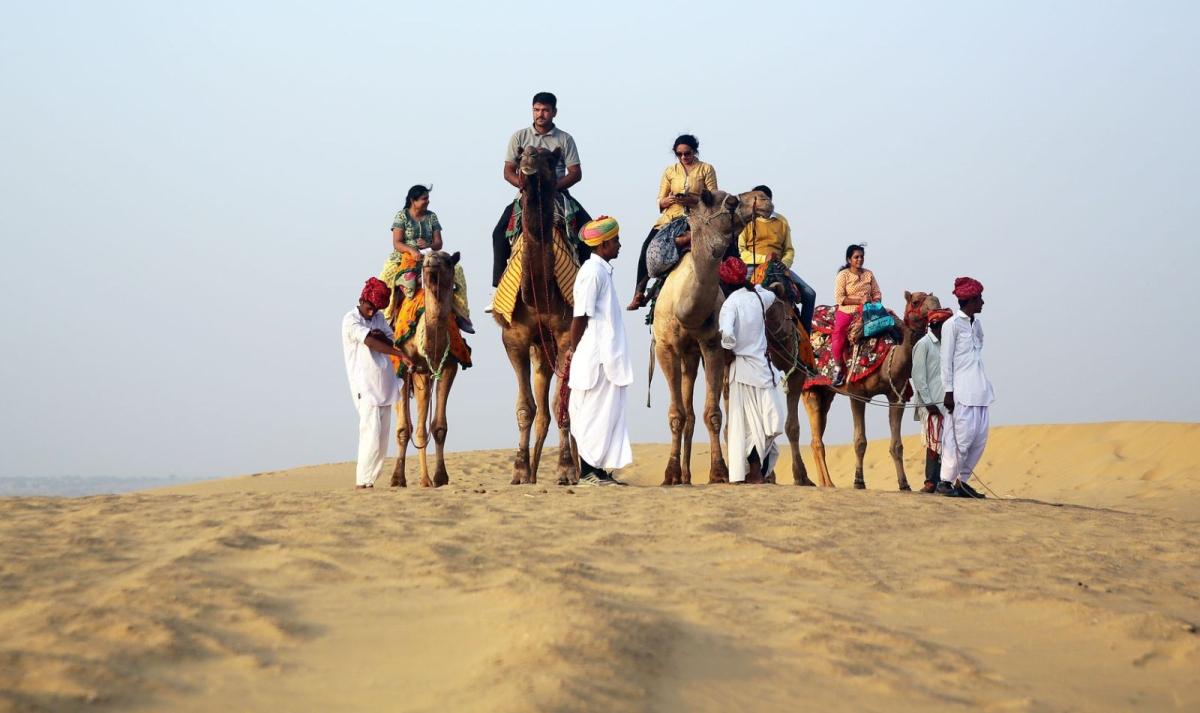
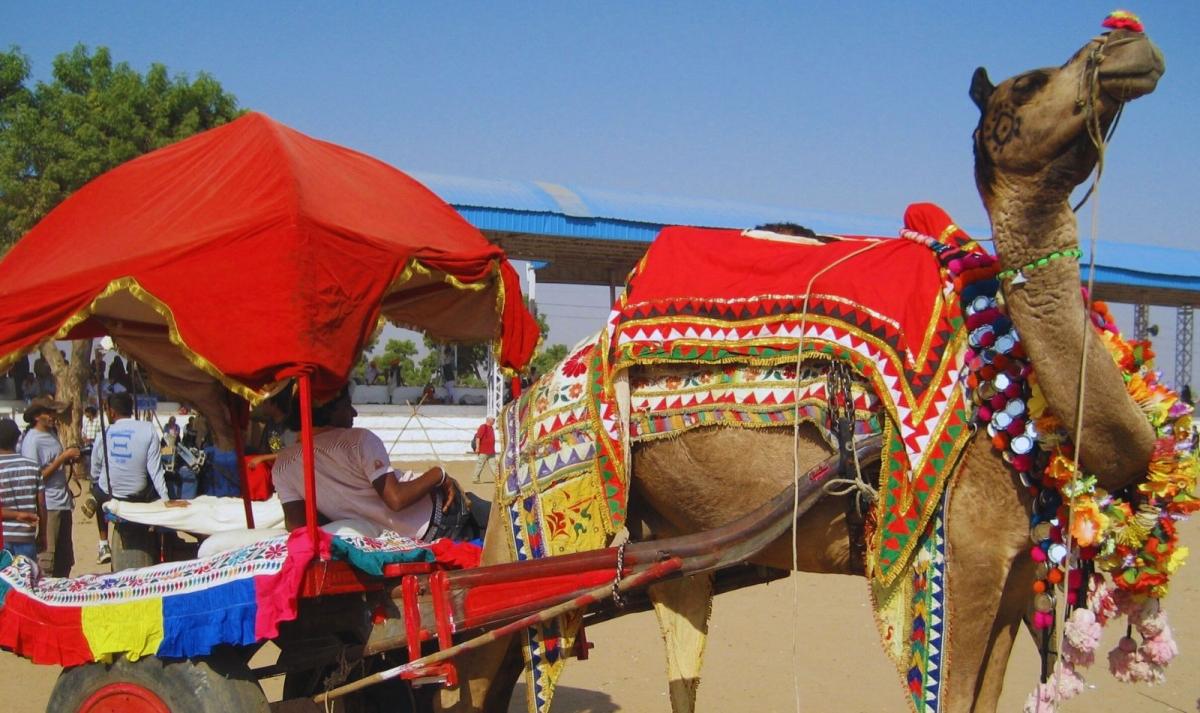
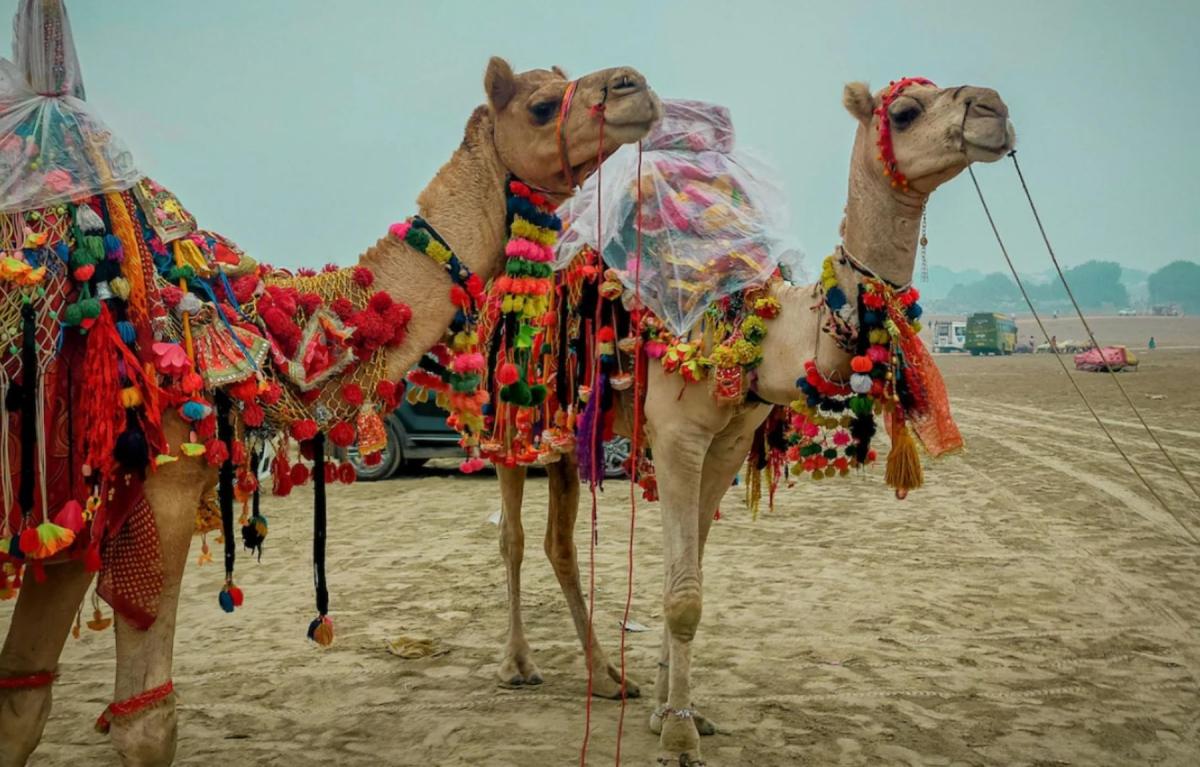
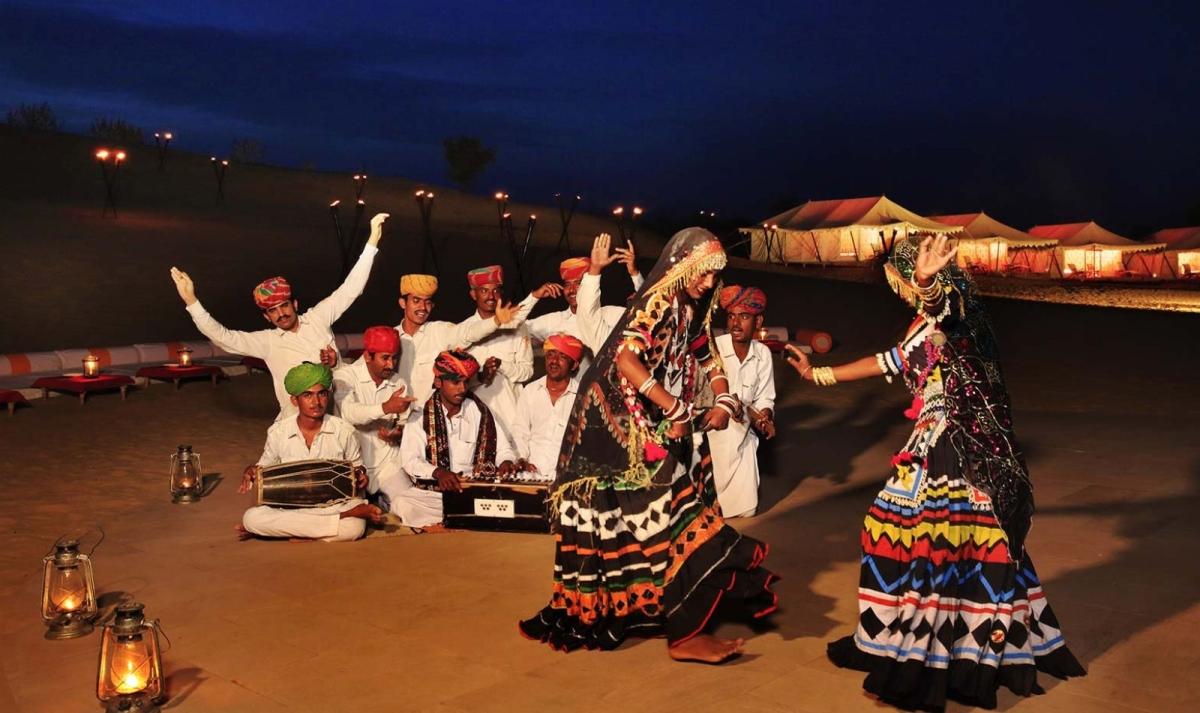
Each autumn, timed to the Kartik Purnima full moon around November, the town's population multiplies as traders, herders and travelers arrive for the Pushkar Camel Fair. Thousands of camels, along with horses and cattle, are bought, sold and paraded across the dunes outside town, and the days surrounding the fair bring folk music, competitions and a temporary tent city that dwarfs the permanent one. Many visitors plan a trip around the fair specifically, since the desert encampments, livestock trading and evening performances are largely unique to this short window each year.
Ajmer, the larger city a short drive from Pushkar, is home to the Ajmer Sharif Dargah, the shrine of the Sufi saint Moinuddin Chishti and one of the most visited Muslim pilgrimage sites in India. Combining the two towns in one trip pairs Pushkar's Hindu pilgrimage traditions with Ajmer's Sufi shrine, giving visitors a sense of two different religious currents within a single short journey.
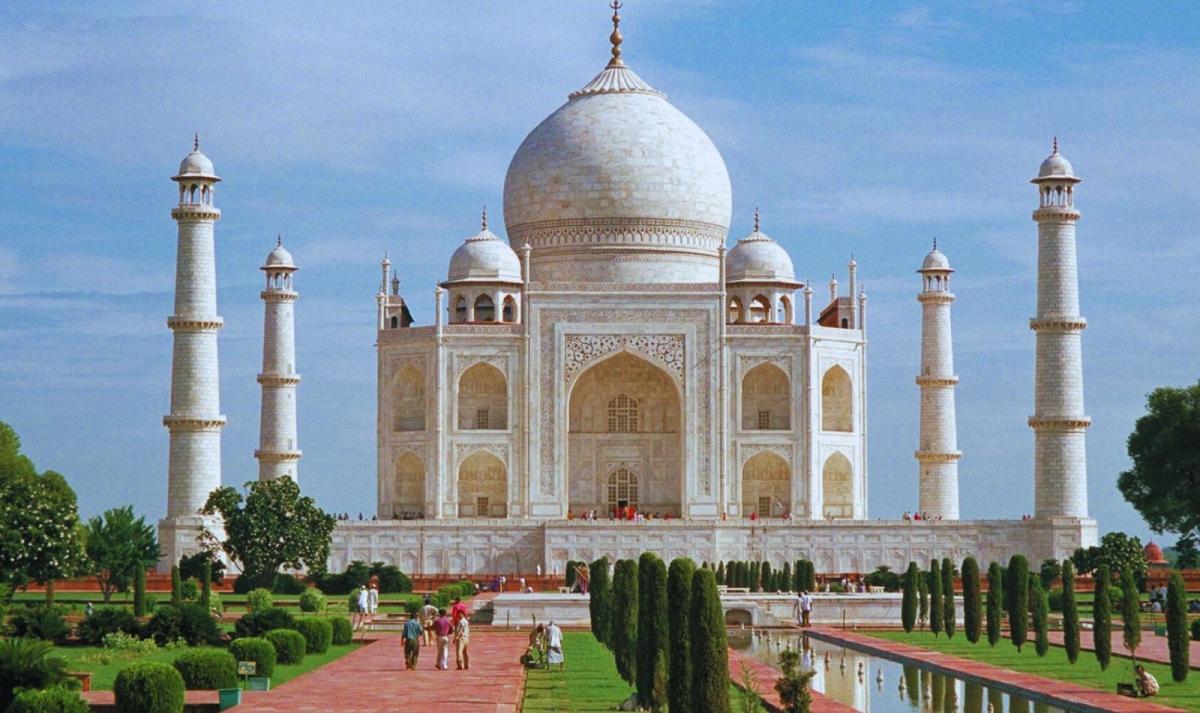
Given its position close to Jaipur, Jodhpur and Ajmer, Pushkar is commonly folded into wider Rajasthan and Golden Triangle circuits rather than visited on its own. The Golden Triangle Tour with Pushkar pairs the town with Delhi, Agra and Jaipur, adding a pilgrimage and desert-culture stop to the classic monument-focused route.
Pushkar is busiest and most atmospheric during the camel fair in October or November, when temperatures have also cooled from the summer heat. The months through February remain comfortable for visiting the ghats and temples outside fair season, while summer brings intense heat that limits daytime sightseeing.