
Free Cancellation
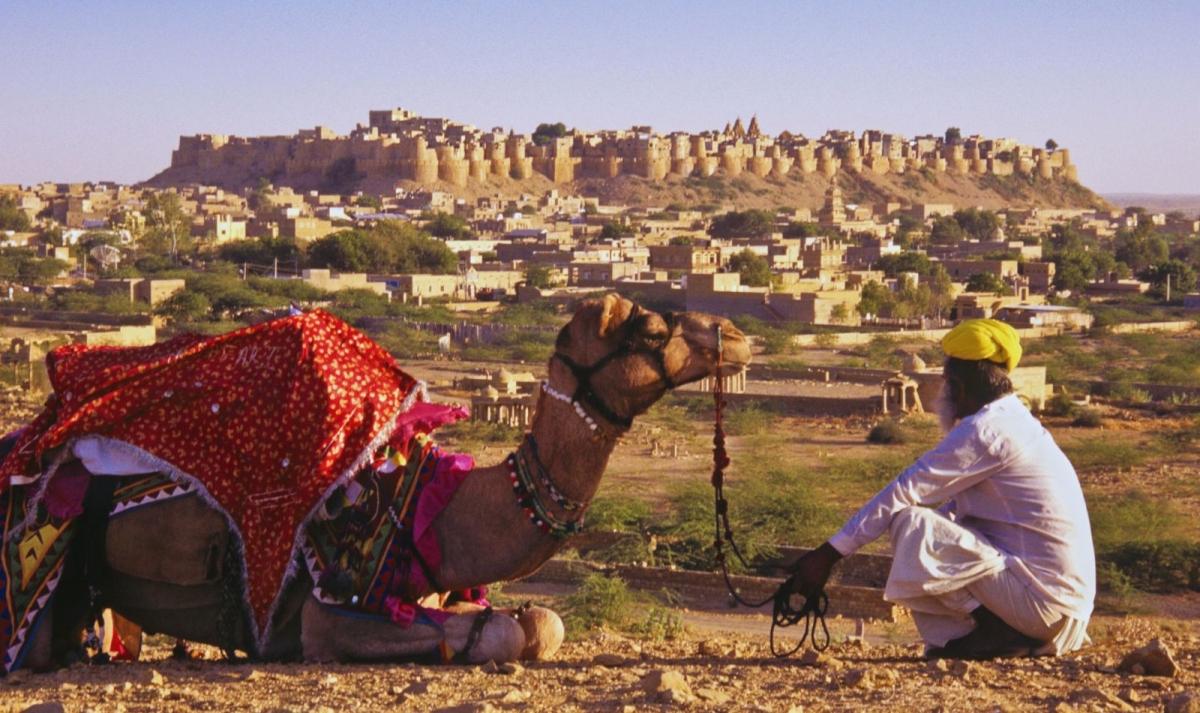
Jaisalmer rises from the Thar Desert in the far west of Rajasthan, close enough to the Pakistan border that it once guarded a key stretch of the old caravan routes between India and Central Asia. Built almost entirely from a local yellow sandstone that turns gold in the late afternoon sun, the city has earned the nickname the Golden City, a description that applies as much to its fort walls as to the merchant houses scattered through the old town.
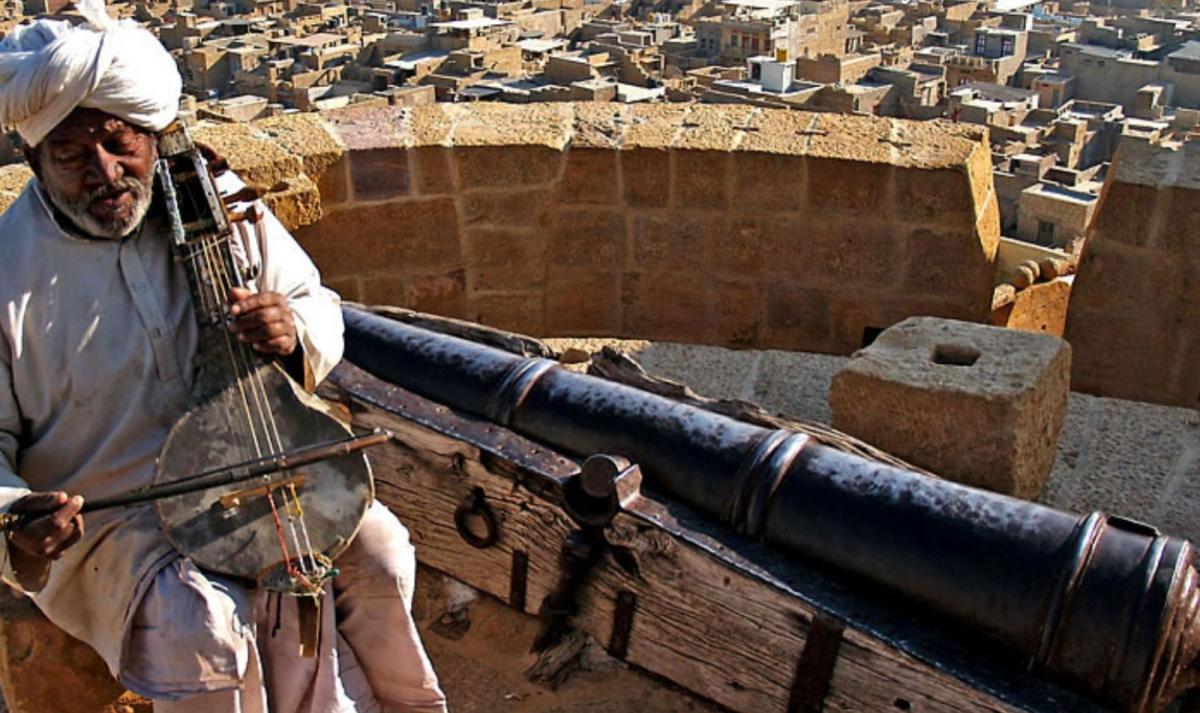
Jaisalmer Fort, raised in 1156 by the Rajput ruler Rawal Jaisal, is one of the few forts in the world still inhabited, with roughly a quarter of the old city's population living and working inside its walls today. Many visitors reach it as one leg of a wider Rajasthan itinerary connected back to the rest of India, though the city holds enough on its own, from desert dunes to carved havelis, to justify two or three days.
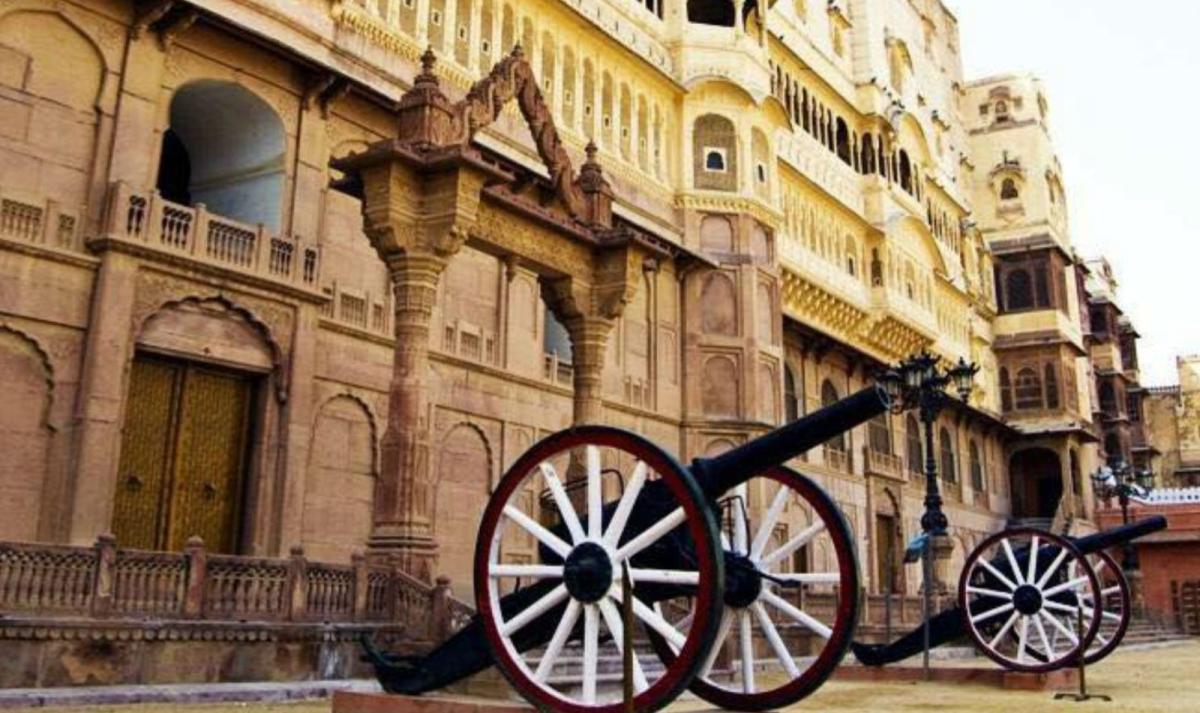
Narrow lanes inside Jaisalmer Fort climb past guesthouses, shops and homes that have occupied the same stone buildings for generations, giving the fort a lived-in character that sets it apart from India's other desert citadels. At its center, the former royal palace rises seven stories above the fort's main square, with carved balconies and screened windows that once let the royal family observe court proceedings below. A set of intricately carved Jain temples, built between the twelfth and fifteenth centuries, stands within the fort walls, their sandstone pillars and ceilings cut with figures and floral patterns typical of Jain temple architecture in Rajasthan and Gujarat.
Outside the fort, Jaisalmer's merchant families built havelis, private mansions faced with sandstone carved into screens, balconies and archways. Patwon Ki Haveli, a cluster of five such houses built by a family of cloth traders in the early 1800s, and Nathmal Ki Haveli, worked on by two brothers said to have carved each half of the facade separately, rank among the most detailed examples still standing. The stonework on both buildings took years to complete and remains sharp enough to photograph in close detail.
South of the old city, Gadisar Lake was built in the twelfth century as a water reservoir for Jaisalmer and remains ringed with small temples, shrines and carved stone ghats added by later rulers and merchants. The ornate Tilon Ki Pol gateway marks one entrance to the lake, a common stop for an evening walk away from the fort's crowds.
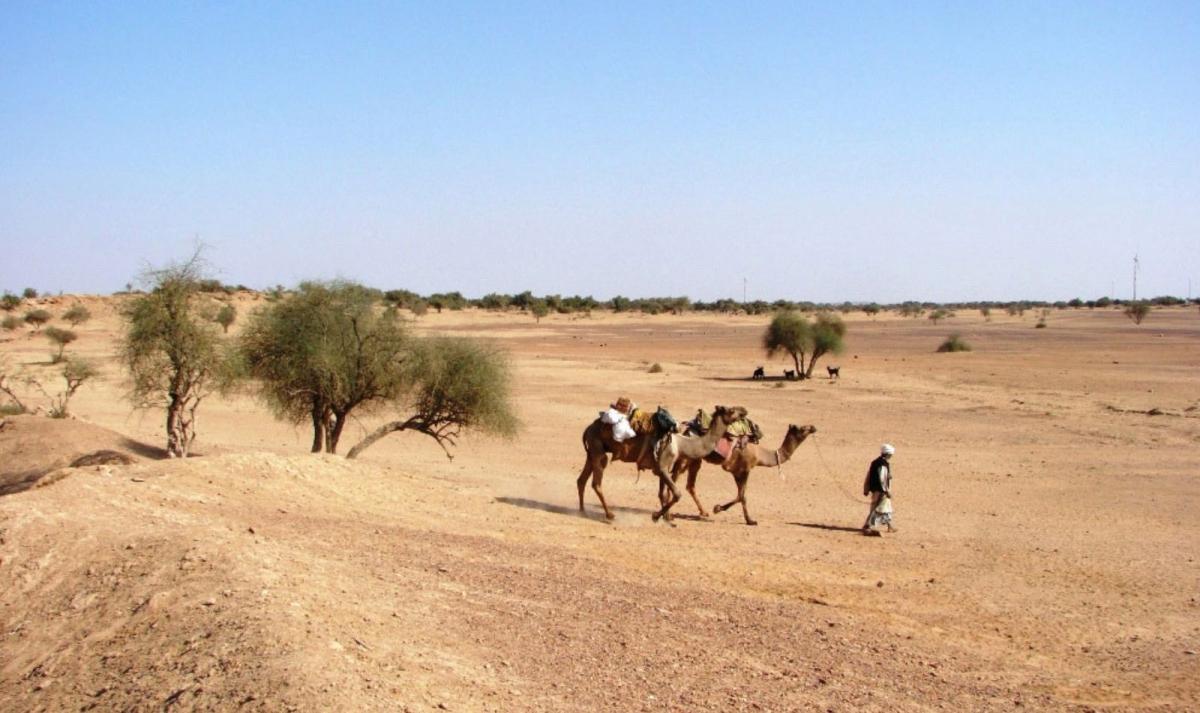
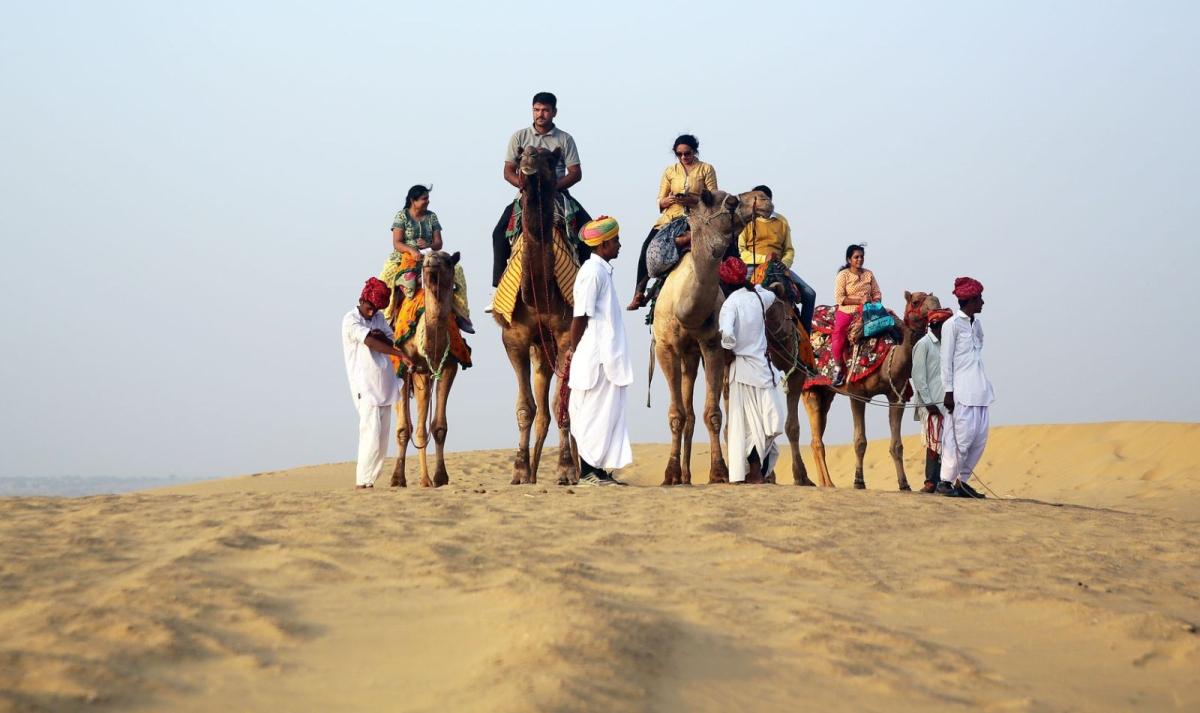
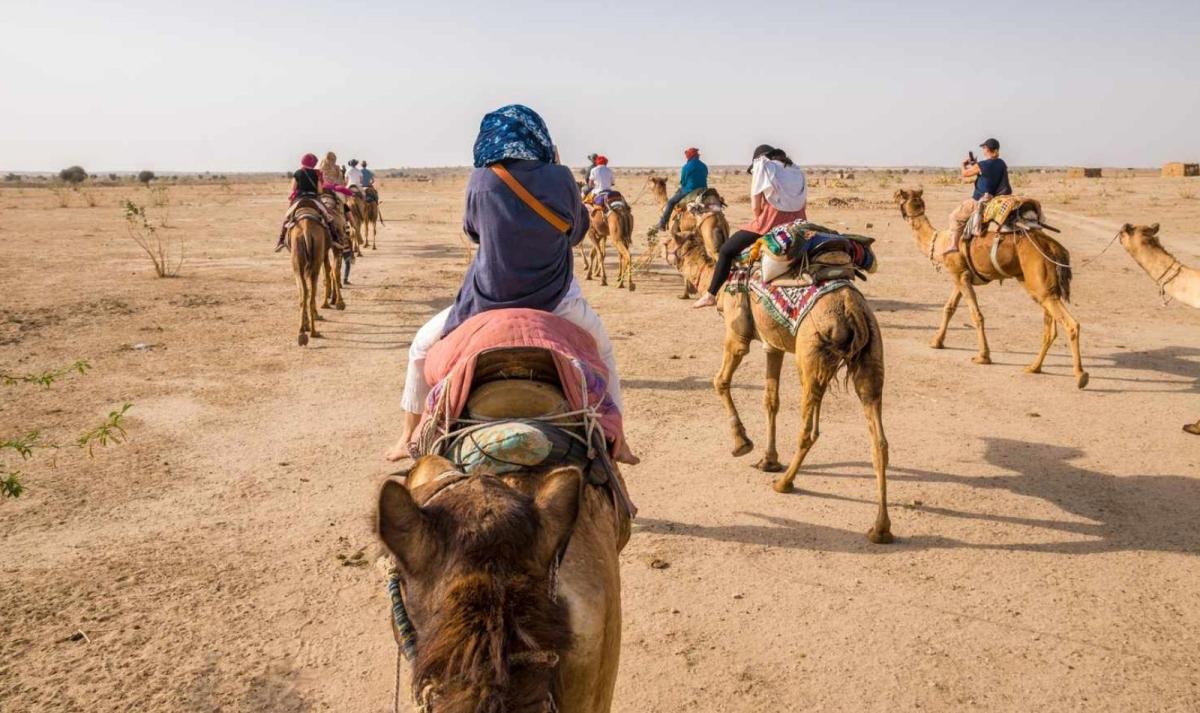
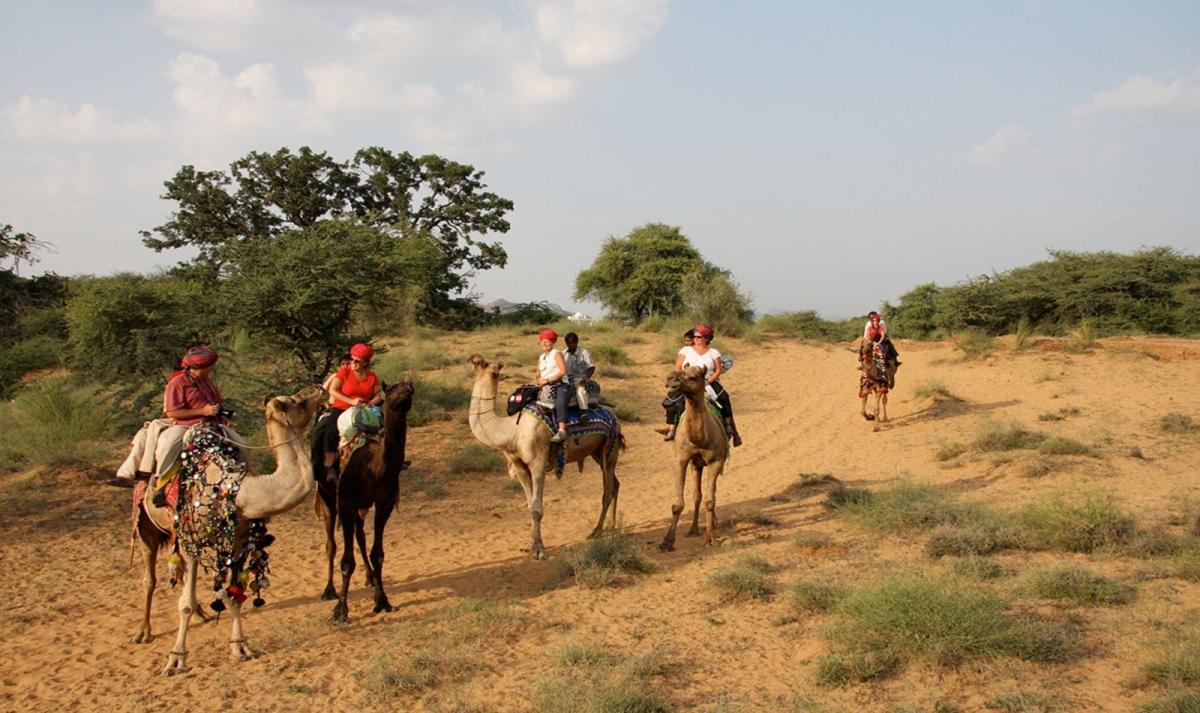
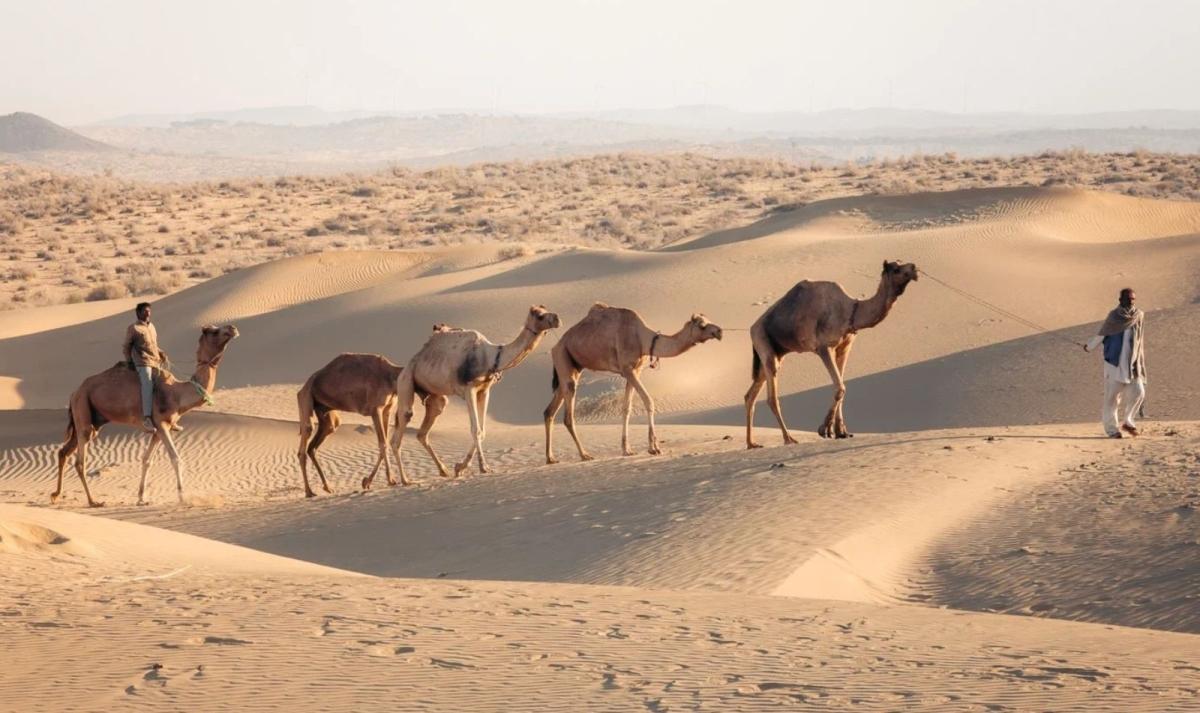
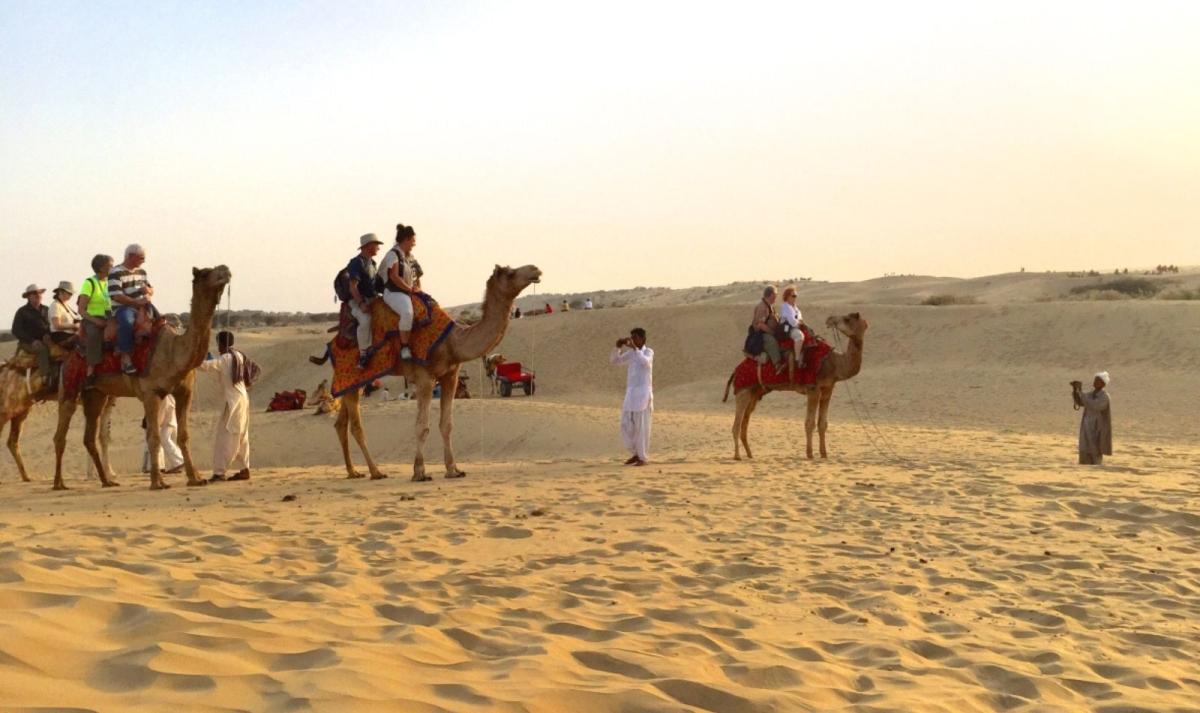
Jaisalmer's setting on the edge of the Thar Desert makes it the starting point for camel safaris into the dunes around Sam and Khuri, roughly 25 miles from the city. Overnight trips typically combine a camel ride out to the dunes with dinner and a night camping under open sky, an experience built around the desert landscape rather than any single monument. Shorter sunset excursions run from the same dunes for travelers with less time to spare. West of the dunes, the abandoned village of Kuldhara features on some itineraries, its stone houses left empty since the early nineteenth century when, according to local accounts, its Paliwal Brahmin residents left overnight rather than accept a local ruler's demands.
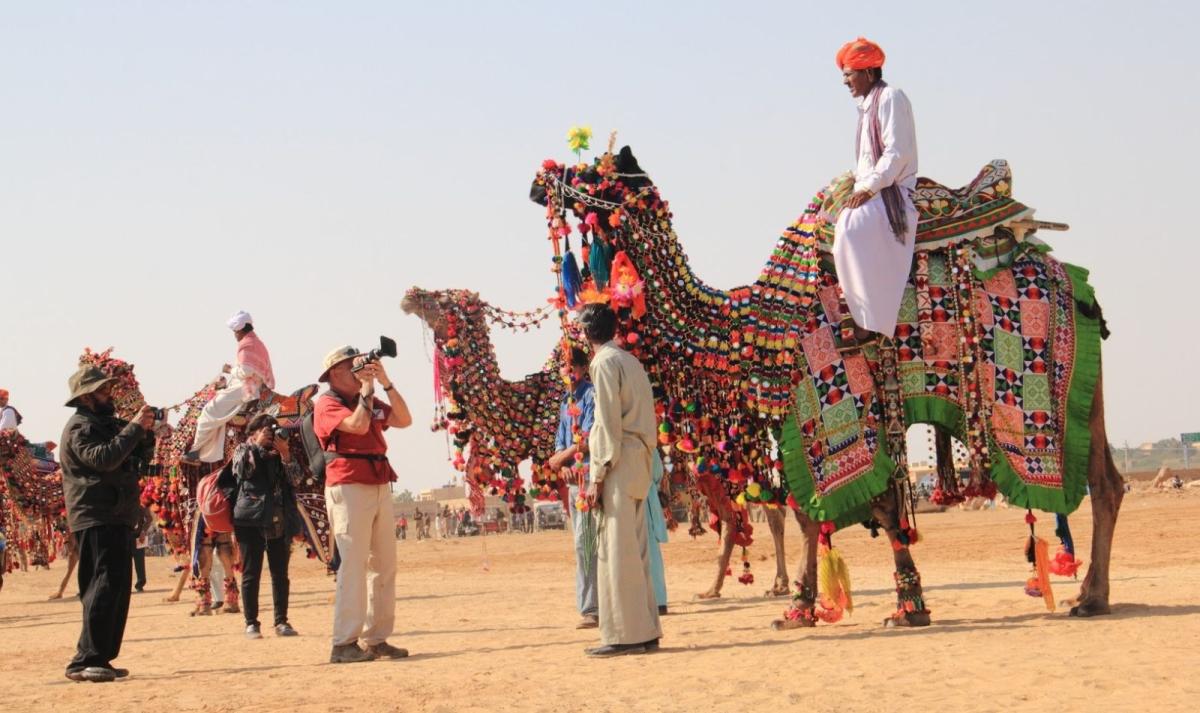
Each winter, usually in February, Jaisalmer hosts the Desert Festival, three days of folk music, camel races and turban-tying competitions held against the backdrop of the fort and the dunes beyond the city. The festival draws visitors specifically for its timing, and hotel availability in the city tightens considerably during the event.
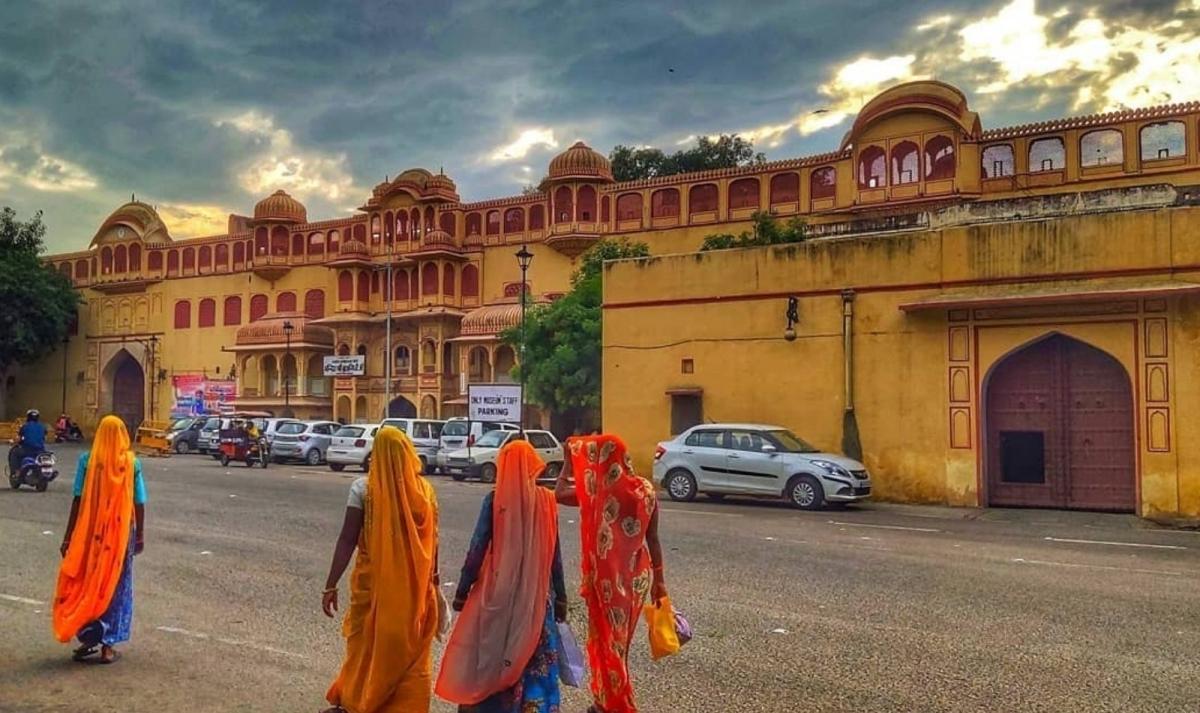
Jaisalmer often appears as one stop on longer circuits through Rajasthan's fort cities, paired with Jodhpur, Udaipur and Jaipur. The 6 Day Royal Rajasthan Heritage Tour By Car With Driver links several of these cities by private car, an approach well suited to the long desert distances between them.
Between October and March, daytime temperatures stay manageable for exploring the fort and riding out to the dunes, while nights in the desert can turn cold enough for warm layers. Summer temperatures regularly climb past 110 degrees Fahrenheit, making the months from April through June difficult for anything beyond early morning sightseeing.