
-high.jpg&w=1920&q=75 "Gujarat Tour 6 Day Indian Holiday Package")
Free Cancellation
-high.jpg&w=1920&q=75 "Same Day Taj Mahal Tour from Mumbai by Flight – Agra Day Trip Package")


Mumbai Tours cover India's financial capital and largest city by population, a metropolis built across what was once an archipelago of seven separate islands, gradually reclaimed and joined into the single landmass the city now occupies. Facing the Arabian Sea on India's western coast, Mumbai combines colonial-era architecture, a modern business district and one of the busiest ports in South Asia with a pace that rarely slows.
As part of a wider India itinerary or as a standalone city break, Mumbai Tours combine harbor-front landmarks, heritage railway stations and coastal promenades with insight into the city's film industry. Guides typically balance the formal grandeur of South Mumbai's colonial quarter with the everyday rhythm of local markets and neighborhoods.
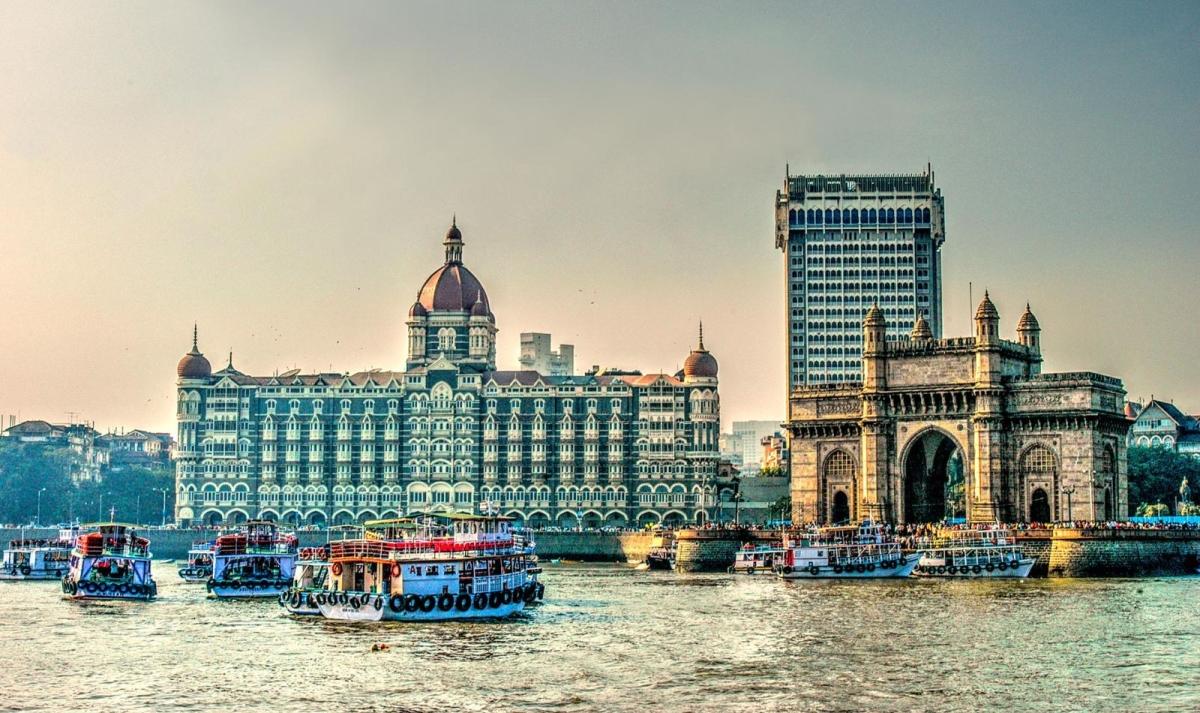
The Gateway of India stands on the waterfront at Apollo Bunder, an arch built in 1924 to commemorate the 1911 visit of King George V and Queen Mary. It faces the harbor directly beside the Taj Mahal Palace Hotel, and the pair form the most photographed stretch of the city's skyline, especially at sunset when ferries to Elephanta Island depart from the adjacent jetty.
Formerly known as Victoria Terminus, this railway station is a UNESCO World Heritage Site and a showcase of Victorian Gothic Revival architecture fused with Indian design elements. Still in daily use by suburban and long-distance trains, its domes, turrets and stone carving rank it among the more elaborate railway buildings anywhere in Asia.
Marine Drive curves for roughly three kilometers along Mumbai's western shoreline, a promenade lined with Art Deco apartment buildings from the 1930s and 1940s. After dark, the string of streetlights tracing its arc has earned it the nickname the Queen's Necklace, and the walkway remains one of the city's main gathering points for evening strolls.
An hour's ferry ride from the Gateway of India across Mumbai harbor, Elephanta Island holds a series of rock-cut cave temples dating to roughly the fifth to eighth centuries, carved directly into basalt rock and dedicated primarily to Shiva. The main cave's triple-faced sculpture, Sadashiva, ranks among the more significant surviving works of early Indian rock-cut art.
Kala Ghoda, meaning black horse after a since-removed equestrian statue, is a cluster of streets in South Mumbai lined with colonial-era buildings that now house galleries, bookshops and museums, including the domed Jehangir Art Gallery and the David Sassoon Library. The precinct sits within walking distance of both the Gateway of India and Chhatrapati Shivaji Maharaj Terminus, making it an easy addition to a South Mumbai walking route.
Formerly named the Prince of Wales Museum, this Indo-Saracenic building near the Gateway of India houses collections spanning sculpture, miniature painting and decorative arts from across the Indian subcontinent. Its combination of Mughal, Maratha and British colonial architectural elements makes the building itself as much a part of the visit as the exhibits inside.
Mumbai is the center of Hindi-language cinema, commonly known as Bollywood, with studios, production houses and the industry's stars based throughout the city's northern suburbs. Some tours include drives past studio districts or filming locations, giving visitors a sense of the scale of an industry that releases more feature films each year than almost any other national cinema. Suburbs such as Bandra and Juhu, both home to well-known film personalities, feature on some of these itineraries alongside the city's coastline.
Mumbai's suburban rail network, one of the busiest commuter systems in the world, connects South Mumbai to the northern suburbs along three main lines and carries several million passengers a day. Visitors typically rely on taxis, ride-hailing apps or organized tour transportation rather than the rush-hour trains, though a short ride on a quieter stretch of the network offers a direct look at how the city actually moves.
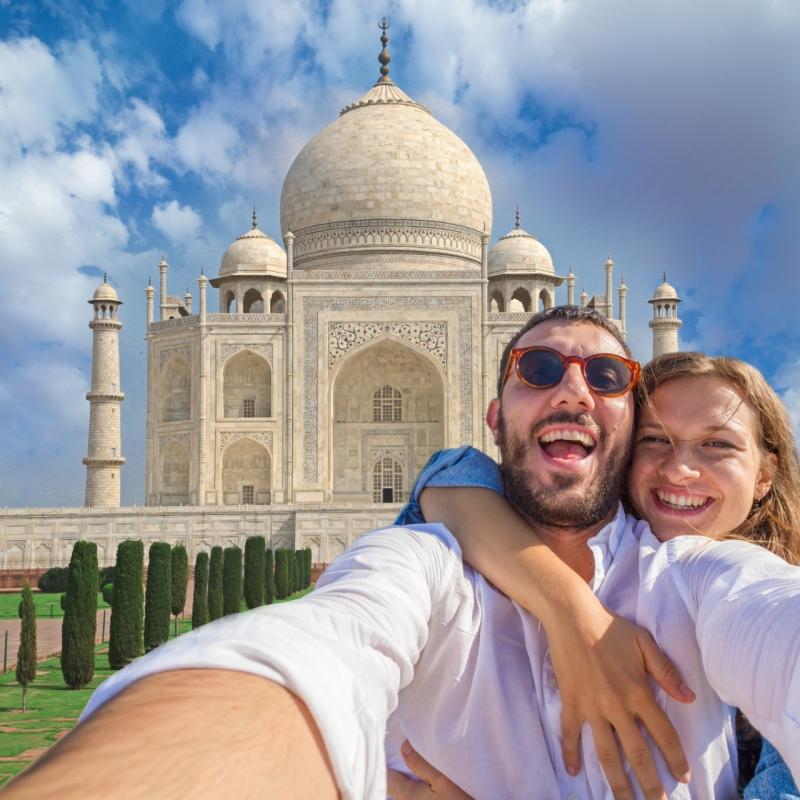
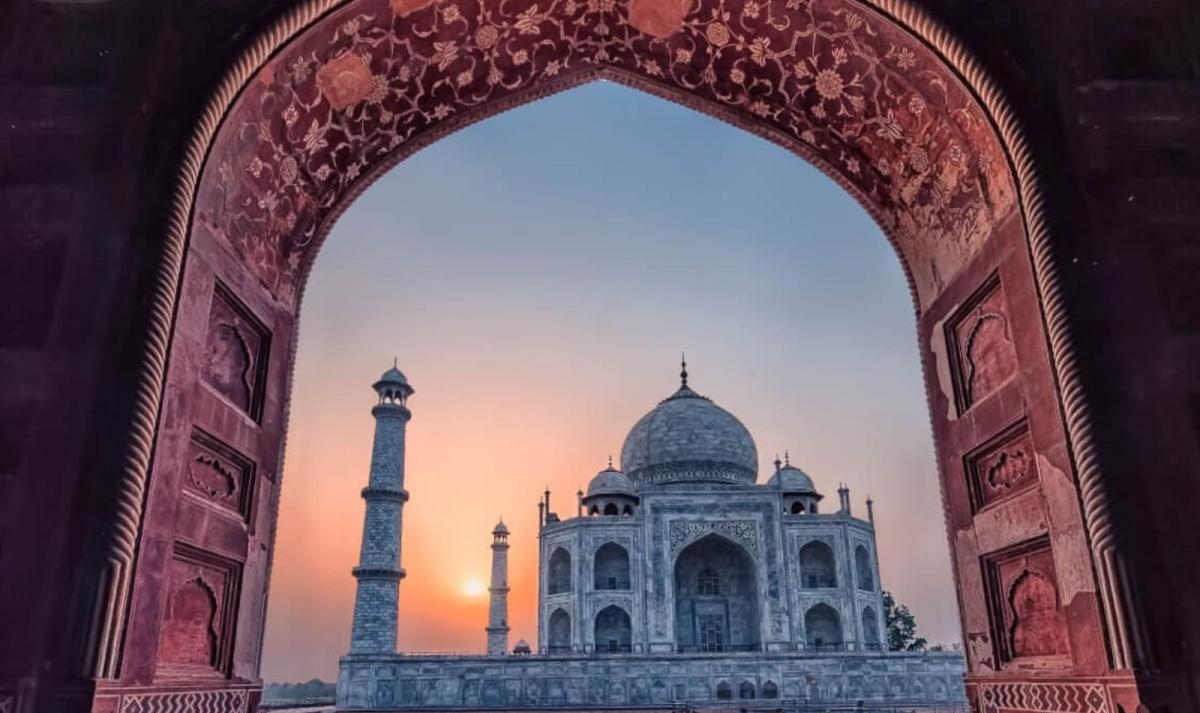
Mumbai Tour Packages combine half-day city sightseeing with multi-day itineraries that extend north to Agra and Delhi. Several pair Mumbai's own landmarks with a flight to see the Taj Mahal, a practical way to add one of India's most recognized monuments onto a Mumbai-based trip.
Taj Mahal Tour 2 Days Delhi Agra Experience
The most comfortable months for sightseeing run from November through February, when humidity drops and daytime temperatures stay moderate. The monsoon, roughly June through September, brings heavy rainfall that can disrupt outdoor plans, while March through May turns hot and humid ahead of the rains.