
Free Cancellation
-high.jpg&w=1920&q=75 "7 Days Mussoorie Nainital Jim Corbett Tour")
-high.jpg&w=1920&q=75 "7 Days Amazing Uttarakhand Tour")
-high.jpg&w=1920&q=75 "Sunrise Taj Mahal Trip from Delhi All Inclusive")
-high.jpg&w=1920&q=75 "Affordable Taj Mahal Sunrise Tour from Delhi by Car – Book Now")
Delhi Tours cover a capital built and rebuilt across more than a thousand years, where Mughal-era monuments stand a few kilometers from the planned avenues of British-built New Delhi. As the anchor of India's Golden Triangle alongside Agra and Jaipur, Delhi typically opens or closes a wider itinerary through northern India, and its own sights alone can fill several days of sightseeing.
Delhi Tours as part of a longer India itinerary usually split the city into two halves: the crowded lanes and Mughal architecture of Old Delhi, and the wide boulevards and government buildings of New Delhi, laid out by the British in the early twentieth century. Between the two, markets, food streets and religious sites from several traditions round out a city that has served as a capital under multiple empires.
Old Delhi took shape as Shahjahanabad, the walled city founded by the Mughal emperor Shah Jahan in 1639 when he moved the empire's capital from Agra. Its narrow lanes still follow much of their original layout, and several of its monuments rank among the most visited in India.
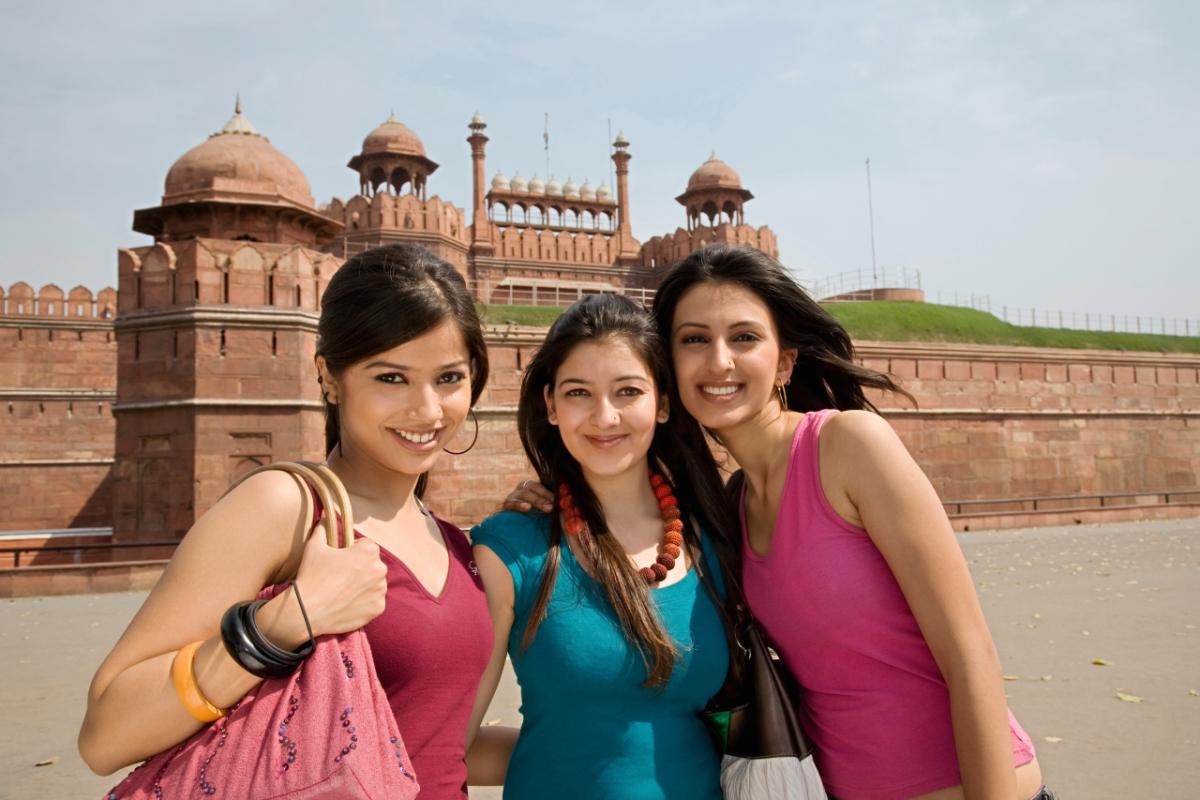
The Red Fort served as the primary residence of Mughal emperors for roughly two hundred years after its construction, with red sandstone walls enclosing palaces, gardens and audience halls. Every year on August 15, India's prime minister addresses the nation from the fort's ramparts, marking the country's independence.
Completed in 1656 under Shah Jahan, Jama Masjid ranks among the largest mosques in India, with a courtyard capable of holding tens of thousands of worshippers. Its red sandstone and white marble facade, along with a pair of minarets open to visitors, offer views across the rooftops of Old Delhi.
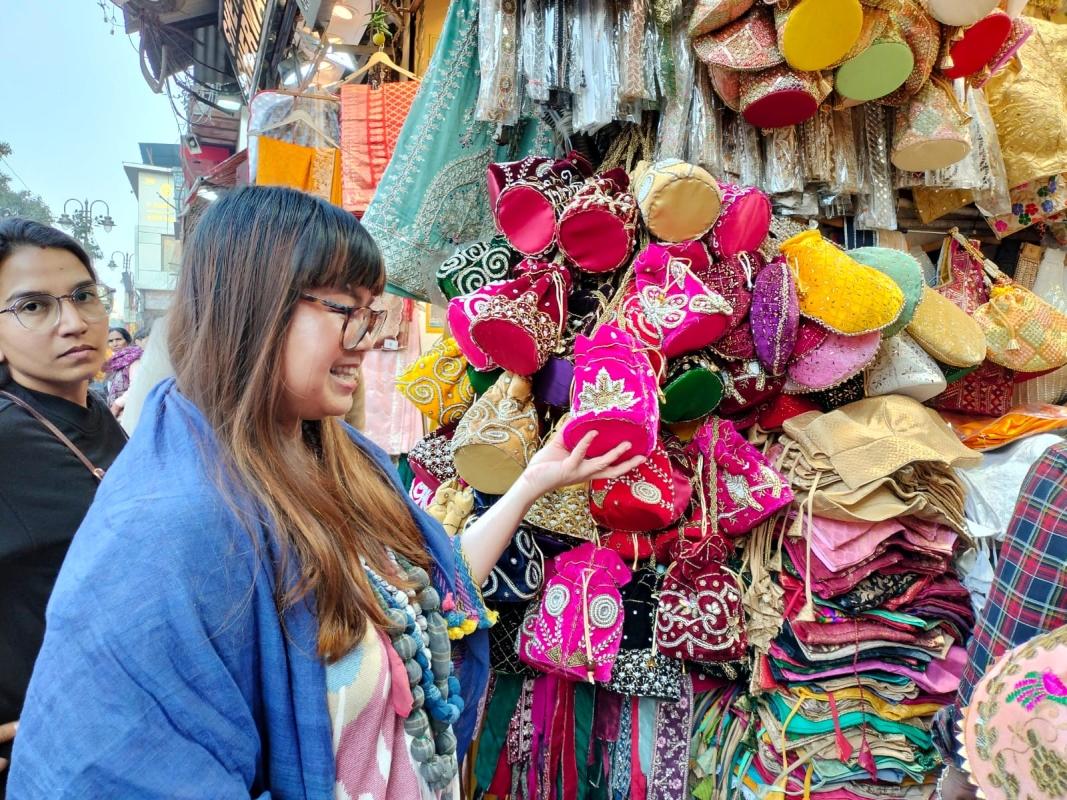
Chandni Chowk has functioned as one of Old Delhi's principal markets since the seventeenth century, and a cycle-rickshaw ride through its lanes remains a classic way to take in the district. Silver merchants, spice traders and food stalls operate side by side along streets originally laid out with a canal running down the center.
New Delhi was designed by the British architects Edwin Lutyens and Herbert Baker and formally inaugurated as the capital of British India in 1931. Its wide, tree-lined avenues and government buildings mark a sharp contrast with the density of Old Delhi a few kilometers north.
Rashtrapati Bhavan, the residence of India's president, was completed in 1929 as the centerpiece of Lutyens's plan, its sandstone facade blending classical European proportions with domes and chhatris drawn from Mughal and Rajput architecture. Nearby, the circular Parliament House, designed by Herbert Baker, has served as the seat of India's legislature since 1927, predating the country's independence by two decades.
India Gate stands at the eastern end of Rajpath, built as a war memorial to commemorate roughly seventy thousand Indian soldiers who died serving in the British Indian Army during the First World War. The surrounding lawns draw crowds in the evenings, particularly once the monument is lit after dark.
Completed in 1986, the Lotus Temple takes the shape of a partially opened lotus flower formed from twenty-seven free-standing marble petals arranged around a central hall. Open to visitors of all faiths for silent prayer or meditation, it has become one of the most visited modern buildings in Delhi despite containing no images, statues or scripted rituals.
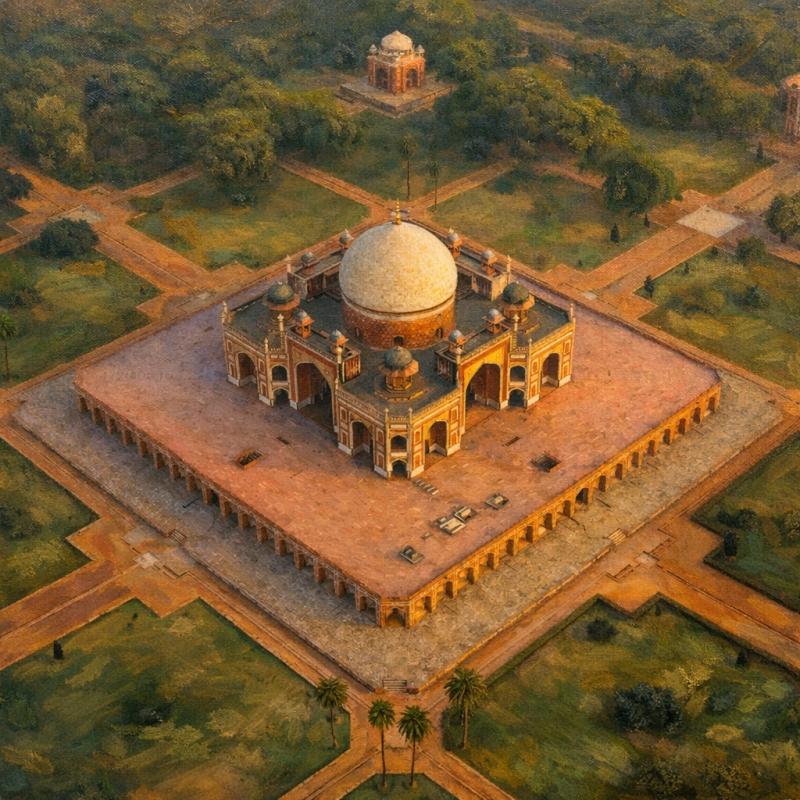
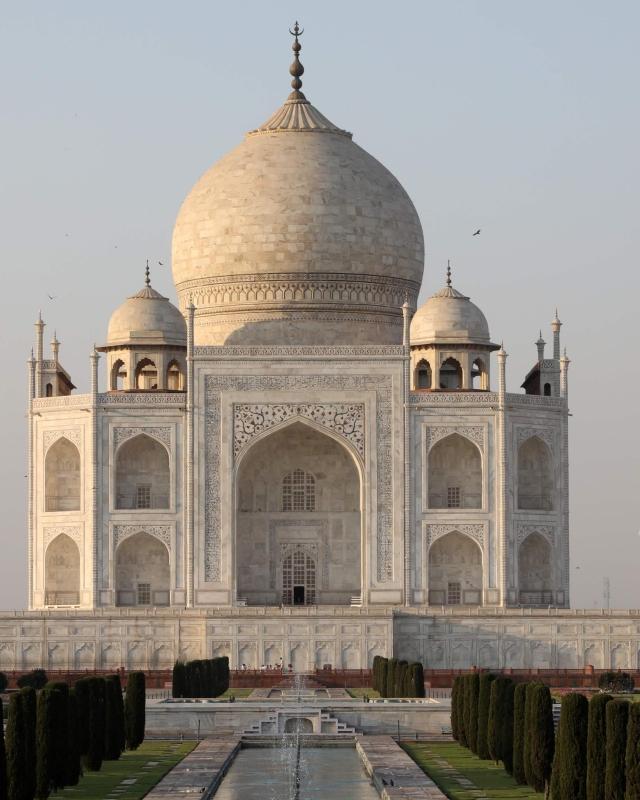
Built in the 1560s for the Mughal emperor Humayun, this tomb introduced the garden-tomb style later refined in the Taj Mahal, with a symmetrical layout of gardens, water channels and a red sandstone and marble structure. It was among the first sites in India added to the UNESCO World Heritage list, in 1993.
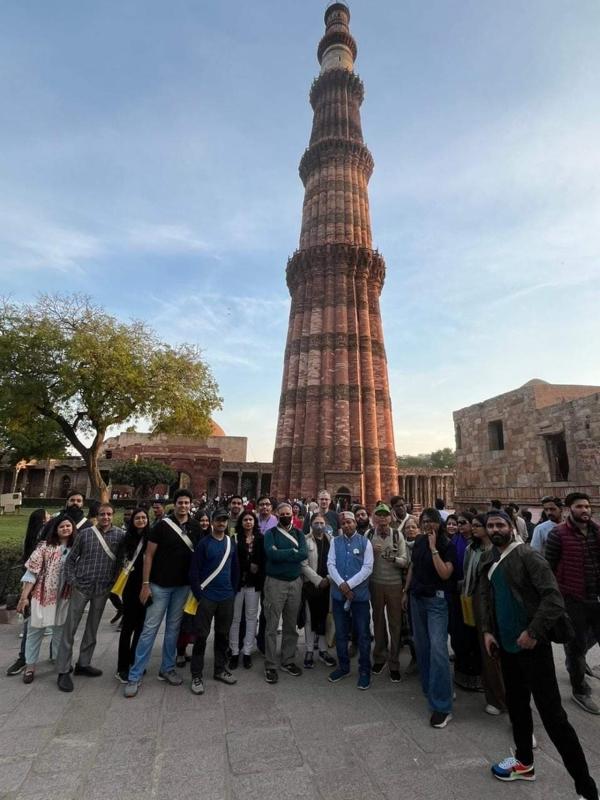
Rising more than seventy meters, Qutub Minar is the tallest brick minaret in the world, begun in 1193 to mark the start of Muslim rule in Delhi. The surrounding complex includes the ruins of India's earliest surviving mosque and an iron pillar that has resisted rusting for over a thousand years.
Raj Ghat marks the spot on the banks of the Yamuna River where Mahatma Gandhi was cremated in 1948, following his assassination shortly after India gained independence. A simple black marble platform, kept lit by an eternal flame, sits within a park that draws both visiting dignitaries and everyday travelers looking to pay respects away from the crowds of the older monuments.
Beyond Chandni Chowk, Delhi's markets range from the government-built Connaught Place, a circular colonial-era shopping district, to Sarojini Nagar and Khan Market for a mix of local and contemporary retail. Street food runs throughout the city, from Old Delhi's parathas and kebabs to chaat stalls found in nearly every neighborhood, reflecting Delhi's role as a meeting point for Punjabi, Mughlai and regional Indian cooking.
Karim's, tucked into a lane near Jama Masjid, has served Mughlai dishes since 1913 and remains a reference point for Old Delhi's kebab and curry houses, while Paranthe Wali Gali, a single narrow street in Chandni Chowk, has specialized in stuffed fried flatbreads for more than a century.
Delhi Tour Packages commonly combine the city with Agra and Jaipur to complete the Golden Triangle circuit, while others extend further to include wildlife destinations such as Ranthambore National Park.
Golden Triangle with Tiger Safari at Ranthambore Tour
October through March brings the most comfortable temperatures for sightseeing, with December and January occasionally cool enough for a jacket in the mornings. Summer months from April through June bring intense heat, often exceeding 40 degrees Celsius, while July through September carries the monsoon season.