
Free Cancellation

Jhansi sits in the Bundelkhand region of southern Uttar Pradesh, a city whose history is inseparable from Rani Lakshmibai, one of the most prominent figures of India's 1857 uprising against British colonial rule. As ruler of the princely state of Jhansi, she led her troops in defense of Jhansi Fort against a British siege in 1858 and died in battle weeks later near Gwalior, a story that has made her one of the most commemorated women in modern Indian history.
Most visitors reach Jhansi as a rail junction and stopover on a wider central India route, using the city as a base for its own fort and as the gateway to Orchha, a former Bundela capital a short drive away. The city's railway station sits on the Delhi-Chennai main line, making Jhansi a natural junction for travelers moving between northern and central India.
Built in 1613 by the Bundela ruler Bir Singh Deo, Jhansi Fort stands on a rocky hill overlooking the city and holds the ramparts from which Rani Lakshmibai is said to have directed the defense of the state in 1858. A museum inside the fort complex displays weapons, portraits and artifacts connected to her reign, and the fort walls give a clear view over Jhansi and the surrounding Bundelkhand plains.
The Rani Mahal, Lakshmibai's former residence within the old city, now houses a small archaeological collection of sculpture recovered from the region. A statue of the queen on horseback, sword raised, stands at a central square in Jhansi and marks one of several sites across the city connected to her role in the uprising, alongside the Government Museum's collection of Bundelkhand-era sculpture and coins. The building itself is arranged around a courtyard whose walls carry faded murals in the Bundela style, one of the few surviving examples of secular painting from the region.
Roughly 10 miles from Jhansi, Orchha was the capital of a Bundela kingdom founded in the sixteenth century and remains a well-preserved example of Bundela architecture in India. Its skyline is dominated by the Jahangir Mahal, a palace built to host a Mughal emperor's single overnight visit, alongside the Raja Mahal and a row of chhatris, domed cenotaphs raised on the banks of the Betwa River for the kingdom's former rulers. The Chaturbhuj Temple, built to house an image of Rama that eventually ended up enshrined elsewhere in the town, rises above the rest of Orchha and remains one of its tallest structures. Many tours pair Jhansi's fort with a half-day or full-day excursion to Orchha given the short distance between them.
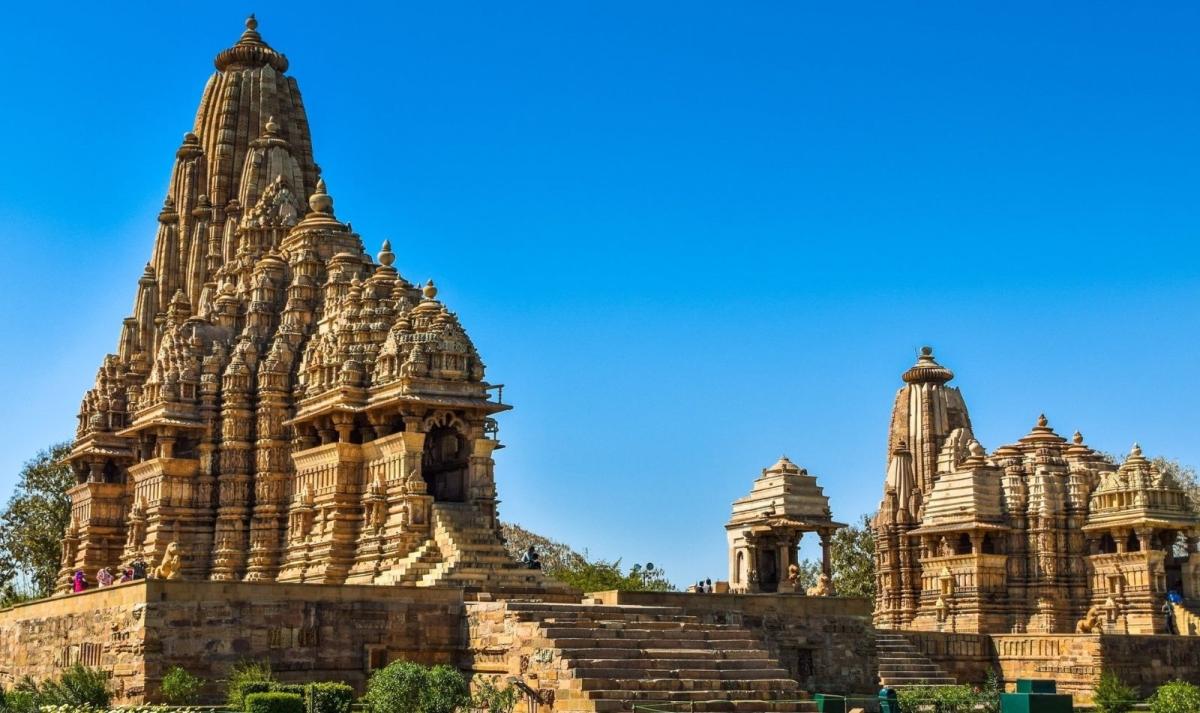
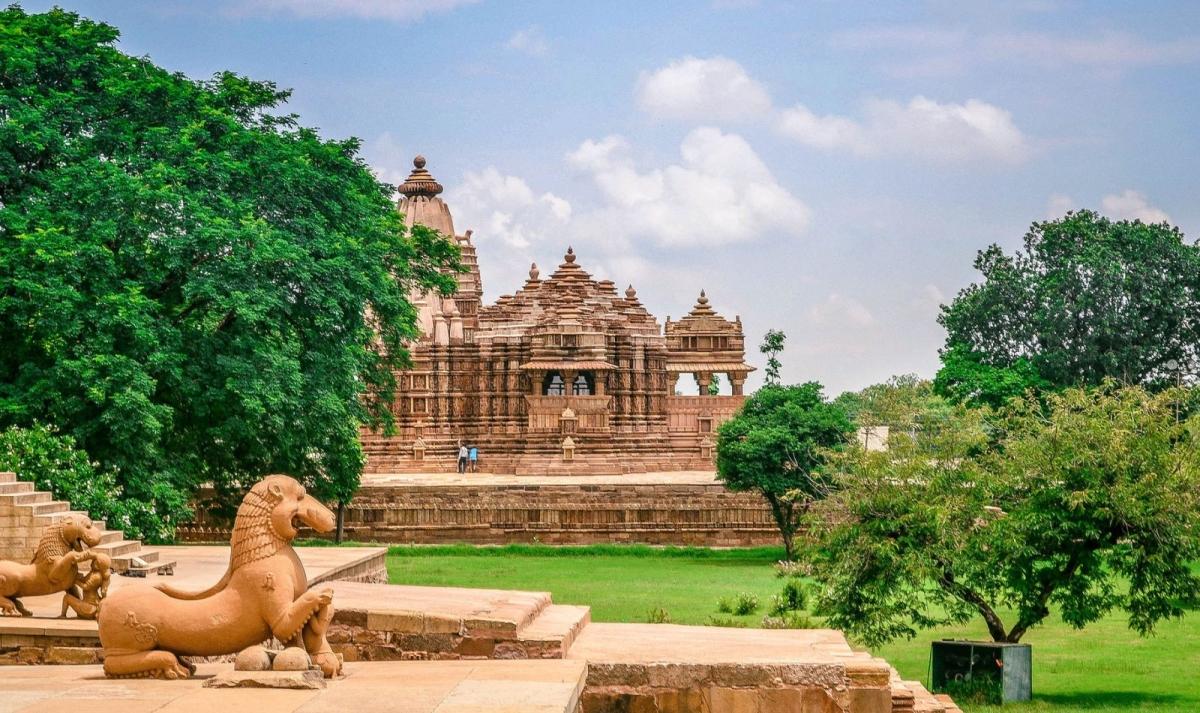
Jhansi also functions as a common access point for Khajuraho, roughly four hours away by road, home to a temple complex listed as a UNESCO World Heritage Site. Itineraries connecting the two, such as the Golden Triangle with Khajuraho Temples Trail, route travelers through Jhansi on the way between Bundelkhand's forts and the temple carvings further east.
Cooler months from October through March suit both the fort climbs in Jhansi and excursions to Orchha, where much of the sightseeing takes place outdoors along the riverbank. Summers in Bundelkhand run hot and dry, with temperatures regularly exceeding 100 degrees Fahrenheit between April and June.