
-high.jpg&w=1920&q=75 "6 Days Dream of Turkey Vacation Package")
PopularFree Cancellation

-high.jpg&w=1920&q=75 "8-Day Turkey Escorted Tour: Istanbul, Ephesus, Pamukkale & Cappadocia")
-high.jpg&w=1920&q=75 "7 Days Eyes of Turkey Travel Package")
-high.jpg&w=1920&q=75 "11 Days Special Turkey Vacation Package With Guaranteed Departure")


-high.jpg&w=1920&q=75 "14 Days Grand Tour of Turkey")
-high.jpg&w=1920&q=75 "Private 4 Days Cappadocia Ephesus Pamukkale Tour")
-high.jpg&w=1920&q=75 "10-Day Journey Through Anatolia: Turkey Tour Package")

-high.jpg&w=1920&q=75 "Daily Sumela Tour from Trabzon")
-high.jpg&w=1920&q=75 "12 Days Luxury Gold Anzac Day Tour")
-high.jpg&w=1920&q=75 "8 Days Eastern Turkey Tour")
-high.jpg&w=1920&q=75 "10-Day Highlights of Türkiye - Fixed Departure Tour")
-high.jpg&w=1920&q=75 "7 Days Luxury Gold Anzac Day Gallipoli Tour")
 FestivalsCappadocia Hot Air Balloon Festival 2026 - Guide
 Family TravelBest Turkey All Inclusive Holidays 2026
.png) Churches and cathedralsPope Leo Istanbul Program 2025 – Day by Day
Churches and cathedralsPope Leo Istanbul Program 2025 – Day by Day Family TravelBest Honeymoon Places in Turkey 2026 | Resorts & Guide
 Day tripsExperience the Thrill of Isfanbul Vialand Theme Park
 All aboutUzak Şehir Movie Plot: A Journey Between Alienation, Loneliness, and Hope
Turkey Cultural & Historical Tours offer a journey through thousands of years of human history, connecting ancient civilizations, archaeological sites, imperial capitals, traditional towns and living cultural heritage across Anatolia.
Few destinations bring so many historical periods together within a single journey. The lands of modern Turkey have been home to the Hittites, ancient Greek civilizations, Romans, Byzantines, Seljuks and Ottomans, while archaeological discoveries continue to reveal much earlier chapters of human settlement in Anatolia.
For travelers interested in history, a cultural tour of Turkey can go far beyond visiting individual monuments. One journey can take you through the palaces and mosques of Istanbul, the archaeological remains of Ephesus, the legendary landscape of Troy, the ancient city of Pergamon, the travertines and ruins of Pamukkale and Hierapolis, and the rock-cut heritage of Cappadocia.
Turkey historical tours can also introduce travelers to traditional towns, local cuisine, bazaars, handicrafts and regional customs. This combination of monumental history and living culture is what makes Turkey particularly rewarding for cultural travelers.
Whether you are interested in archaeology, architecture, ancient civilizations, Ottoman history or UNESCO World Heritage Sites, Turkey offers routes ranging from short cultural breaks to comprehensive multi-day journeys across the country.
With hundreds of different itineraries available, travelers can choose between guided group tours, private cultural tours and multi-destination Turkey tour packages according to their interests and available time.
Turkey Cultural Tour Packages are designed for travelers who want to experience several of the country's major historical destinations within one organized itinerary.
Because Turkey's most important cultural attractions are spread across different regions, multi-day packages can make traveling between them considerably easier.
A first-time visitor might begin in Istanbul, discovering monuments representing both Byzantine Constantinople and the Ottoman capital. The journey can then continue toward Cappadocia, followed by western Anatolia and archaeological destinations such as Ephesus, Hierapolis and Troy.
Longer itineraries can explore additional archaeological sites, historic towns and less-visited regions.
Turkey cultural tour packages may be available as:
Multi-day guided cultural tours
Private Turkey cultural tours
Small-group historical tours
Archaeology-focused itineraries
Istanbul and Anatolia combination tours
Ancient city tours
UNESCO heritage itineraries
Grand tours covering several regions of Turkey
The ideal package depends on how deeply you want to explore the country.
Travelers with approximately one week can concentrate on several major highlights, while longer itineraries provide opportunities to explore archaeological sites and regional destinations without moving between cities too quickly.
Tour inclusions differ between itineraries. Depending on the selected package, arrangements may include accommodation, transportation, domestic connections, professional guiding, airport transfers and selected sightseeing activities. Individual tour details should always be checked before booking.
Understanding Turkey means understanding the civilizations that developed across Anatolia.
The country contains archaeological and architectural evidence representing thousands of years of settlement, migration, trade, religion and empire. Cultural tours can therefore be structured almost like a journey through a historical timeline.
The Hittites established one of the great powers of the ancient Near East, with their political center at Hattusa in central Anatolia.
The remains of Hattusa include monumental gateways, defensive structures, temples and archaeological areas that help visitors understand the scale of the Hittite capital.
Nearby Yazılıkaya, a rock sanctuary containing carved reliefs, provides further insight into Hittite religious traditions.
The Hittite period represents only one chapter of ancient Anatolia. Archaeological discoveries throughout Turkey demonstrate that human settlement in the region stretches back much further, making Anatolia one of the world's most fascinating destinations for travelers interested in early civilizations.
Western and southern Anatolia became home to numerous important Greek and Hellenistic settlements.
Today, travelers can explore ancient cities where temples, theaters, agoras and monumental buildings still reveal the scale of urban life in antiquity.
Pergamon became one of the most influential Hellenistic kingdoms, while cities such as Ephesus, Aphrodisias and Priene developed into important cultural, political or commercial centers during different periods.
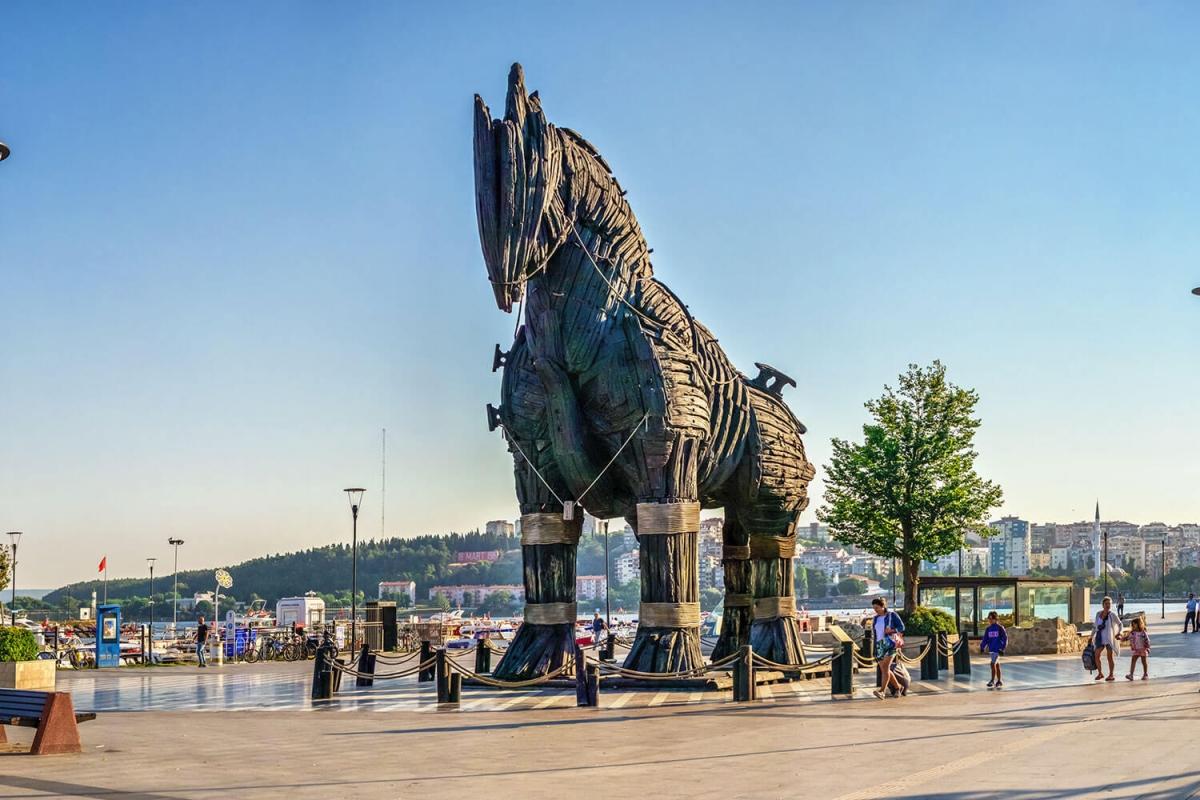
Troy adds another dimension to this heritage. Known internationally through the stories associated with the Trojan War, the archaeological site contains multiple layers of settlement representing a history far more complex than its legendary reputation alone.
Roman rule transformed many Anatolian cities into prosperous centers connected by roads, ports and commercial networks.
Ephesus is one of the most impressive examples.
Visitors can walk through ancient streets and see monumental structures associated with one of the Roman world's major urban centers. The Library of Celsus, Great Theatre and other remains make Ephesus an essential destination on many Turkey historical tours.
Hierapolis, overlooking the white travertines of Pamukkale, provides another opportunity to explore Roman urban and spa culture.
Other archaeological destinations such as Perge, Aspendos and Aphrodisias demonstrate the extraordinary geographical reach of Roman heritage across modern Turkey.
For travelers particularly interested in classical archaeology, it is possible to build an entire Turkey itinerary around Greco-Roman cities.
The Byzantine Empire left a profound mark on the architecture, religious traditions and cultural landscape of Turkey.
Nowhere is this more visible than in Istanbul, formerly Constantinople.
For centuries, Constantinople served as the capital of the Byzantine Empire. Monumental structures associated with this period continue to shape the historical identity of the city.
Beyond Istanbul, Byzantine heritage can also be discovered in Cappadocia, where rock-cut churches, monasteries and religious settlements developed within the region's distinctive volcanic landscape.
The frescoed churches of the Göreme area provide an especially important connection between Cappadocia's unusual geography and its Christian heritage.
Byzantine monuments can therefore form an important part of cultural itineraries combining Istanbul and central Anatolia.
The arrival and expansion of the Seljuks created another major chapter in Anatolian history.
Seljuk architecture can be recognized through mosques, madrasas, caravanserais and monumental stone portals found across central and eastern Anatolia.
Konya became one of the most important centers of Seljuk Anatolia and remains closely associated with the life and legacy of Mevlana Jalaluddin Rumi.
Historic caravanserais across Anatolia also reflect the importance of long-distance trade routes. These fortified roadside complexes provided accommodation and services for merchants and travelers moving across the region.
Including Seljuk heritage in a cultural tour helps bridge the historical transition between Byzantine Anatolia and the later Ottoman period.
The Ottoman Empire shaped Turkey's cities, architecture, cuisine and cultural traditions for centuries.
Istanbul contains some of the greatest examples of Ottoman imperial heritage, including monumental mosques, palace complexes, bazaars, fountains and traditional neighborhoods.
Cities such as Bursa and Edirne are equally important for understanding the development of the Ottoman state.
Bursa served as an early Ottoman capital and contains important mosques, tombs and historical commercial areas. Edirne later became another imperial capital before Constantinople was conquered in 1453.
Ottoman heritage is not limited to monumental architecture. Traditional markets, culinary customs, handicrafts and historic urban neighborhoods continue to provide connections with this period.
A well-designed Turkey cultural tour can therefore follow Ottoman history from the empire's early centers to the monumental architecture of Istanbul.
Choosing the best historical places to visit in Turkey can be difficult because archaeological and cultural attractions are spread across almost every region of the country.
For many travelers, Istanbul is the natural starting point. The city brings Byzantine and Ottoman history together through palaces, mosques, churches, bazaars, fortifications and historic neighborhoods.
Ephesus is one of the country's essential archaeological destinations and offers one of the strongest introductions to classical and Roman urban history.
Cappadocia provides a completely different experience. Its rock formations contain underground cities, cave churches and historical settlements that developed within a distinctive volcanic landscape.
Pamukkale and Hierapolis combine natural scenery with archaeology, allowing travelers to experience the famous white travertines alongside the remains of an ancient spa city.
Troy attracts visitors interested in both archaeology and the stories that have shaped its international reputation for centuries.
Pergamon offers another perspective on the ancient world through the remains of a powerful Hellenistic center.
Hattusa is particularly important for travelers interested in the Hittites and the civilizations of ancient Anatolia.
Aphrodisias stands out for its archaeological remains and exceptional sculptural heritage.
Other important cultural destinations can include Bursa, Edirne, Konya, Safranbolu, Antalya and Ankara, depending on the focus and length of the itinerary.
Turkey's archaeological map extends even further. Travelers interested in prehistoric Anatolia, southeastern heritage or the historical landscapes of Eastern Turkey can connect the main cultural route with specialized regional tours rather than attempting to fit every historical destination into one itinerary.
This makes it possible to return to Turkey multiple times and experience a completely different period of history on each journey.
The best route depends on the traveler's available time and historical interests.
For first-time visitors, one of the strongest combinations is Istanbul, Cappadocia, Ephesus and Pamukkale. This route provides a broad introduction to Byzantine and Ottoman heritage, early Christian history, ancient cities, Roman archaeology and some of Turkey's most distinctive landscapes.
Travelers interested primarily in classical history can follow a western Turkey route connecting Istanbul, Gallipoli, Troy, Pergamon, Ephesus and Pamukkale.
This journey moves through different archaeological and historical periods while connecting several of the country's internationally recognized destinations.
Another option is to concentrate on Ancient Anatolia, combining destinations such as Ankara, Hattusa, Cappadocia and Konya before continuing toward other regions.
Travelers with more time can choose a Grand Turkey Cultural Tour, combining several routes into a longer journey. A comprehensive itinerary may connect Istanbul with western Anatolia, the Aegean archaeological sites, Pamukkale, central Anatolia and Cappadocia.
Rather than simply visiting as many cities as possible, longer cultural tours allow more time at archaeological sites and provide greater context for understanding how different civilizations influenced one another.
The most suitable route can therefore be selected according to both trip duration and personal interests.
Private Cultural & Historical Tours in Turkey are suitable for travelers who want greater flexibility over their route, sightseeing pace and historical interests.
Instead of following a fixed group itinerary, private tours can focus more closely on specific themes.
Travelers interested in archaeology may prioritize Ephesus, Troy, Pergamon, Hattusa and other ancient cities. Those interested in imperial history may prefer an itinerary concentrating on Byzantine and Ottoman monuments.
A private tour can also combine major attractions with smaller archaeological sites and historic towns that are difficult to include in standard itineraries.
This format can be particularly useful for couples, families, private groups and travelers returning to Turkey after previously visiting the country's main highlights.
Depending on the selected itinerary, private tours may provide transportation and professional guiding while allowing more control over sightseeing time and daily schedules.
Travelers can choose from existing cultural tour packages or select itineraries that best match their preferred destinations, travel dates and trip length.
With Turkey's historical attractions spread across such a large geographical area, choosing the right route is often more important than simply adding more destinations. A carefully planned private itinerary can provide enough time to understand each location while still connecting several important periods of Anatolian history.